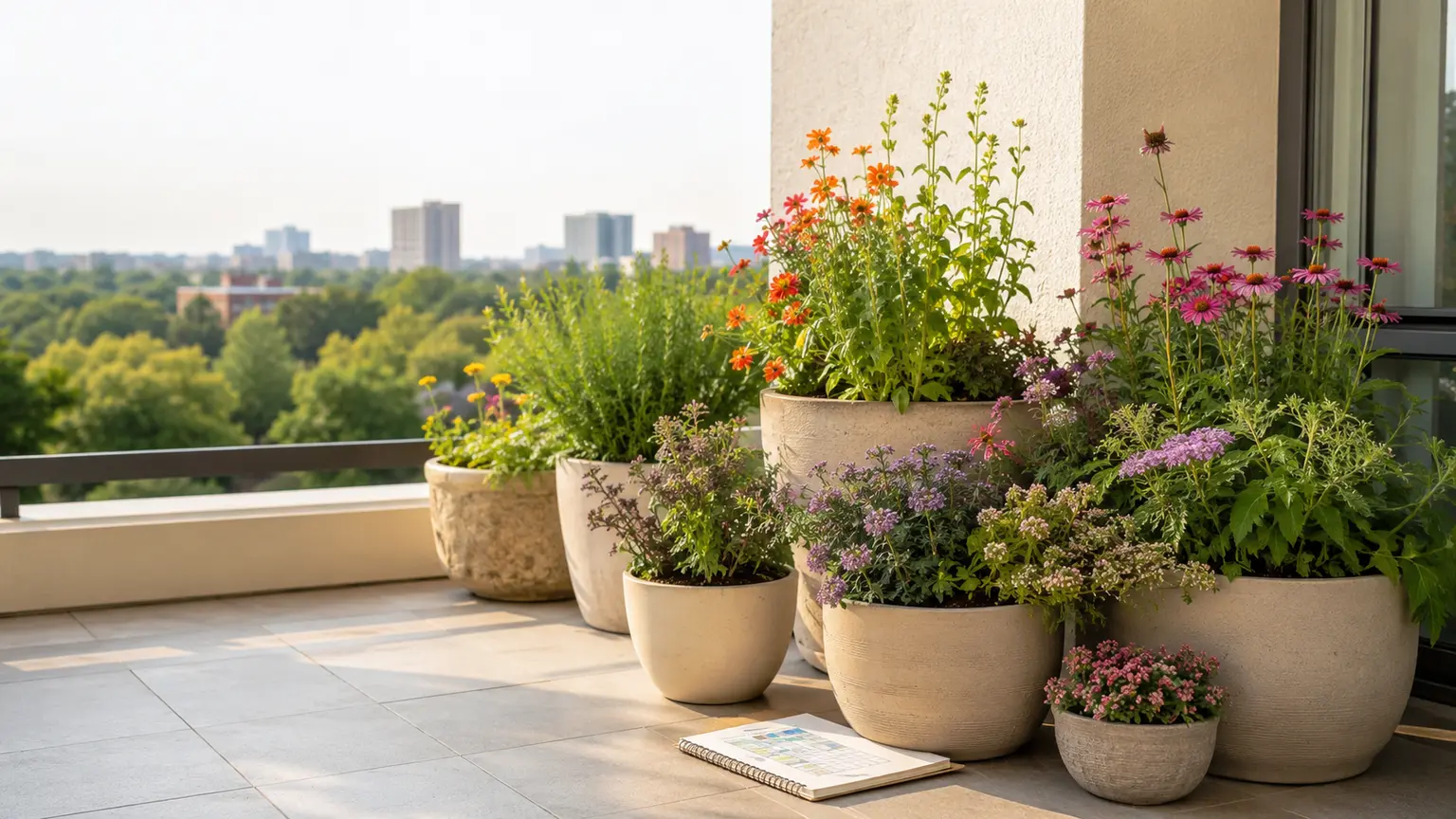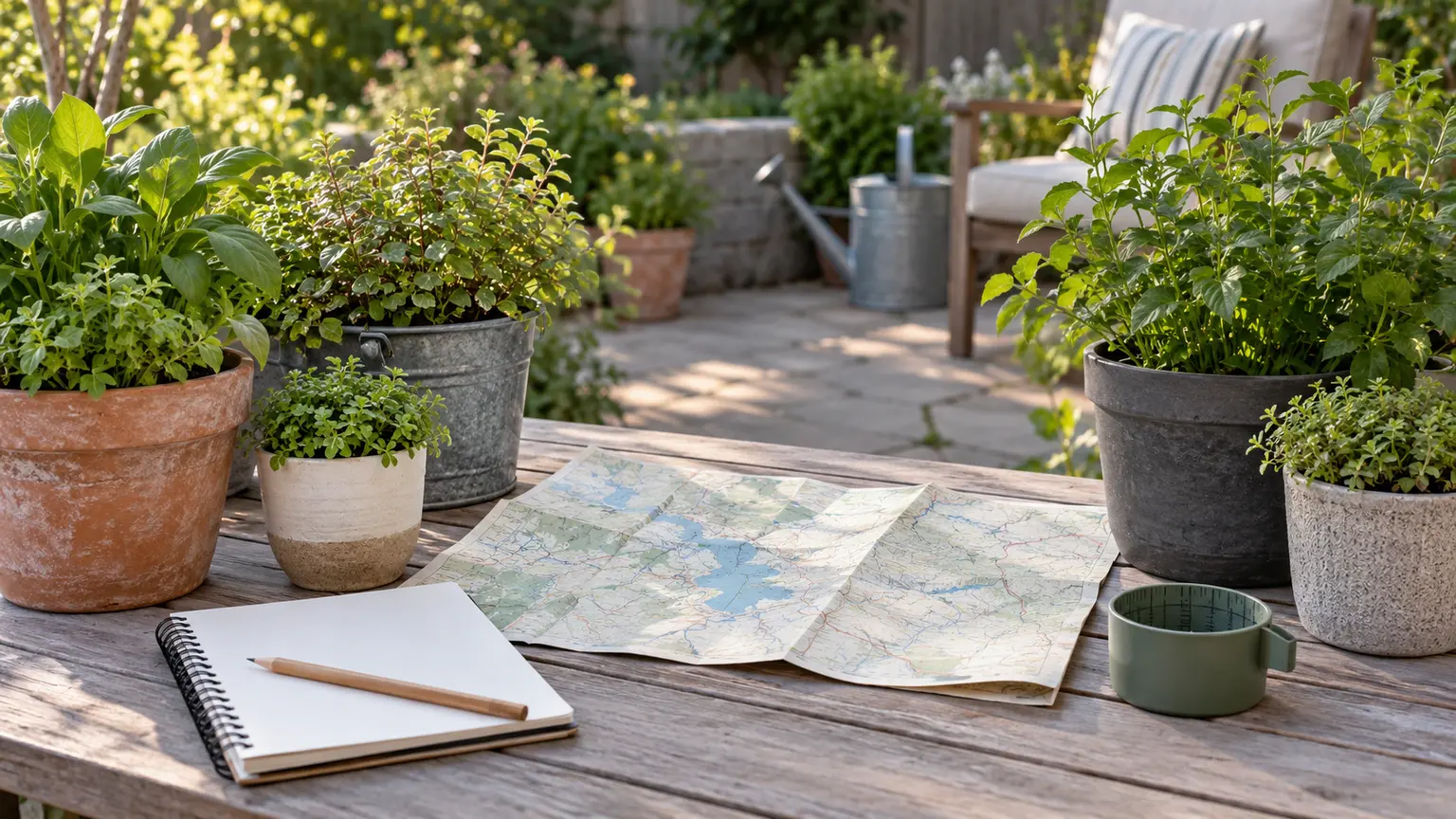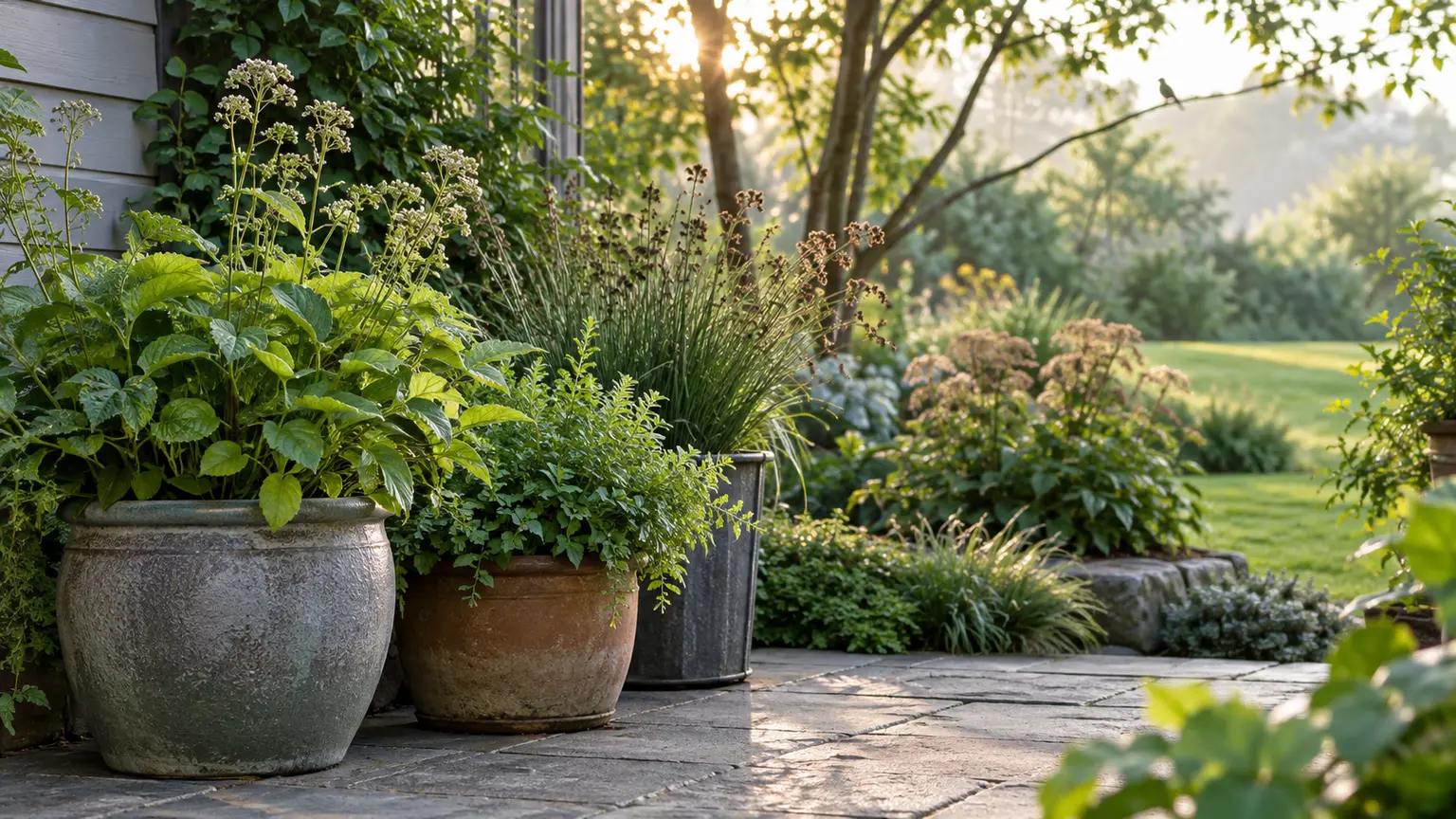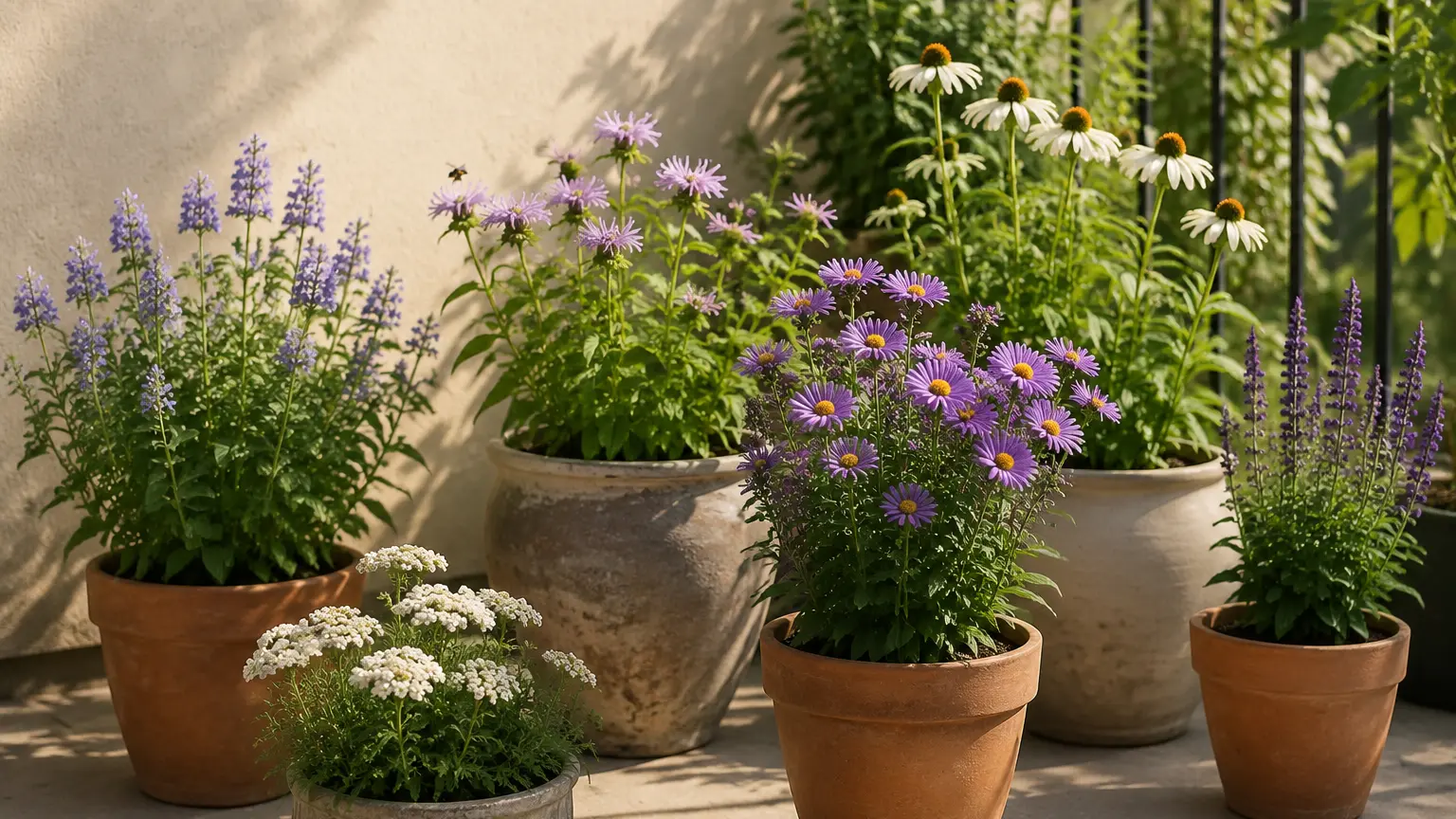
A patio container can add seasonal flowers to a small or overlooked space, but choosing the right perennial takes more than picking a plant labeled “native.” Native status depends on place, and a plant that fits one state or ecoregion may not be native—or well adapted—to another. Containers also create a different growing environment from an in-ground bed: roots and potting media are more exposed to heat, cold, wind, and drying.
Use a decision sequence: verify that a candidate is native where you live, assess the patio’s actual conditions, confirm that the plant’s mature size and habit suit a pot, and then compare approximate flowering windows. The goal is a healthy container that adds floral resources when plants are in bloom—not a guarantee that a particular pollinator will visit.
Start with place: define “native” for this patio
Begin with the question “native where?” Federal National Park Service pollinator guides organize recommendations by broad U.S. regions, which is useful for orientation. However, broad regions are only a starting point. State extension programs, state plant atlases, natural-heritage agencies, and locally focused native-plant organizations are better checks for a specific patio.
The Maryland Native Plant Program, for example, distinguishes plants native to Maryland and its ecoregions. Kansas State Extension likewise cautions that a plant native somewhere in the United States may not be native to Kansas or Missouri. Before shopping, look up each candidate through a resource that identifies distribution for your state or ecoregion rather than relying on a national plant list or a nursery’s general description.
- Write down your state and, if available, your ecoregion or local natural area.
- Search your state extension service, plant atlas, natural-heritage program, or native-plant organization for the candidate’s documented range.
- Compare the plant’s listed range with your location. Treat “native to North America” or “native to the United States” as incomplete information.
- Save the local reference or plant profile so you can recheck mature size, habitat, bloom period, and growing conditions before buying.
- If local sources disagree, choose a different candidate or ask the relevant extension or native-plant organization for clarification.
Audit the container site before choosing a plant
Read the patio as a microclimate, not just as “sun” or “shade.” Kansas State Extension and Illinois Department of Natural Resources guidance both emphasize matching a plant’s light and water needs to the conditions the gardener can provide. A site that looks sunny on a spring afternoon may receive less direct light later in the season, while walls, paving, and glass can add reflected heat.
- Count the hours of direct sun where the pot will stand, checking at different times of day if the site is partly shaded.
- Note afternoon heat from walls, concrete, railings, or windows, along with exposure to drying wind.
- Observe whether the container receives natural rain or sits under an overhang.
- Check that the pot has adequate drainage and consider how quickly its media dries after warm, windy weather.
- Measure the available space, including room for the plant’s mature height and spread.
- Be realistic about watering. Choose plants whose moisture needs you can meet without depending on a fixed schedule.
Containers can require more frequent attention than in-ground plantings because their roots and growing media are exposed on all sides. Drying rate varies with pot size and material, weather, wind, plant size, shade, and the amount of rain received. Instead of assigning a universal watering routine, check the container regularly and follow the locally appropriate care guidance for the plant.
Choose a perennial that fits a pot, not just a plant tag
A perennial may be locally native and pollinator-friendly in a garden bed yet still be a poor match for a small container. Compare the plant’s mature height, spread, root room, and growth rate with the pot you can provide. A young nursery plant may look compact for one season and then outgrow the space.
Wind deserves particular attention on balconies, rooftops, and exposed patios. Kansas State Extension notes that very tall, large-leaved plants can be vulnerable in containers. A pot that is easy to tip, or a plant that continually leans beyond its support, is a sign that the combination is not well matched.
You can use upright, mounding, and trailing forms as an optional visual planning tool. An upright plant can provide height, a mounding plant can fill the center, and a trailing plant can soften an edge. This “thriller, filler, spiller” approach is not required for pollinator value. A single well-fitted perennial or a simple grouping can be the better choice if it leaves enough root room and is stable in the site.
- Check the mature height and spread on a local plant profile, not only the current nursery size.
- Confirm that the plant’s preferred moisture and light conditions match your site and care capacity.
- Look for a growth habit that can remain stable in the pot’s wind exposure.
- Use a container large enough for the plant’s expected root room, while avoiding a combination that stays excessively wet.
- Ask whether the perennial can reasonably overwinter in a container in your location; do not assume that garden hardiness translates directly to a pot.
Plan flowering in relay, with room for variability
A succession of flowering periods is a useful design goal. University of Minnesota Extension describes diverse bee habitat as including flowering plants that bloom at different times of year, and Cornell Cooperative Extension recommends flowering species that bloom in succession from spring through fall. For a patio, that might mean choosing several containers or a small mix of locally appropriate perennials with early-, middle-, and late-season windows.
Treat those windows as approximate rather than guaranteed. Weather, planting date, plant age, container stress, and cultivar or genotype can shift flowering or shorten the display. Overlap is often more realistic than expecting one container to flower continuously.
| Planning question | What to compare |
|---|---|
| Early season | Does a locally appropriate candidate have an approximate bloom period near the beginning of your patio’s growing season? |
| Middle season | Will another candidate or container add flowers after the first display begins to fade? |
| Late season | Is there a region-appropriate option with a later flowering window, if the site and container can support it? |
| Conditions | Could heat, wind, watering limits, or transplant timing shorten or shift the expected bloom period? |
Use a modest success standard for a small-space habitat planting
A patio container is one floral resource, not a complete habitat. University of Minnesota Extension notes that pollinator habitat includes floral resources as well as nesting and overwintering elements, and that one space may not be able to provide everything. Several modestly sized containers can offer more flexibility than forcing every goal into one pot.
Define success by what you can observe and maintain: the perennial remains healthy in its container, receives conditions suited to its needs, and flowers during at least part of the expected season. Notice which plants perform well in your particular patio conditions and whether anything visits while flowers are open, without treating visitation as a promise or a requirement.
At the end of the season, record the plant’s actual size, drying rate, flowering period, wind response, and winter performance. Those notes can guide the next container choice more reliably than a national list. Start with local evidence, fit the plant to the pot and microclimate, and let the planting’s results refine the design over time.
Sources and further reading
- dnr.illinois.gov — dnr.illinois.gov
- www.nps.gov — www.nps.gov
- www.johnson.k-state.edu — www.johnson.k-state.edu
- albany.cce.cornell.edu — albany.cce.cornell.edu
- www.johnson.k-state.edu — www.johnson.k-state.edu
- extension.umd.edu — extension.umd.edu
- extension.umn.edu — extension.umn.edu