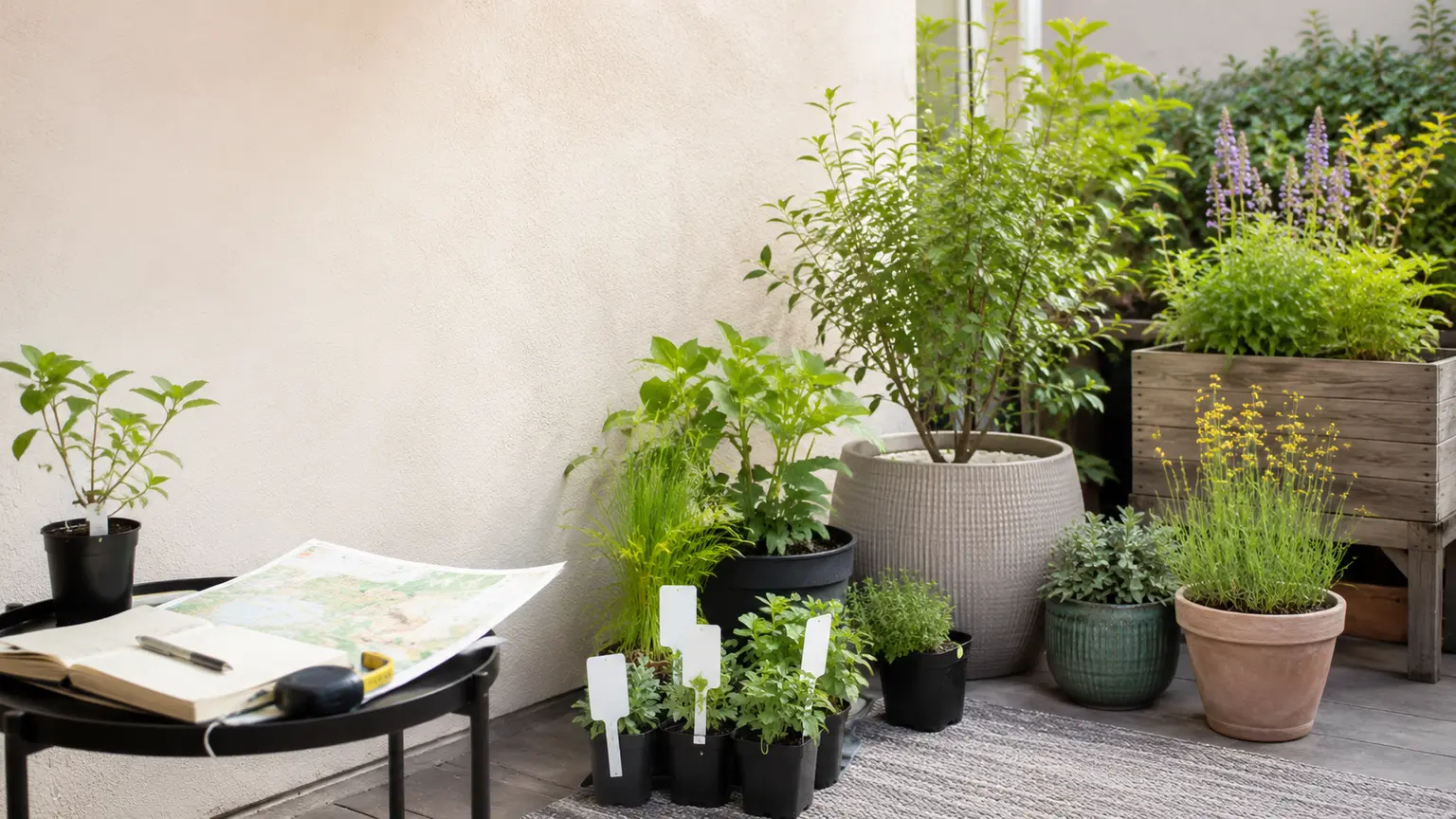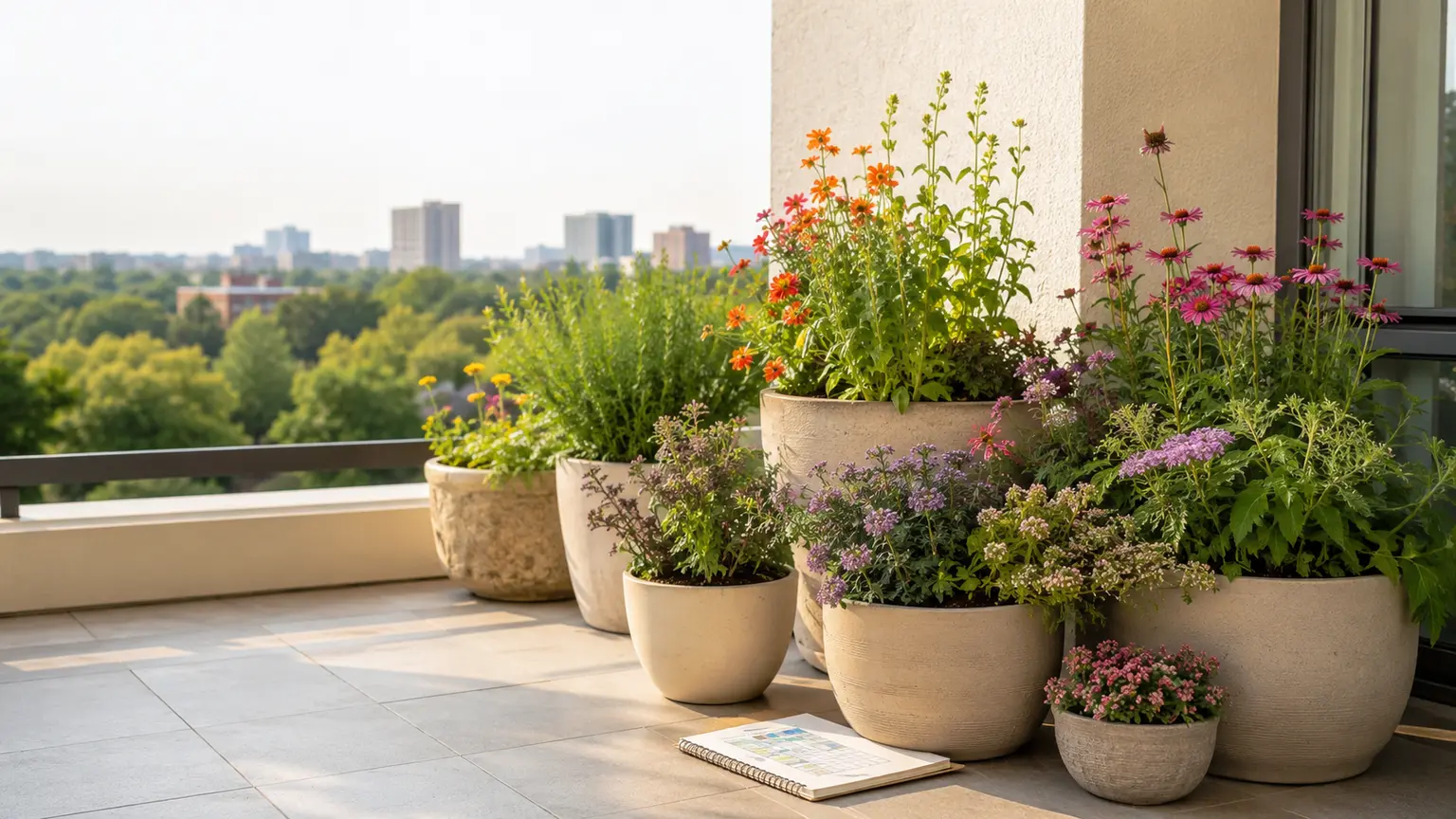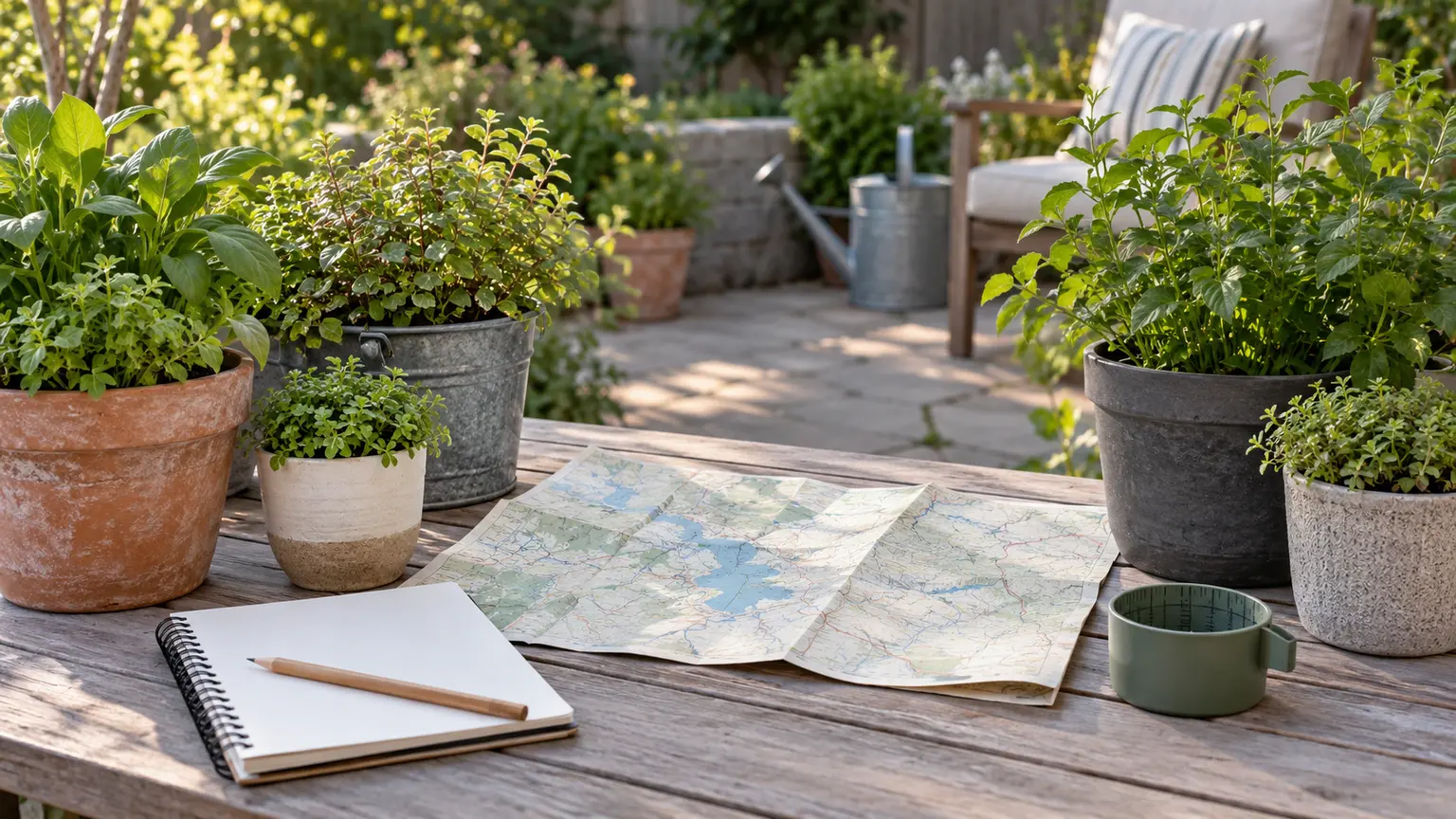
A plant can be native somewhere in the United States and still be a poor choice for your patio, balcony, or small yard. A container creates a limited root zone, faster moisture changes, and more exposure to wind, pavement, walls, and reflected heat. The plant also has to fit the available height, width, depth, and maintenance routine.
That is why a single national list of “best native plants for containers” can mislead. Instead, build a short local candidate list and filter it several times. Native range comes first, but container fit determines which plants remain.
Why a national container-native list fails readers
Native status is geographic. A species native to one region may not be native to your county, ecoregion, or local habitat. Even when a plant is locally native, its natural growing conditions may differ sharply from a sunny, elevated balcony or a dark corner beside a building.
Containers also change the growing conditions. Small pots can dry and heat up quickly, while larger containers provide more rooting space and generally need less frequent irrigation. A plant that needs steady moisture in the ground may require close attention in a container, particularly during hot, dry, or windy weather. Native does not mean maintenance-free once a plant is removed from its natural soil volume.
For a broader local-search process, see “How to Find Native Plants That Can Grow Well in Containers in Your Region” (/guides/find-native-plants-for-containers-in-your-region).
Step 1: Build a local candidate pool before shopping
Begin with location, not a nursery shelf. Record your state, county, ZIP code, or ecoregion and the type of space where the container will sit. Use a locally scoped native-plant resource, such as the National Wildlife Federation Native Plant Finder, to create an initial pool. Then check each plant’s scientific name in the USDA NRCS PLANTS database for distribution and native-status information.
- Write down the scientific name, not only the common name. Common names can refer to multiple plants.
- Note whether the plant is shown for your local area, rather than merely somewhere in the United States.
- Keep several candidates instead of searching for one perfect species.
- Ask a state Extension service, native-plant society, or botanical garden to confirm questionable records or marginal fits.
- Treat database and ZIP-based results as screening tools, not proof that a plant occurs naturally in every neighborhood or microclimate within that area.
At this stage, do not worry about flower color or what is currently in stock. The goal is a geographically credible list that can be tested against the container and site.
Step 2: Measure the pot’s real growing conditions
Hardiness zone alone is not enough. Before comparing plants, observe the actual container site. Sun exposure can vary between a rooftop, balcony railing, shaded porch, and ground-level patio. Buildings and pavement may add heat, while an exposed balcony can add drying wind. Access to irrigation matters just as much as the plant label.
| Site or container detail | What to record | Why it affects the shortlist |
|---|---|---|
| Direct light | Approximate hours of sun and when it occurs | A plant adapted to afternoon shade may respond differently to intense reflected light or all-day exposure. |
| Heat and wind | Nearby walls, pavement, railing, roof exposure, and regular wind | These conditions can increase water loss and temperature stress. |
| Moisture | Whether the pot dries quickly, stays damp, or receives rain | Plants with different moisture requirements should not be grouped casually. |
| Water access | How often you can check and irrigate the container | Container care cannot be standardized nationally; weather, pot size, medium, and growth stage all matter. |
| Pot dimensions | Usable depth, width, volume, drainage, and clearance around the pot | The plant needs enough root room and anchorage without blocking a doorway or exceeding balcony space. |
| Mature dimensions | Expected height, spread, and growth habit | A small nursery plant may become too tall, wide, or top-heavy for the site. |
Measure the container’s usable space rather than relying only on its outside dimensions. A tall plant needs a sufficiently deep and wide pot for anchorage, and larger plants generally need more root room. Avoid applying one universal pot-size rule to every native perennial, grass, shrub, or small tree; confirm species-specific requirements through a regional profile or experienced nursery.
For an exposed site, the guide “How to Map Sun, Heat, and Wind on a Small Patio Before Choosing Plants” (/guides/map-sun-heat-wind-small-patio-before-choosing-plants) can help organize these observations.
Step 3: Eliminate poor container matches
Now compare each candidate’s mature size, root habit, habitat preferences, and growth rate with your notes. This is the point where a long native-plant list becomes useful: you can remove plants that fail the physical or care requirements instead of trying to make every plant work.
- Remove plants whose mature height or spread exceeds the available clearance.
- Question plants that need more root volume than the container can provide or that become unstable when tall.
- Check for vigorous spreading by rhizomes or stolons. Ordinary spreading behavior is a container-management concern, not automatically evidence that a plant is invasive.
- Remove plants that require a specialized moisture or soil regime you cannot consistently provide.
- For mixed containers, group plants only when their light, moisture, and soil requirements are compatible.
- Treat fast growth as a maintenance factor: a plant that quickly fills its pot may need earlier division, replacement, or a larger container.
Do not use “invasive” as a synonym for vigorous, spreading, or difficult to contain. Invasive status has a specific ecological and regulatory meaning and should be checked with the relevant state authority. For a container decision, it is enough to describe the practical issue accurately: the plant may outgrow the pot or require more frequent management.
Step 4: Test mixed containers carefully
A mixed container should be designed around shared conditions, not just color or wildlife appeal. Compare the light, moisture, and soil requirements for every plant before combining them. Plants from moist habitats may need steady, even moisture, while a plant adapted to drier conditions may perform poorly in the same consistently damp medium.
Container media, pot material, exposure, and plant size can change how quickly water is used, so habitat information is a starting point rather than a complete watering prescription. If the care requirements do not overlap, use separate containers. That gives each plant a more manageable root environment and makes it easier to identify what is causing stress.
Step 5: Source, test, and revise the shortlist
Make nursery availability the final filter, not the reason for choosing a plant. Regional directories, including the Xerces Society Native Plant Nursery and Seed Directory, can help locate potential suppliers. Contact each grower before traveling or ordering and ask for the exact scientific name, current inventory, mature dimensions, container suitability, and any relevant production details.
Start with a small number of plants rather than filling every pot at once. Observe how quickly the container dries, whether the plant remains stable in wind, whether roots or crowns become crowded, and whether its mature form fits the space. Keep notes through the season and revise the shortlist based on what the actual site can support.
A simple decision rule
Keep a candidate only when it passes all six screens: local range, site conditions, mature size, root and spread behavior, compatible container care, and realistic nursery availability. If it fails one screen, do not force the choice because it is fashionable, attractive, or labeled native.
The result may be a short list of plants rather than a national top-ten ranking. That is the point. A locally native plant that fits the pot, exposure, root zone, and watering routine is a more useful recommendation than a species that is native somewhere else but mismatched to your space.
Sources and further reading
- plants.sc.egov.usda.gov — plants.sc.egov.usda.gov
- content.ces.ncsu.edu — content.ces.ncsu.edu
- nativeplantfinder.nwf.org — nativeplantfinder.nwf.org
- extension.illinois.edu — extension.illinois.edu
- extension.illinois.edu — extension.illinois.edu
- extension.arizona.edu — extension.arizona.edu
- ask.ifas.ufl.edu — ask.ifas.ufl.edu
- content.ces.ncsu.edu — content.ces.ncsu.edu
- xerces.org — xerces.org