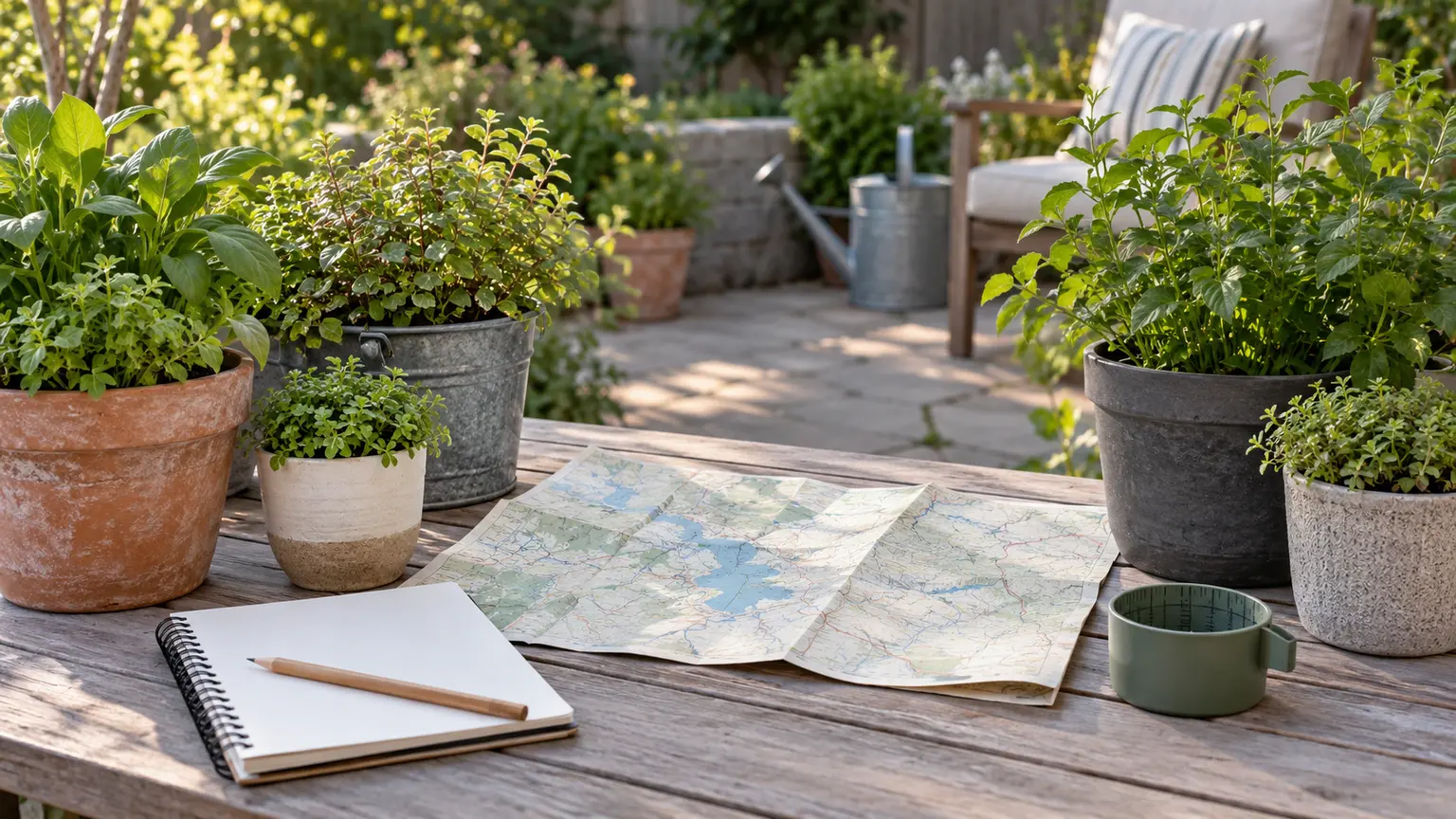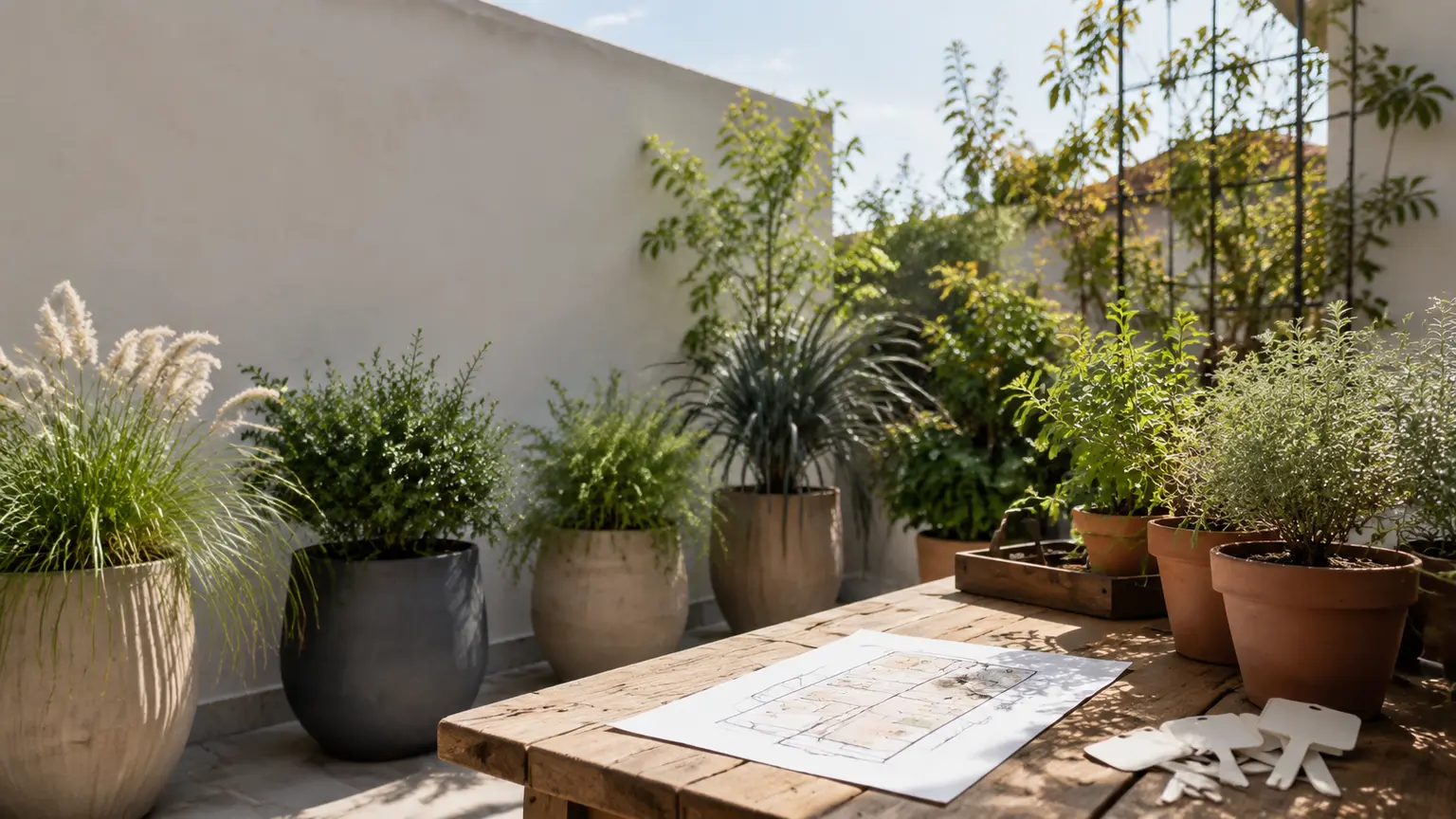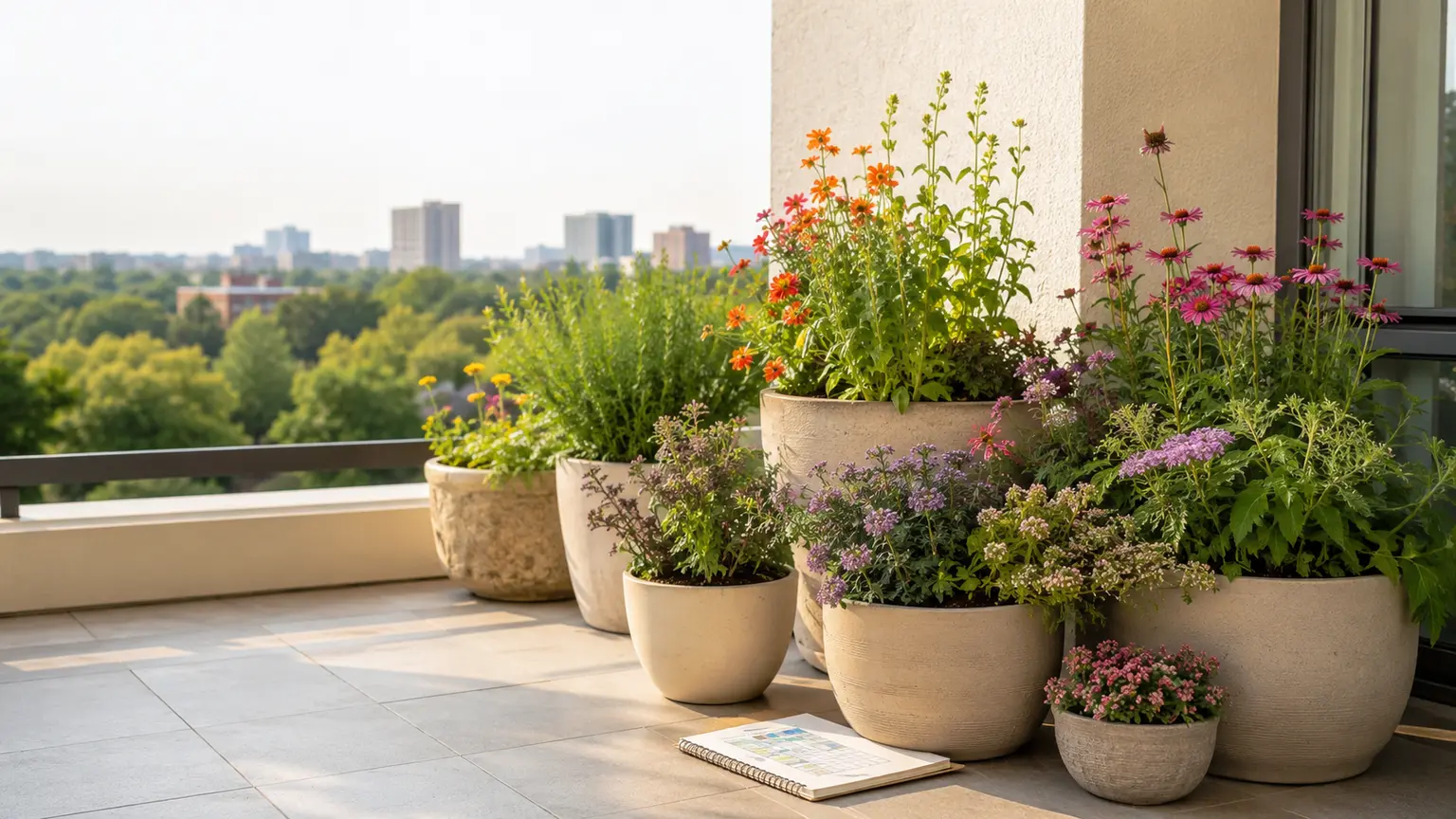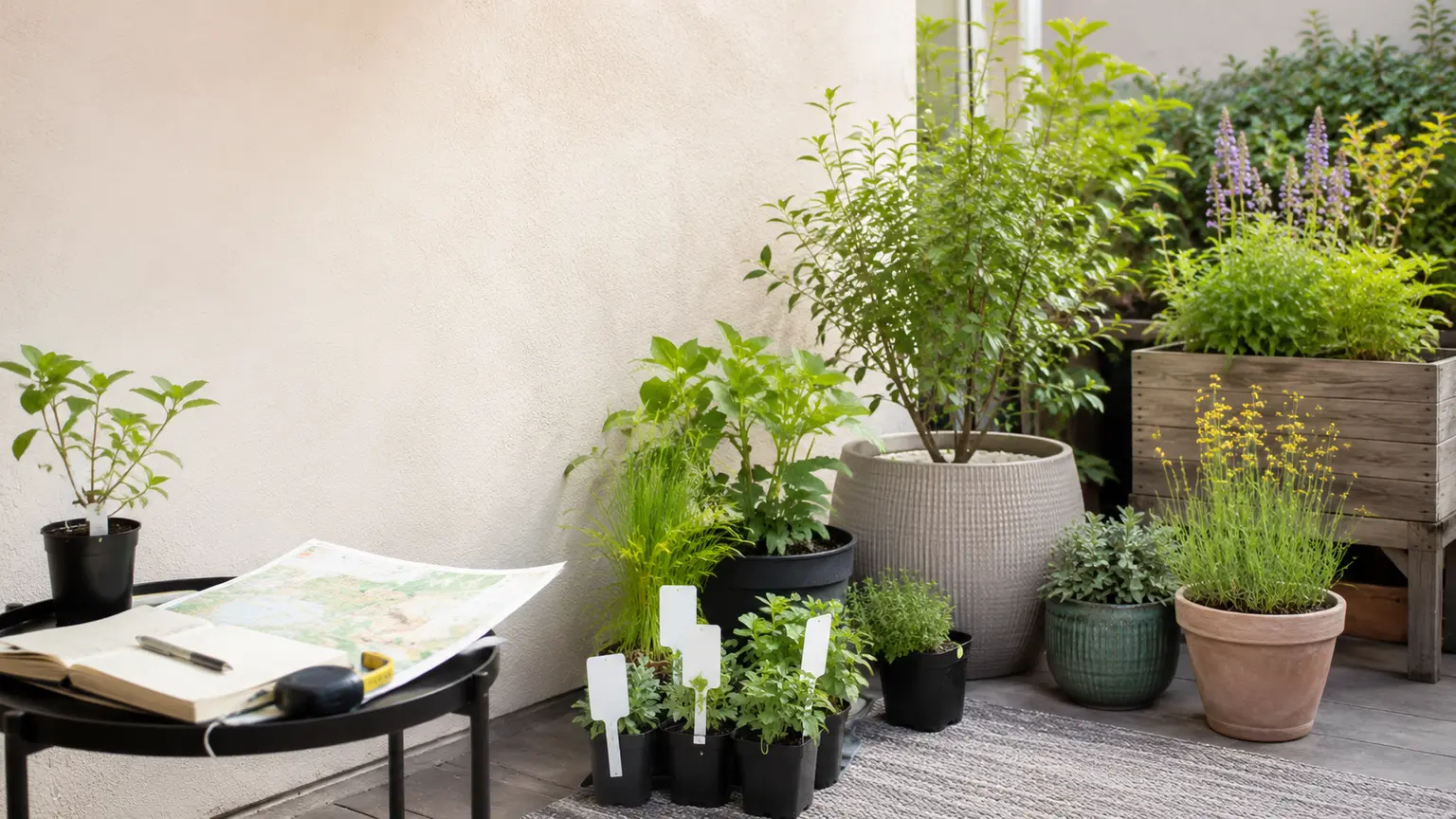
A plant can be native to your state and still be a poor choice for a balcony, patio, or small yard container. Its mature size, root habit, moisture needs, winter exposure, and availability all matter. Instead of starting with a national list of “best native plants for pots,” build a short list for your location and growing conditions.
Start with place, not a plant list
Begin with your ZIP code. The National Wildlife Federation’s Native Plant Finder uses USDA county-level historic-range data to generate a starting pool of native plants. That makes it useful for discovery, but not a final planting prescription. The tool notes that it may omit plants native to nearby counties and that its results are still being refined. A plant associated with your county is not automatically suited to your container, exposure, watering routine, or local nursery stock.
- Enter your ZIP code into the Native Plant Finder and save the botanical names of promising candidates.
- Check each name in the USDA PLANTS database for distribution information and the accepted botanical name.
- Use the EPA ecoregions map as a second geographic check. Ecoregions provide broad ecological context, while state and county lines do not always reflect differences in climate, soils, or plant communities.
- Find your state’s Cooperative Extension system through the Extension Foundation directory. Ask for container guidance, regional plant lists, or a nearby plant clinic if those resources are available.
- Look for a state or regional native plant society and its nursery or supplier directory. These organizations can help identify plants that are actually grown and sold in your area.
Describe the container site before screening plants
Spend a few days observing the space before choosing a species. Note the approximate hours of direct sun, whether nearby walls or pavement add heat, how exposed the container is to wind, and whether you can water consistently. On a balcony, also consider whether the container will remain outdoors during freezing weather and whether its weight is appropriate for the space.
Containers dry and warm differently from garden soil. Larger containers generally dry more slowly, while roots in pots experience greater temperature changes than roots in the ground. Even a plant described as drought-tolerant may need regular monitoring in a container, especially during hot, windy weather or while it is establishing.
Turn regional candidates into a container-fit scorecard
For every candidate, create a row in a worksheet. Use Extension plant profiles and regional references to fill gaps rather than guessing from a plant’s common name. Container size should account for both depth and volume, and restricted roots can reduce growth. Do not turn general pot-sizing advice into a universal gallon or depth rule: species, pot material, weather, and care all change the result.
| Filter | What to record | Why it matters |
|---|---|---|
| Botanical identity | Accepted botanical name; common name as a cross-check | Prevents confusion among plants with similar common names. |
| Mature size | Expected height and width, not just the nursery size | A small starter plant may become too large for a balcony or shallow pot. |
| Root habit | Root depth, spread, woody crown, rhizomes, or other relevant habit when documented | A pot must provide enough usable root space; some plants are more forgiving of restriction than others. |
| Container fit | Practical pot depth and volume suggested by regional or Extension guidance | Depth and volume affect root room, stability, moisture, and how quickly the medium dries. |
| Light | Full sun, part shade, shade, and the plant’s tolerance of reflected heat | The same exposure can be mild in one location and intense in another. |
| Moisture and drainage | Whether the plant prefers consistently moist, average, or sharply drained conditions | Match the plant to both the potting medium and your ability to monitor water. |
| Exposure | Wind, heat, salt, or other site stresses noted by local sources | Pots have less buffering than soil in the ground. |
| Winter plan | Outdoor cold exposure, protection options, or a place to overwinter | Roots in containers can be more exposed to freezing temperatures than roots in the ground. |
| Availability and provenance | Current stock; straight species, cultivar, seed-grown plant, or local ecotype | A biologically suitable plant is not useful if it cannot be sourced responsibly and reliably. |
Make the winter and water reality check
Ground hardiness does not translate perfectly to a pot. In regions with freezing winters, the National Wildlife Federation suggests considering plants able to tolerate conditions about two USDA hardiness zones colder when they will remain outdoors in containers. Treat that as a conservative planning heuristic, not a guarantee. Pot size and material, moisture, wind, snow cover, exposure, and the plant’s dormancy needs can all affect survival.
- Ask your Extension office how locally grown container plants are typically protected during winter.
- Decide whether the pot will stay outdoors, move to an unheated sheltered location, or be replanted before severe cold.
- Avoid choosing a plant solely because an in-ground profile calls it drought-tolerant. Set a check-in routine that reflects heat, wind, pot material, plant size, and season.
- Confirm that the container has adequate drainage while still allowing the moisture conditions the plant requires.
Source the final shortlist responsibly
Once two or three candidates pass the site and container filters, check whether you can obtain them from a reputable regional source. Maryland, Virginia, and North Carolina Extension resources illustrate how state-level directories can help locate native-plant sellers; equivalent resources may exist through your own Extension office or native plant society.
Call or email before traveling or ordering. Inventory changes, and a directory does not necessarily confirm current stock, shipping, propagation methods, or treatment practices. Ask for the full botanical name, current container size, and whether the plant is a straight species, cultivar, seed-grown selection, or vegetatively propagated clone.
Ask what “local” means
A plant sold nearby is not automatically a local ecotype. Ask where the seed or other propagation material was collected and whether the seller can describe its source region. Source origin can matter for plants with broad geographic ranges, long-lived woody plants, and projects where local adaptation is a specific goal.
A native cultivar, sometimes called a nativar, is not automatically interchangeable with a straight species or local ecotype. Cultivars may have altered traits or narrower genetic diversity, and wildlife value can differ by plant and by cultivar. That does not make every cultivar unsuitable. Compare the traits that led you to consider it—such as mature size or form—with the goals of your container planting, and ask local experts whether a straight species or source-identified plant is preferable.
Use a final yes-or-no check
- Is the plant documented as native to the relevant local area, rather than simply somewhere in North America?
- Does its mature size and root habit fit the container you can provide?
- Do its light, moisture, drainage, and exposure needs match the actual site?
- Do you have a realistic plan for watering and winter protection?
- Is it currently available from a source that can explain its botanical identity and propagation origin?
- Have you checked state or county invasive and noxious-weed resources before buying a plant outside its local historic range?
- Are you buying nursery-propagated material or responsibly sourced seed rather than collecting from wild populations?
The result should be a short, defensible list—not a universal ranking. If several plants meet the filters, choose the one that fits your space, routine, and sourcing goals most clearly. Recheck the shortlist with local Extension or native-plant experts when a species is unfamiliar, broadly distributed, difficult to overwinter, or available only as an uncertainly sourced cultivar.
Sources and further reading
- nativeplantfinder.nwf.org — nativeplantfinder.nwf.org
- www.nwf.org — www.nwf.org
- blogs.ifas.ufl.edu — blogs.ifas.ufl.edu
- ucanr.edu — ucanr.edu
- plants.sc.egov.usda.gov — plants.sc.egov.usda.gov
- ucanr.edu — ucanr.edu
- www.epa.gov — www.epa.gov
- content.ces.ncsu.edu — content.ces.ncsu.edu
- open.lib.umn.edu — open.lib.umn.edu
- ask.ifas.ufl.edu — ask.ifas.ufl.edu
- extension.illinois.edu — extension.illinois.edu
- www.extension.umd.edu — www.extension.umd.edu
- gardenecology.oregonstate.edu — gardenecology.oregonstate.edu
- extension.umd.edu — extension.umd.edu
- extension.org — extension.org
- www.pubs.ext.vt.edu — www.pubs.ext.vt.edu
- rrs.cnr.ncsu.edu — rrs.cnr.ncsu.edu