A hot, windy patio is not simply a sunny garden in miniature. Containers have limited root space, exposed potting medium, and little margin for missed watering. Nearby paving, walls, and other hard surfaces can add reflected heat, while overhangs may keep rain from reaching the pots. Wind can increase drying and make tall or top-heavy plants harder to support.
The most reliable approach is to treat the patio as a constrained growing system. Assess the site first, build a candidate list from local resources, and then choose the plant and container together. This is more useful than relying on a universal “best plants” list or on hardiness zone alone. Hardiness zones describe winter minimum temperatures; they do not account for summer heat load, reflected heat, wind, pot volume, or available water.
1. Diagnose the patio before looking at plants
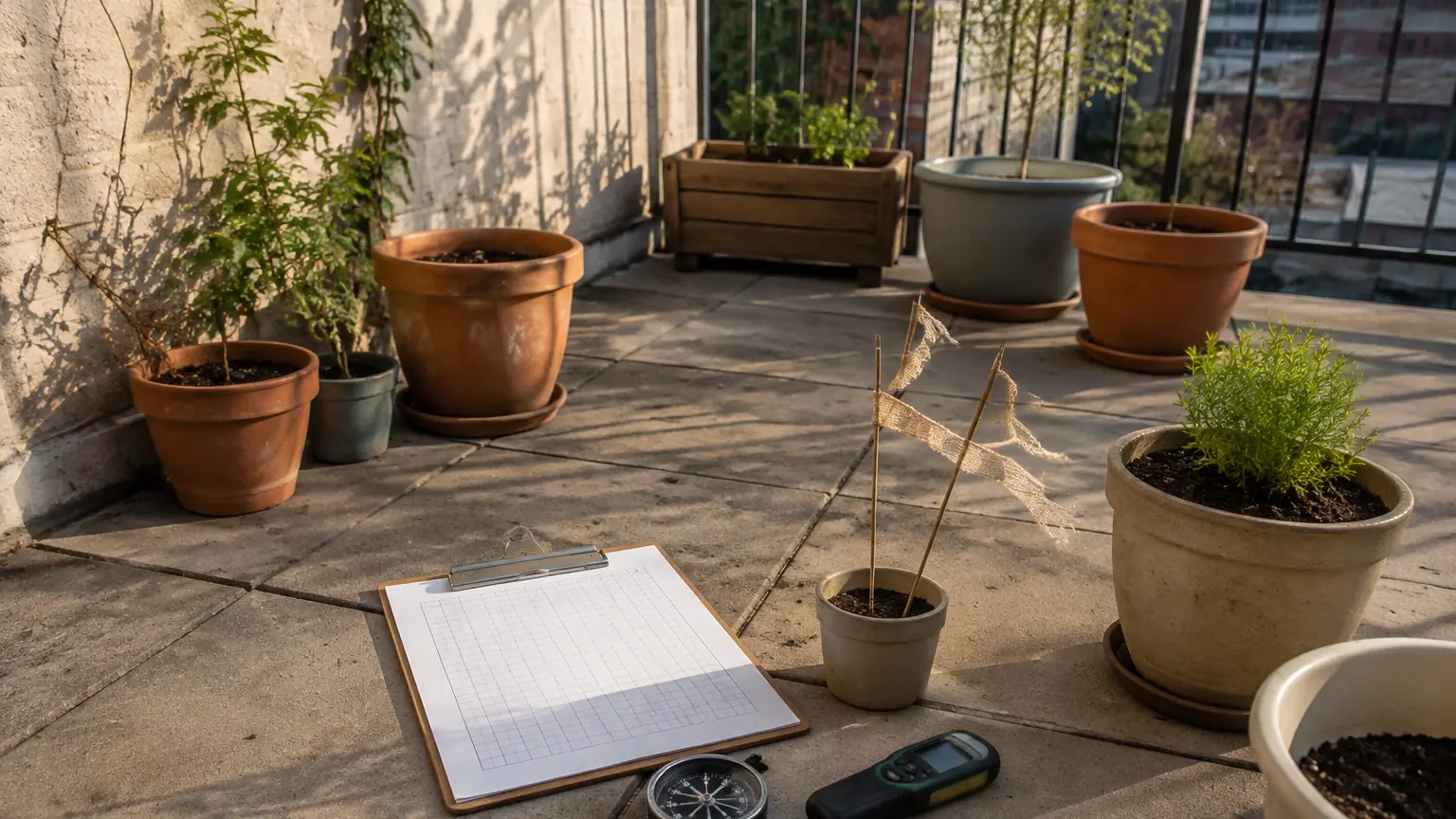
Spend several days observing the space during the growing season. Record conditions rather than guessing from the patio’s general direction or a plant label. University of Maryland Extension notes that full sun means at least six hours of direct, unobstructed sunlight during the growing season, but light reflected from hard surfaces can increase the effective intensity of a location.
- Count direct summer sun in the exact spot where each container will sit.
- Note walls, paving, concrete, metal, or glass that may reflect heat or light onto foliage and pots.
- Observe whether wind is steady, intermittent, funneled between buildings, or strongest at a particular time of day.
- Check whether the pots receive rain or sit beneath an overhang or balcony above.
- Measure the footprint and height available for containers, including places where a pot could become a trip or fall hazard.
- Decide how often you can inspect moisture during hot or windy weather, including weekends and travel periods.
Do not create a fixed watering schedule from this audit. Drying rates vary with plant size, potting medium, container material, weather, and exposure. Check the growing medium directly rather than waiting for wilt alone; wilt is not a dependable universal signal for every plant or situation.
2. Build a local candidate pool, then apply hard filters
Start with your state Cooperative Extension service, local native-plant resources, botanical gardens, and specialist nurseries. The EPA’s WaterSense plant-selection page links to state-by-state and nationwide resources that can help you identify regionally appropriate candidates. A local native status, however, does not by itself show that a plant will thrive in a hot, windy container.
Use those resources to generate possibilities, then screen each one against the actual patio. Maryland Extension recommends assessing site conditions and the space available at mature size rather than assuming pruning can keep a large-maturing plant small. Colorado State University Extension also emphasizes that a container should accommodate roots at full growth. Illinois Extension recommends choosing smaller species or cultivars for containers when possible.
- Mature height and width: Will the plant outgrow the available footprint, shade nearby containers, or become difficult to move?
- Root-room needs: Does the plant’s expected mature size fit the container’s usable volume and depth?
- Light requirement: Does the candidate’s stated light preference match the measured exposure, including reflected heat?
- Moisture preference: Can its water needs fit the site and your routine, rather than an idealized care schedule?
- Growth habit: Could a tall, narrow, or leafy plant become unstable in wind?
- Container performance: Is there local guidance or credible nursery information indicating that the plant can adapt to container culture?
- Regional fit: Can the plant’s identity, mature dimensions, and preferences be verified through a local source?
3. Match plant ambition to container engineering
The container is part of the plant decision. Small pots hold less moisture and may require more frequent summer maintenance. Taller or larger plants generally need enough root room and a heavier, more stable vessel to resist wind. A plant that looks appropriately sized at purchase can still become a poor match as it reaches mature dimensions.
Prioritize functional drainage. Illinois Extension cautions that garden soil often does not drain adequately in containers, while Arizona Cooperative Extension explains that roots need oxygen and can fail when excess water cannot drain away. Use a well-aerated container medium suited to the plant group and irrigation setup rather than treating native garden soil as the default.
- Choose a container with usable volume and depth appropriate for the plant at full growth, not only its nursery size.
- Confirm that drainage holes are present and open. Drainage is especially important in nonporous containers.
- Consider material and color as part of the patio’s heat and drying conditions; avoid assuming one material works equally well everywhere.
- Use a wider or otherwise stable form when wind makes tapered containers easy to tip. Illinois Extension notes that square pots can be more stable than tapered forms.
- Pair tall plants with heavier containers or another stability strategy that does not create a fall hazard.
- Place saucers where they will not leave standing water around the container; Illinois Extension recommends emptying collected water after thorough watering.
For balconies, rooftops, and elevated decks, water-filled containers can be heavy. Check property rules and any applicable load limits before adding large pots. Wind protection, anchoring, or placement should not create new fall, structural-load, or access problems.
4. Let water access decide the tiebreaker
Exposed containers can dry faster than in-ground soil, and warm, dry, or windy conditions may require daily or more frequent checking. Before buying, match the plant grouping to the care you can consistently provide. The right plant is not the one with the most impressive label; it is the one whose water demand fits your access and attention.
- If you hand-water, can you reach every pot easily and check the medium during hot or windy spells?
- If you use drip irrigation or a reservoir system, is it appropriate for the chosen plants and set up to deliver reliable coverage?
- Will someone be able to inspect the containers during travel or an extended heat event?
- Would fewer plants in larger, better-matched containers be more manageable than many small pots?
- Can you water thoroughly until water exits the drainage holes, while avoiding permanently wet conditions?
The answer may change the design more than the plant list. A gardener with limited watering access might select fewer containers with greater usable volume, while someone able to check pots frequently may have more flexibility. Neither approach is automatically better; the constraint is the routine that can actually be sustained.
5. Use a final checkout at the nursery or plant sale
Take the patio audit with you. Compare the label and seller information with your notes, then verify uncertain choices through a local Extension service, native-plant society, botanic garden, or specialist nursery. Ask for the plant’s mature dimensions and container suitability rather than accepting a broad label such as “full sun” as a complete site recommendation.
- Record the botanical name so you can verify the exact plant, cultivar, or selection.
- Check mature height, width, and growth habit against the available root room and footprint.
- Compare stated light and moisture preferences with the patio’s direct sun, reflected heat, wind, and rain reach.
- Inspect the plant’s current container size and root condition; a crowded purchase pot is not evidence that a smaller final container will work.
- Confirm that the candidate is locally appropriate and review state invasive-plant information before buying a nonnative ornamental.
- Consider whether the finished container will be stable and safe where it will sit.
- Choose only a care routine you can maintain during the hottest and windiest part of summer.
A trial season is useful information
Even a careful selection process cannot predict every patio microclimate. Keep notes on how quickly each container dries, whether wind damages or destabilizes growth, and how the plant responds to the reflected heat of the site. If a candidate struggles, treat the result as information about the plant-container-location combination rather than as a gardening failure.
The repeatable method is simple: audit the exposure, start with local resources, filter by mature size and root room, engineer for drainage and stability, and choose according to realistic water access. That process narrows the field without promising a universal winner—and gives you better evidence for the next season.
Sources and further reading
- extension.illinois.edu — extension.illinois.edu
- www.epa.gov — www.epa.gov
- extension.colostate.edu — extension.colostate.edu
- extension.illinois.edu — extension.illinois.edu
- www.extension.umd.edu — www.extension.umd.edu
- extension.umd.edu — extension.umd.edu
- extension.umd.edu — extension.umd.edu
- extension.arizona.edu — extension.arizona.edu