A patio rarely has one uniform growing condition. One corner may receive several hours of direct sun, while the space beside a wall stays bright and hot from reflected light. A spot under an overhang may miss rain, and a balcony edge may dry quickly in moving air. Even two pots sitting a few feet apart can need different care.
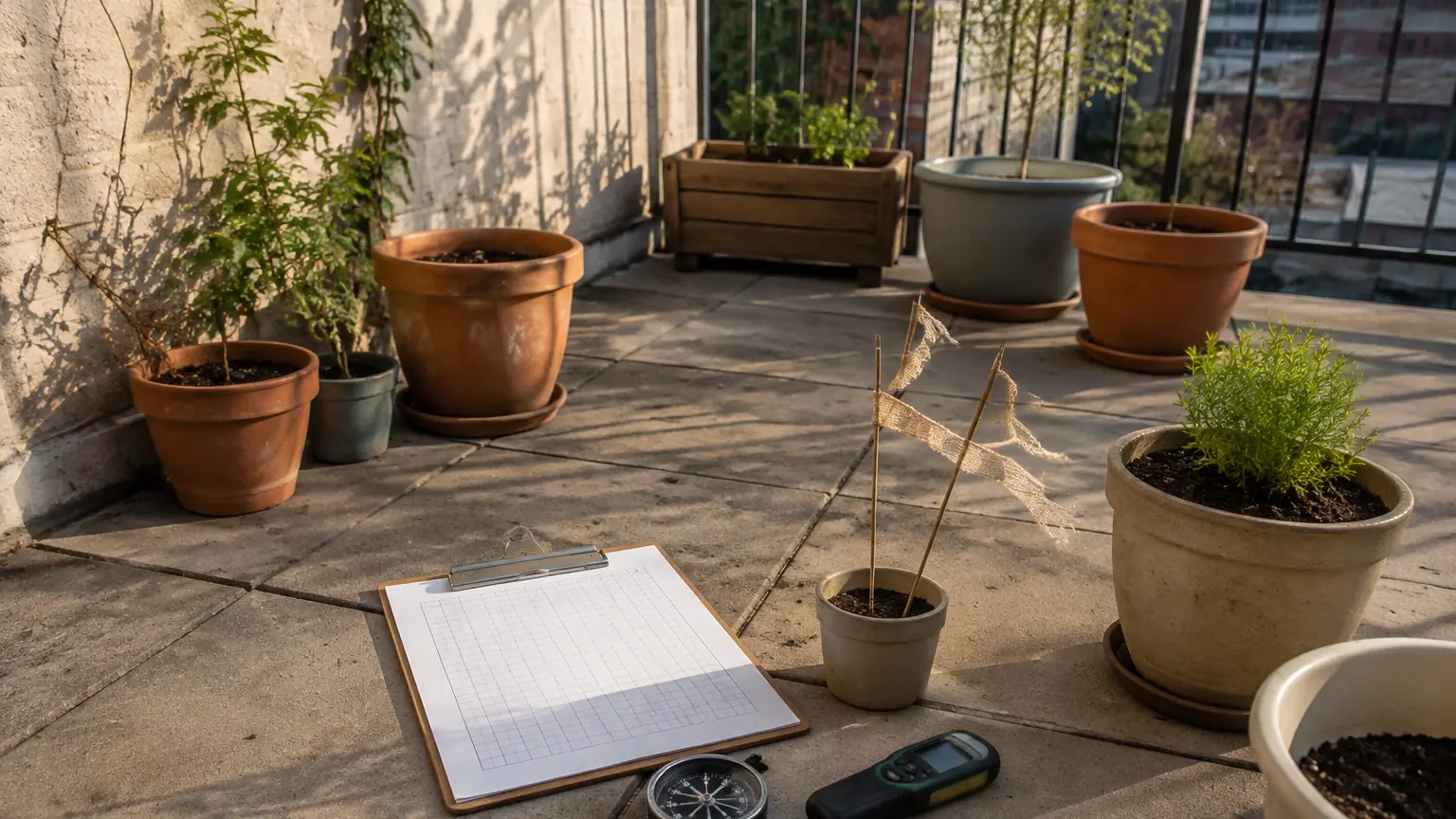
Before buying plants, make a simple patio microclimate log. You do not need specialized equipment. A pencil, paper, phone, clock, and a way to check potting mix are enough to create a useful map of your space.
Start with a blank patio map, not a plant shopping list
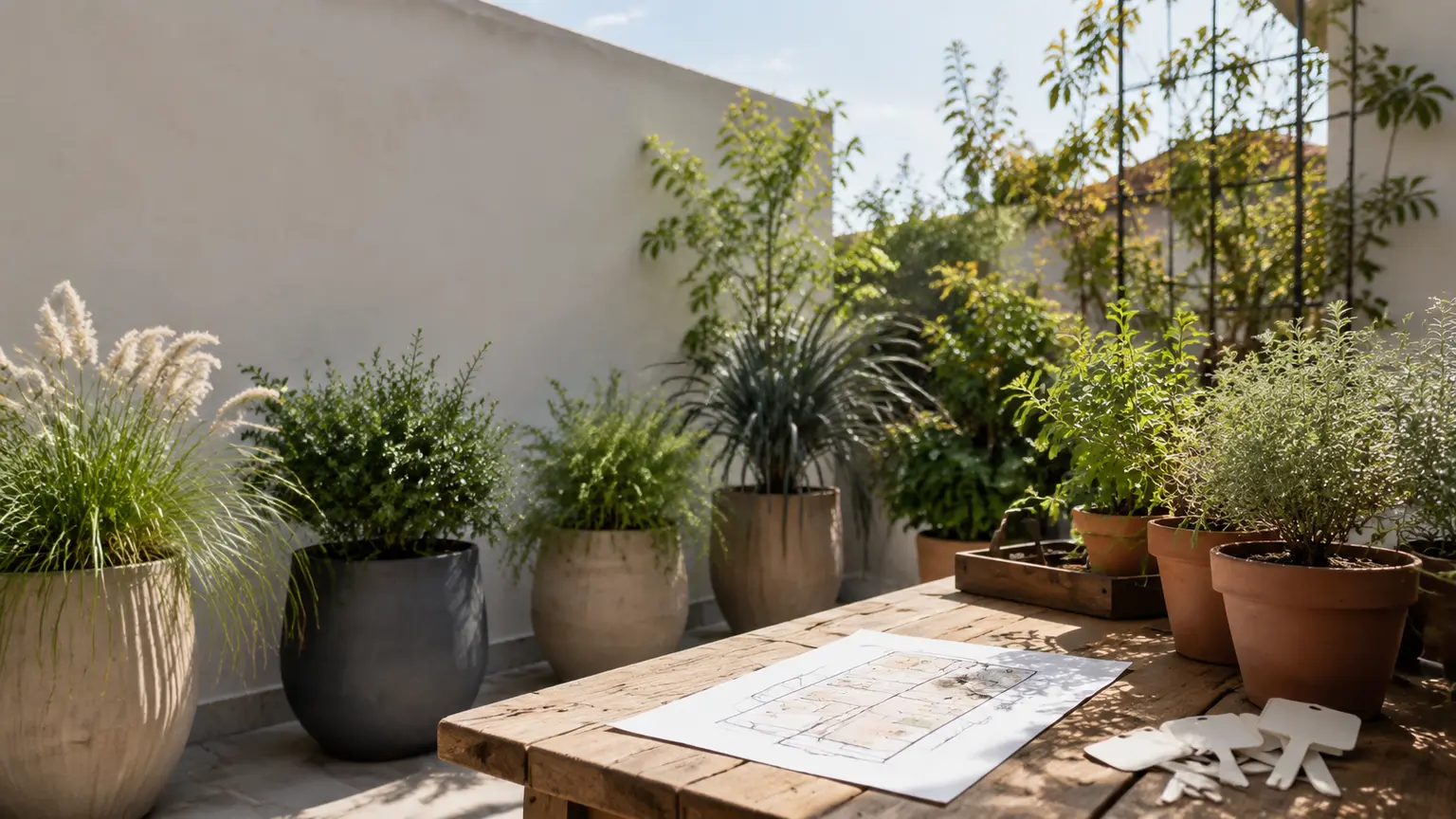
Begin with a quick sketch of the patio, balcony, or overlooked outdoor area. Mark fixed features that could change conditions from one zone to another.
- Walls, fences, railings, roofs, awnings, and overhangs
- Nearby buildings, trees, and other structures that cast shadows
- Paving, brick, concrete, pale walls, or other surfaces that may reflect light or store heat
- Doors, vents, and regularly used pathways
- Places where pots can safely stand without blocking access
If you know the compass direction, add it to the sketch. South- and west-facing exposures generally tend to be warmer and sunnier than north- and east-facing exposures in the Northern Hemisphere. However, direction is only a starting point. A neighboring building, tree, or overhang can substantially change the actual light reaching a pot, and the sun’s seasonal angle changes the pattern over time.
Divide the drawing into small, pot-sized zones rather than labeling the entire patio “sun” or “shade.” A practical map might include a wall zone, an open zone, a corner, and the area nearest the railing. These zones do not need to be equal in size; they only need to represent places where a container could realistically sit.
Do a three-condition observation sweep
Use several observation periods when possible: a clear day for direct-sun timing, a hot afternoon for reflected heat and drying, and a breezy day for wind exposure. A single week is still only a snapshot, so repeat the check after major seasonal changes such as leaf-out or a noticeable shift in the sun’s path.
On the clear day, visit the patio at regular intervals. For each zone, record when direct sunlight begins and ends. Look for actual sun falling on the place where a pot would sit; bright ambient light does not count as direct sun. Note interruptions, such as a building shadow that crosses the space in midafternoon.
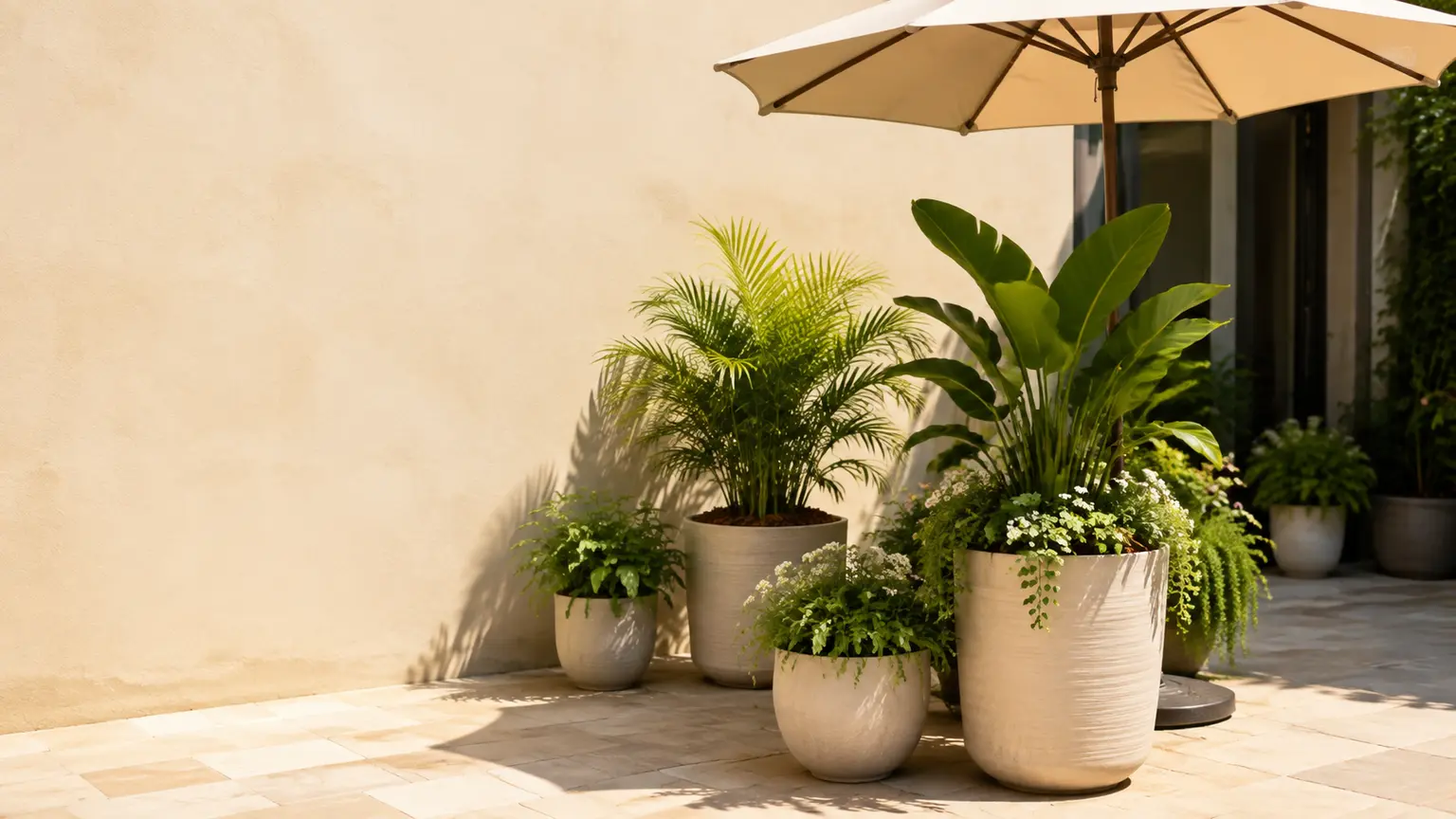
On a hot afternoon, look separately for heat that may come from nearby surfaces. A pale wall, concrete slab, brick, or other paving can reflect light and contribute stored heat, particularly on west-facing patios. Mark these as “hot-reflection” zones rather than treating them as ordinary full-sun locations. Reflected light and heat can contribute to plant stress, including sunscald in some plants, so use the plant label and your observations rather than assuming every plant will respond the same way.
On a breezy day, observe whether foliage would move persistently in each zone. You can also place an empty, lightweight pot on a stable surface as a simple visual check for movement, but do not use this method during hazardous gusts or near a balcony edge. An empty pot is much lighter than one filled with wet mix and a plant. Wind can dry containers faster, damage large leaves or flowers, and contribute to tipping.
| Time or condition | Direct sun | Reflected heat | Wind | Rain reach | Potting-mix feel |
|---|---|---|---|---|---|
| Morning | Start time or shade | Cool, warm, or hot surface nearby | Still or moving foliage | Receives rain or sheltered | Below-surface check |
| Midday | Start time or shade | Wall or paving noticeably warm? | Still or exposed | Receives rain or sheltered | Below-surface check |
| Late afternoon | End time or shade | West-facing heat or glare? | Still or exposed | Receives rain or sheltered | Below-surface check |
| Hot or breezy day | Not applicable | Mark strongest areas | Mark persistent movement | Note overhangs | Compare zones |
Map the dry spots before they become plant problems
Moisture is another layer of the map. At the same time each day during your observation period, check the potting mix below the surface in containers placed in different zones. A surface can look dry while the mix beneath it is still moist, or look acceptable while the root-zone mix has dried. The purpose is comparison, not assigning a watering schedule by calendar.
Record which containers dry fastest and look for patterns. Full sun, hot weather, breezes, small pots, and porous container materials can increase drying. A sheltered spot can also dry quickly if it sits beneath an overhang and receives little or no rainfall. Containers in similar light may therefore have different moisture patterns.
Check moisture before watering rather than giving every pot the same amount on the same day. Plant needs and drying rates vary. Grouping containers with similar moisture requirements can make that checking routine easier, but it does not replace checking the mix.
Include the container itself in your notes. A dark pot in full summer sun can develop a hotter root-zone environment and dry rapidly, while a light-colored or shaded container may behave differently even if the plant tops receive similar sunlight. This is a heat-and-moisture consideration, not a rule that dark pots are always unsuitable. Pot size, material, plant tolerance, irrigation access, and local climate still matter.
Translate the map into placement decisions
Once you have several observations, give each zone a short description such as “long sun, low wind,” “afternoon reflection, fast drying,” or “morning light, rain shadow.” Then compare those descriptions with the requirements on individual plant labels or crop-specific guidance.
- Reserve the longest, clearest direct-sun areas for plants labeled for full sun or for crops whose guidance calls for that exposure.
- Use lower-light zones for plants suited to less direct sun, including appropriate leafy crops, herbs, or ornamentals. Confirm the specific plant’s requirements rather than relying on a broad category.
- Treat a hot-reflection zone as its own condition. A plant may receive enough light there but experience more heat or drying than it would in an open, non-reflective location.
- Keep moisture-demanding plants out of the hottest, windiest, fastest-drying positions unless you can monitor them closely and the plant guidance supports that placement.
- Place plants with similar watering needs together, while keeping enough room to inspect each container and move it if conditions change.
As a planning framework, Colorado State University Extension uses roughly eight hours of full sun for flowering plants and fruiting vegetables, six hours for root vegetables, and four hours for leafy vegetables and many herbs. These thresholds are not universal for every cultivar or climate. In a hot summer, afternoon shade may make a location more suitable for some plants than the total number of sun hours suggests. Let the label and local growing guidance refine the decision.
Adjust the setup instead of forcing the wrong plant
A patio map is useful because it gives you more options than simply keeping or rejecting a plant. Start with reversible changes that suit a rental or small space.
- Move portable pots away from the strongest reflected heat or into a brighter, cooler zone when the observations show a mismatch.
- Choose a larger container or a lighter-colored container where root-zone heat and rapid drying are persistent concerns, while still matching the plant’s needs.
- Cluster containers with similar moisture requirements so checking them is more straightforward.
- Use a stable, appropriately sized container in wind-exposed areas. Account for the much greater weight of wet mix and a mature plant.
- Consider a freestanding screen only if it is allowed by the lease or building rules and can be installed safely without creating a tipping or load hazard.
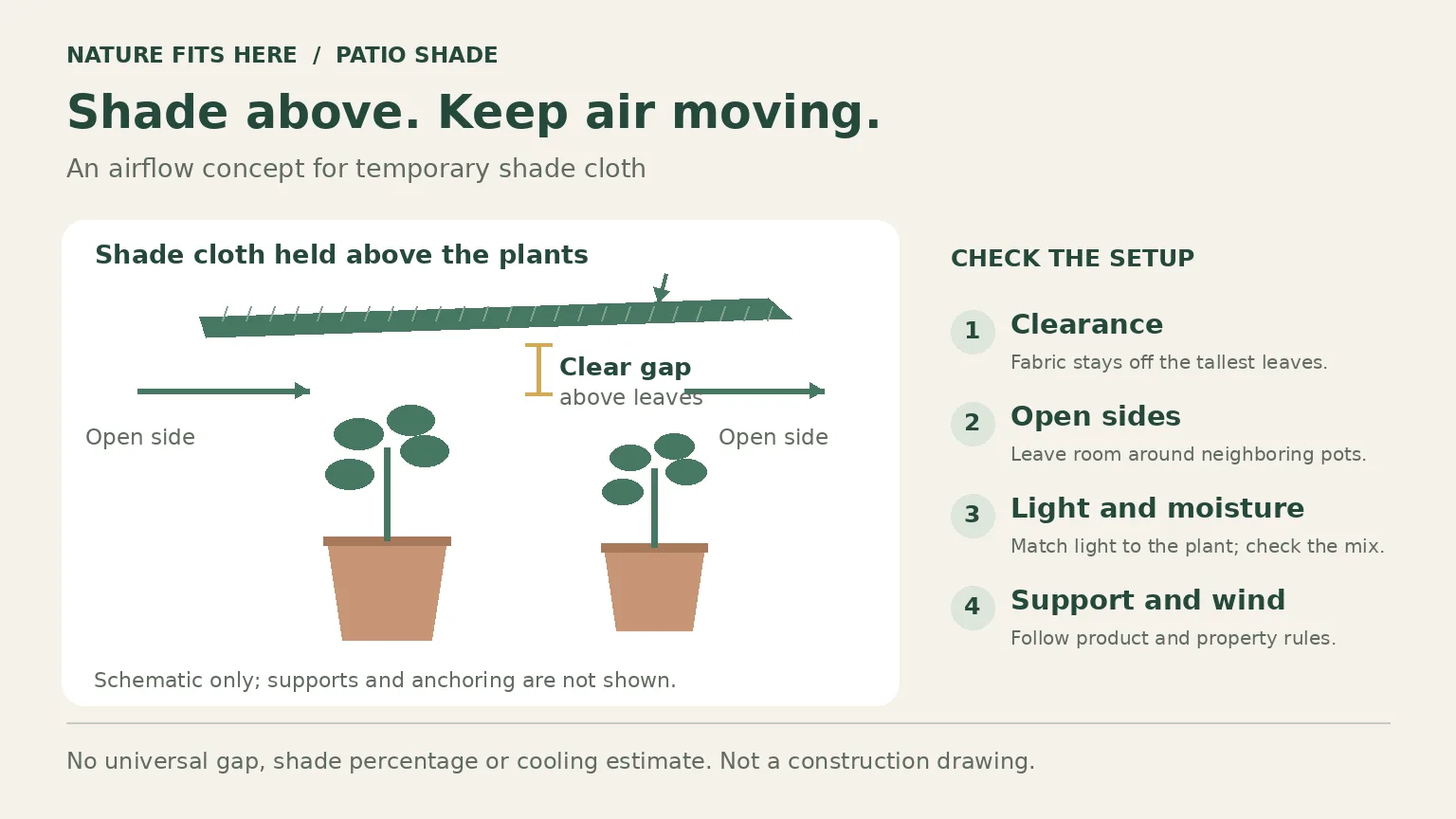
Do not attach screens, trellises, shade cloth, or planters to balcony railings without checking rental terms, building rules, and the product’s mounting and load guidance. Avoid placing heavy pots at balcony edges or improvising wind tests during gusty conditions.
Keep the map and update it
Save the sketch with the date and a few notes about weather. If a plant struggles, compare its placement with the map before buying a replacement. The problem may be less about the patio as a whole than about one combination of reflected heat, wind, container size, and missed rainfall.
A small patio does not need one perfect plant list. It needs a clear picture of its changing conditions. Mapping those conditions first helps you spend selectively, place containers with more intention, and adjust the setup when the space—not the plant label—is the part that needs changing.
Sources and further reading
- content.ces.ncsu.edu — content.ces.ncsu.edu
- extension.illinois.edu — extension.illinois.edu
- extension.umd.edu — extension.umd.edu
- extension.colostate.edu — extension.colostate.edu
- homegarden.cahnr.uconn.edu — homegarden.cahnr.uconn.edu