A hot, windy patio or balcony does not have one universally best container. The right choice depends on how quickly the potting mix dries, how much heat reaches the root zone, whether rain reaches the container, and how much weight and wind exposure the site can handle.
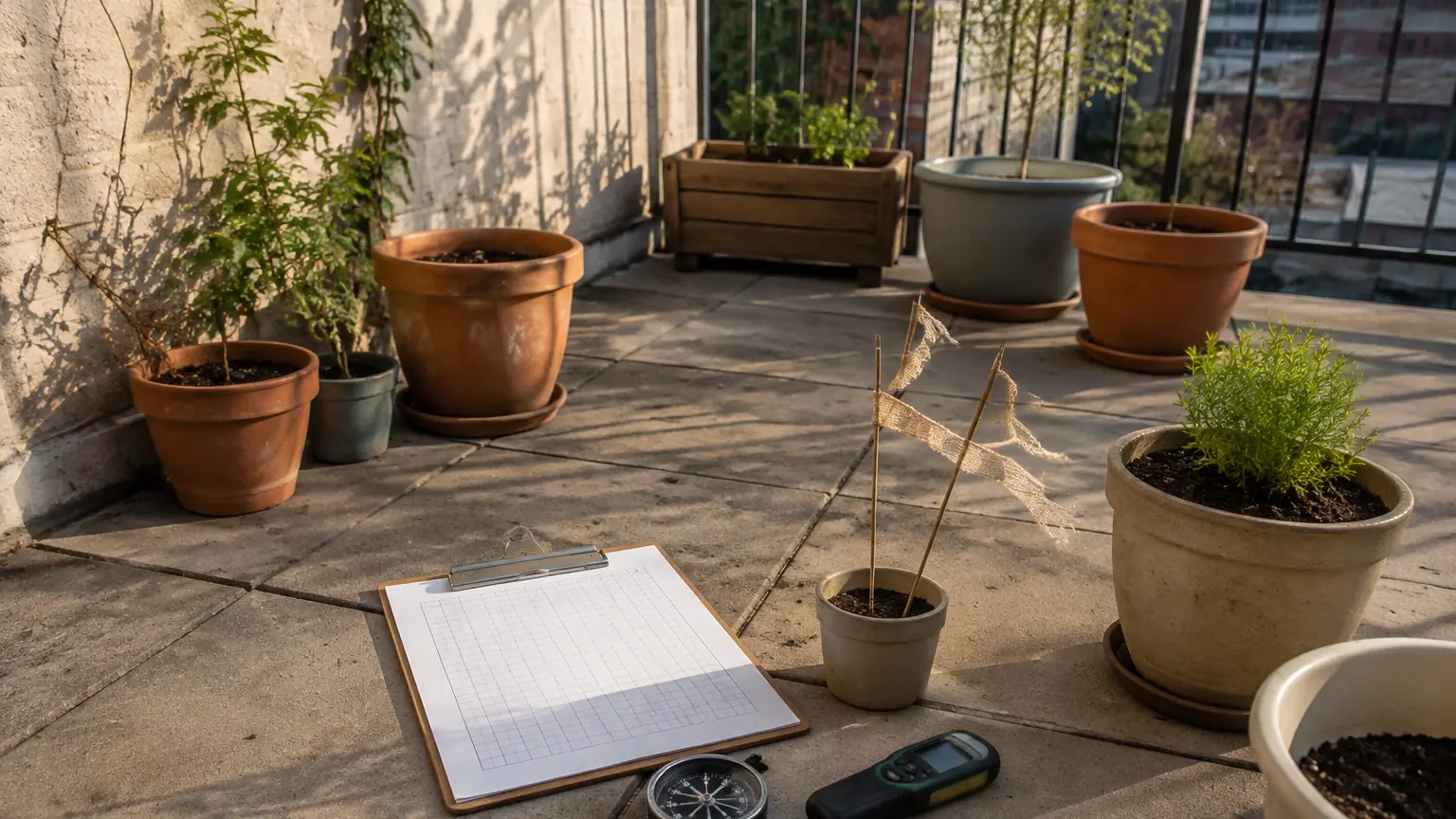
Start by using the site’s existing exposure map: wall zone, open zone, corner, and area nearest the railing. Then assess actual direct sun, a hot-reflection zone, persistent foliage movement from wind, rain reach or rain shadow, and potting-mix drying. The working examples—“long sun, low wind,” “afternoon reflection, fast drying,” and “morning light, rain shadow”—describe possible conditions, not universal classifications. For a fuller site assessment, use the patio sun, heat, and wind mapping guide.
Start with exposure, not a winner
Wind increases the maintenance penalty of a fast-drying container, while direct or reflected sun can raise root-zone temperatures. A container’s material matters, but so do its volume, color, potting mix, plant size, season, and irrigation setup. A large, light-colored container in a sheltered corner may behave very differently from a small, dark container beside a hot wall.
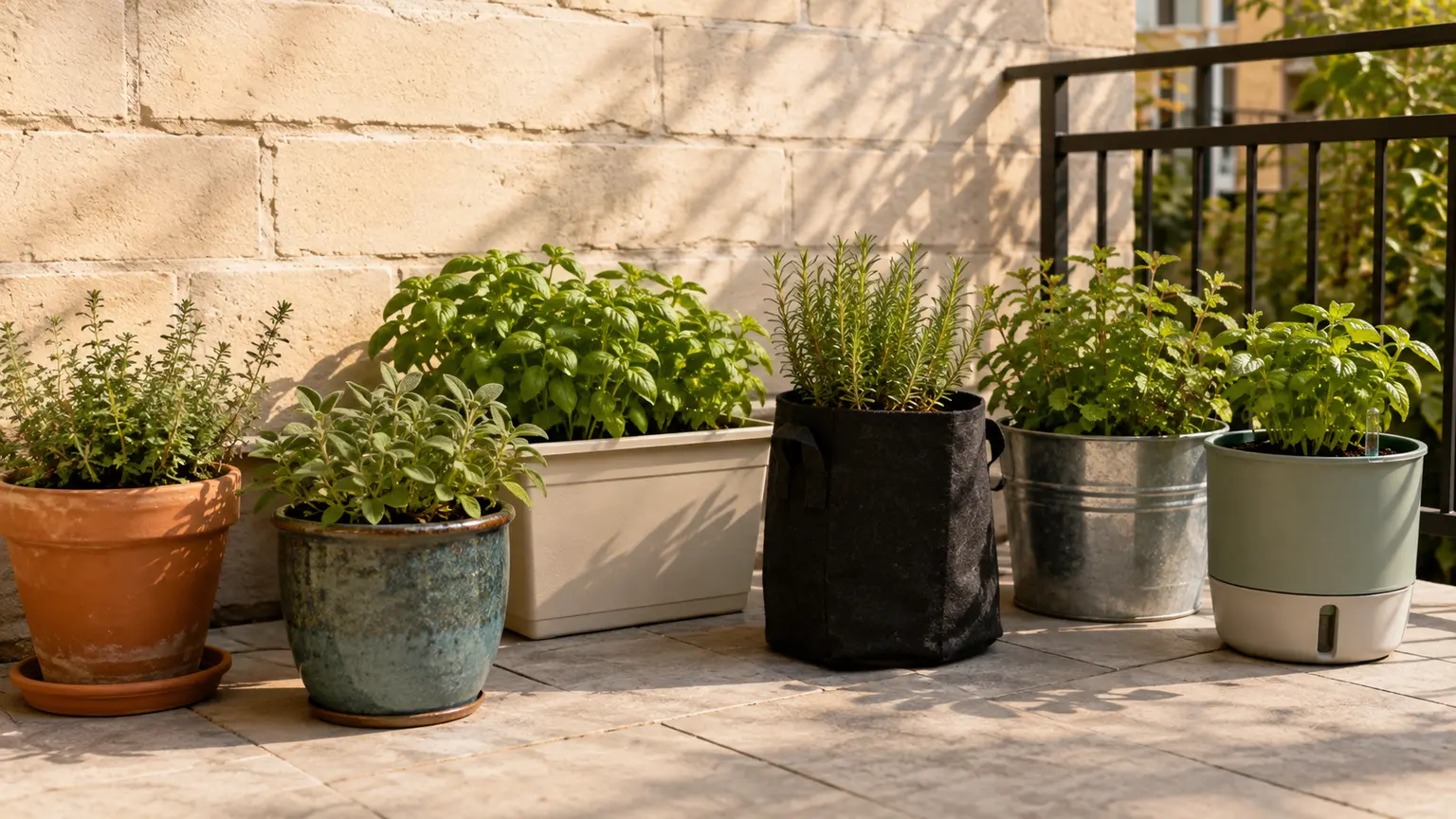
Porous materials such as unglazed terracotta and fabric generally lose moisture faster than nonporous plastic or glazed ceramic. That can suit plants that tolerate a drier root zone, or gardeners who can check moisture often. It is not automatically a low-maintenance choice for an exposed balcony.
The container-material comparison
| Material or design | Moisture loss and root-zone heat | Drainage and durability | Weight and tipping considerations |
|---|---|---|---|
| Unglazed terracotta | Porous walls allow evaporation, so the mix usually dries faster. In hot weather, evaporation may help keep roots relatively cool, but it requires closer watering. | Needs a drainage hole. Can crack with freeze-thaw exposure; winter durability varies by product and climate. | Heavier than plastic when empty and heavier still when planted. A broad, stable shape can reduce tipping risk. |
| Glazed ceramic | Nonporous surfaces retain moisture longer than terracotta. Heat depends on color, wall construction, sun, and placement. | Decorative pots may lack drainage holes. Use an appropriate drainage hole or a draining inner nursery pot; do not leave the inner pot standing in collected water. Frost resistance varies. | Often heavy, especially when planted. Weight can improve stability but may matter on balconies. |
| Plastic or resin | Nonporous and generally moisture-retentive. Dark colors can heat the root zone in full sun. | Usually durable, but outdoor resin products differ. Verify UV rating, drainage-hole design, dimensions, and rated use. | Low empty-pot weight can help where load is a concern. Lightweight designs may need a broad base or a sheltered location to reduce tipping. |
| Fabric grow bag | At the fast-drying end of the comparison, especially in hot, windy locations. Frequent watering or irrigation may be needed. | Drainage is inherent to the fabric form, but product durability varies; the consulted sources do not support a universal lifespan. | Lightweight when empty. Judge the planted combination by base width, total volume, plant height, canopy size, and wind exposure. |
| Metal | Metal temperatures can fluctuate more than those of nonmetal containers. Dark metal in full sun or reflected heat can damage roots and speed drying. | Check construction, drainage, and outdoor suitability. Insulated or double-potted designs behave differently from thin, exposed walls. | May be light or heavy depending on construction. Evaluate the entire planted combination, not the empty pot alone. |
| Self-watering container | A reservoir and wicking system can reduce watering frequency and maintain more consistent moisture. It does not eliminate watering in high heat. | Uses a separated reservoir and overflow opening rather than simply sealing a conventional pot. Not ideal for every plant, particularly plants that need to dry between waterings. | Reservoir water adds substantial final weight. Check the design, overflow, and access for refilling before placing it on a balcony. |
Match the container to the exposure map
For “long sun, low wind,” several materials may work. Glazed ceramic or plastic/resin can reduce moisture loss, while terracotta can suit a plant that prefers a drier mix if regular moisture checks are practical. A light-colored, UV-rated plastic or resin container can be useful when empty-pot weight matters, but confirm that its drainage design is adequate.
For “afternoon reflection, fast drying,” first reduce the exposure penalty where possible. A larger container volume, light-colored exterior, mulch on the potting mix, shade around the container sides, or irrigation can help moderate drying. Fabric and unglazed terracotta remain workable when frequent watering is available, but they are not the automatic low-maintenance options in this location. Metal deserves extra caution here because full sun and reflected heat can raise temperatures at the container wall.
For “morning light, rain shadow,” moisture retention may matter more than maximum heat protection. Plastic, resin, glazed ceramic, or a suitable self-watering design can reduce how often the mix needs attention. Still, check the moisture level rather than relying on the material label. A self-watering reservoir helps with watering frequency, but University of Maryland guidance notes that a full-sun bucket system may still need daily refilling in July and August.
Persistent foliage movement from wind is also a stability signal. Material weight alone does not determine tipping risk. Container shape, volume, plant height, and canopy size all matter. A broad base relative to height is generally a more stable starting geometry than a tall, narrow pot, and tall plants may need an appropriately approved anchoring approach. Any attachment must not compromise railings, waterproofing, egress, or building rules.
Drainage, durability, and stability checks
Every conventional container needs a way for excess water to leave the root zone. Drainage holes help maintain air availability around roots; a gravel layer inside the bottom of a pot is not a substitute for drainage holes. Self-watering containers are a designed exception to the conventional layout because they use a separated reservoir and overflow opening.
- Inspect the drainage holes or overflow opening before buying. Do not assume a decorative glazed pot can be drilled safely; follow the manufacturer’s instructions.
- If using a decorative outer pot with a nursery pot, make sure the inner pot drains and does not sit in collected water.
- Check product-specific UV, frost, and outdoor-use information. “Resin” describes multiple products and formulations, so compare the actual specifications.
- Consider the final planted weight, including wet potting mix, saucers, plant growth, accessories, and any self-watering reservoir.
- Choose a broad base when wind and plant height create a top-heavy combination. Place tall or flexible plants where the site and property rules permit a suitable stability solution.
- Avoid treating pot material as the sole determinant of watering. Check the mix and plant regularly, especially after a change in weather or exposure.
Balcony safety: verify the site before adding weight
The practical choice is therefore conditional: use porous terracotta or fabric when faster drying fits the plant and your watering routine; use glazed ceramic or plastic/resin when slower drying suits the plant, exposure, and watering routine; consider metal a heat-management decision; and use self-watering designs when their moisture pattern, reservoir maintenance, and added weight suit the site. Match the container to the exposure map, then verify drainage, stability, and local load rules before planting.
Sources and further reading
- www.extension.umd.edu — www.extension.umd.edu
- extension.illinois.edu — extension.illinois.edu
- www.pubs.ext.vt.edu — www.pubs.ext.vt.edu
- extension.colostate.edu — extension.colostate.edu
- extension.illinois.edu — extension.illinois.edu
- extension.illinois.edu — extension.illinois.edu
- extension.illinois.edu — extension.illinois.edu
- extension.illinois.edu — extension.illinois.edu
- ucanr.edu — ucanr.edu
- milwaukee.extension.wisc.edu — milwaukee.extension.wisc.edu
- extension.unh.edu — extension.unh.edu