A saucer under a patio container can catch runoff before it reaches a deck, balcony, paver, or concrete surface. The useful part is the catch basin—not the idea of keeping an ordinary pot’s base submerged. After rain or watering, check the saucer, remove collected water, and make sure the container can drain freely.
The right routine varies with the container, plant, weather, and exposure. A small pot in a sheltered corner may behave very differently from a large planter in full summer sun or wind. Treat the saucer as part of a drainage setup, then check the potting mix before deciding whether the plant needs more water.
Should water stay in a plant saucer after rain?
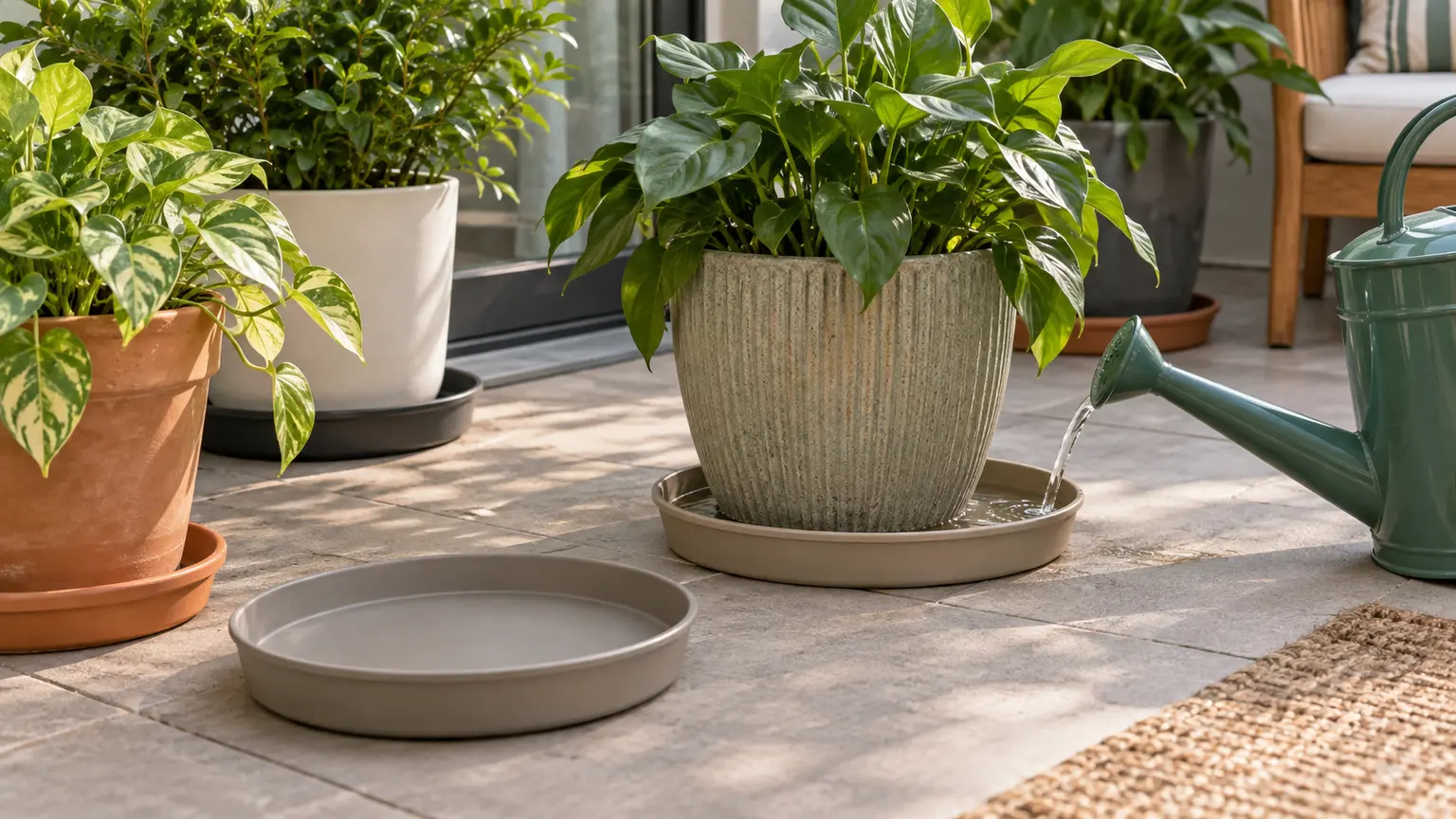
For a conventional soil-filled pot, a saucer has a practical job: it catches water that exits the drainage holes and helps limit staining or wear on the surface below. Once the saucer has collected water, empty it rather than treating it as a permanent reservoir. University of Maryland Extension notes that water left in a saucer can move back into the container if it is not emptied.
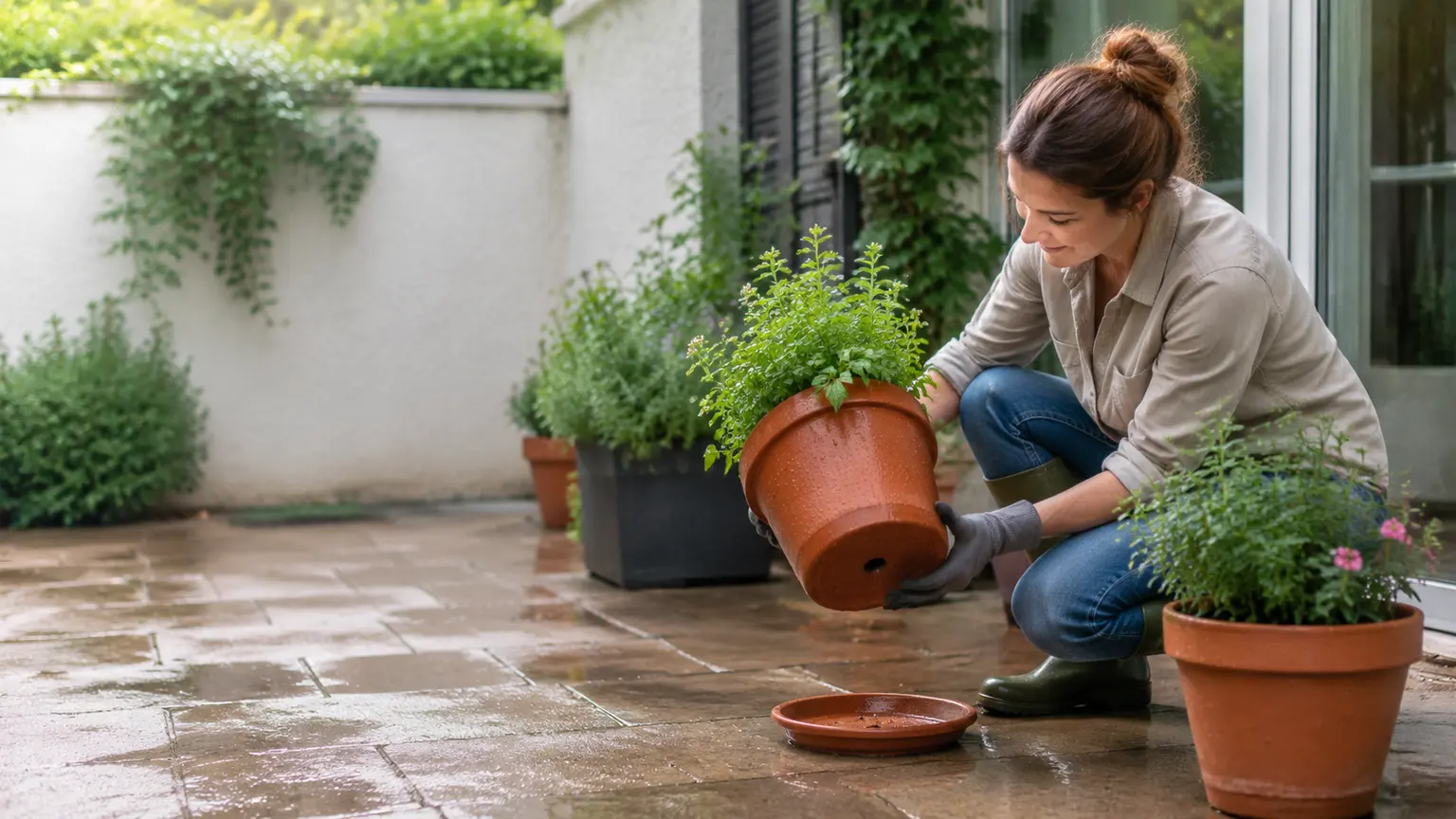
Build a simple after-rain and after-watering habit. Look beneath each pot, pour or drain away collected water, and check again when the container is in a spot where runoff cannot easily evaporate or leave. The Centers for Disease Control and Prevention also recommends emptying and scrubbing flowerpot saucers at least weekly as a mosquito-control practice. That public-health guidance is a backstop, not a reason to wait for a weekly deadline when water is already present.
| What you find | Likely issue | Next step |
|---|---|---|
| Water remains after the rain ends | The saucer is acting as storage | Empty it and keep the disposal path away from doors, walkways, and neighbors |
| Drainage holes sit below the water line | The pot can reabsorb runoff | Empty the saucer and create safe clearance below the pot |
| The saucer refills after you empty it | The root ball is still draining | Check again after drainage slows; do not add more water |
| Water collects inside a decorative outer pot | The liner is standing in hidden runoff | Remove the liner and empty the cachepot |
| A designed reservoir has an overflow | It may be a self-watering system | Follow the model-specific instructions |
Make sure water has a way out of the pot
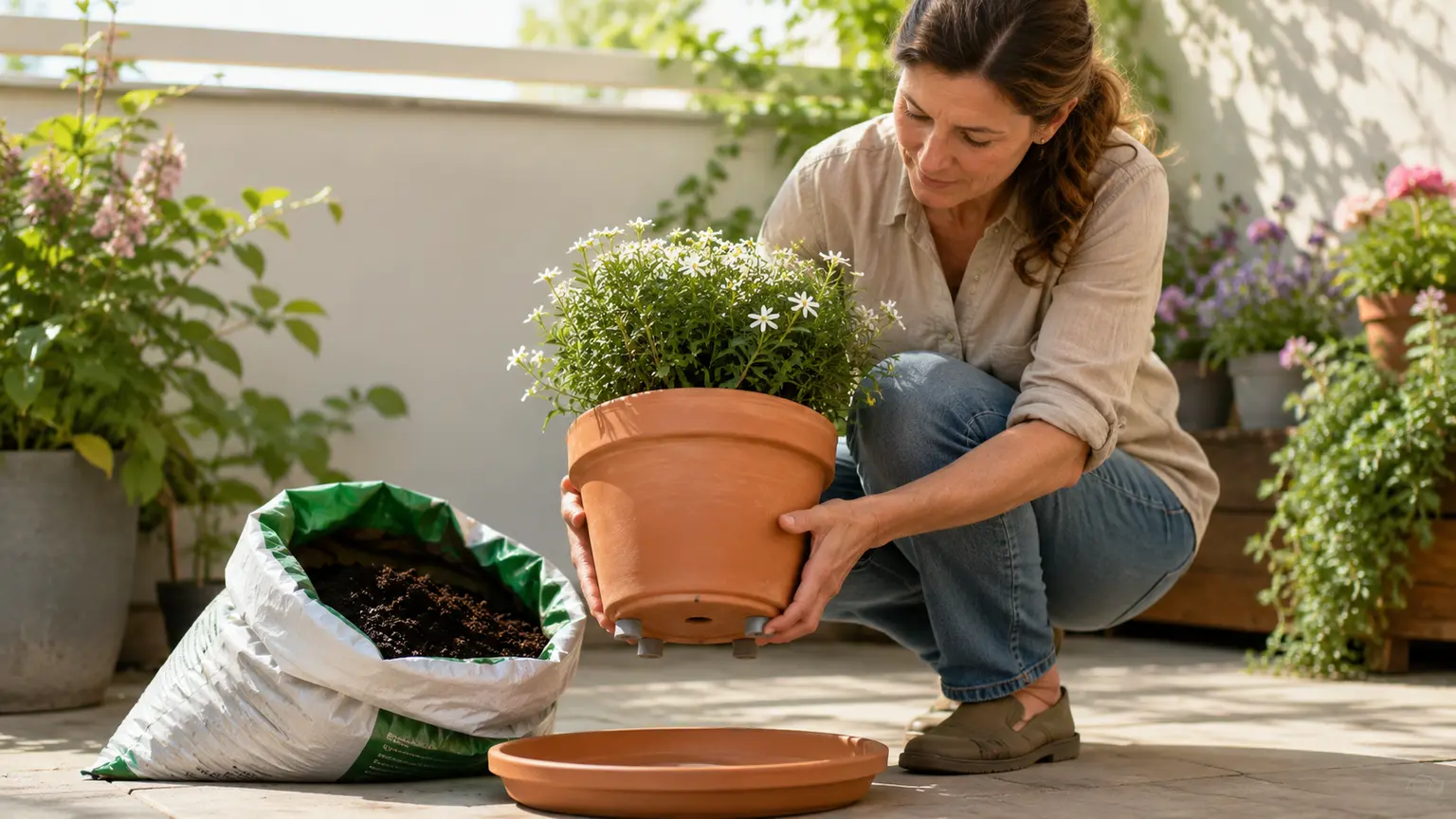
A saucer cannot correct a container that has no effective drainage path. Before planting, confirm that a conventional pot has drainage holes or slits. They allow excess water to leave the container and help avoid a persistently wet root zone. Also check that the holes are not blocked by the surface beneath the pot or by debris.
After a heavy rain, inspect the container rather than assuming the saucer is the only issue. Look for a pot sitting completely flat on a deck or paver, roots or debris obstructing an opening, or a saucer that fits so tightly that it covers the drainage holes. If the pot is difficult to inspect, move it only when you can do so safely; wet potting mix can make a container substantially heavier.
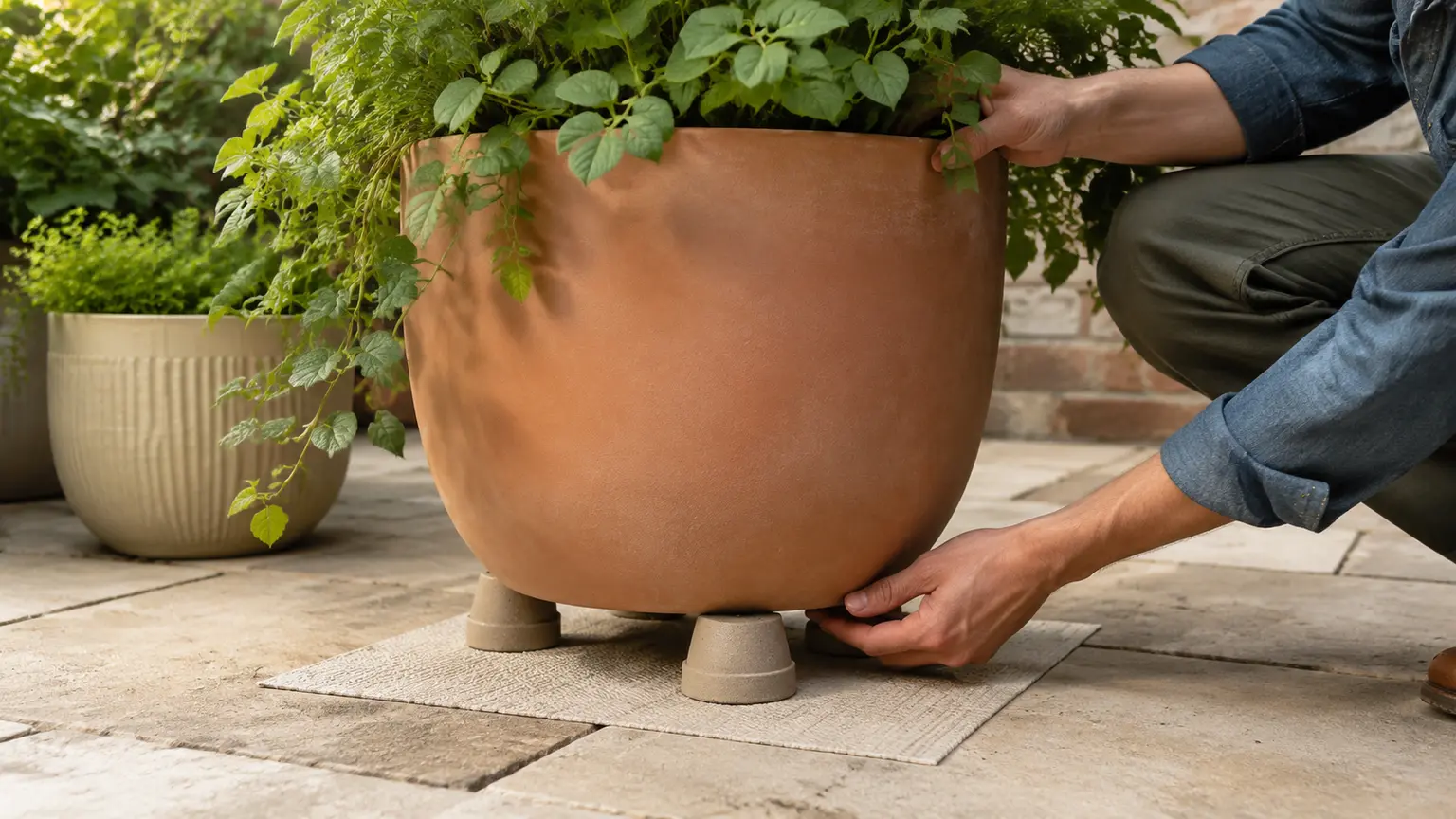
Raising the entire container on suitable pot feet can improve the route for runoff. Sturdy pot feet, bricks, or similar supports can lift the base above the surface, provided they are stable, suitable for the pot’s weight, and positioned away from the drainage holes. The goal is to create clearance—not to place the plant on an unstable stack that could tip or crack under a watered container.
- Check that the pot has drainage holes or slits appropriate to its design.
- Clear visible debris from the holes without packing material into them.
- Confirm that the saucer or patio surface is not covering the drainage openings.
- Use stable supports when extra clearance is needed.
- Empty collected water from the saucer after checking the pot.
Choose an easier setup for rain-prone patios
A detachable saucer is usually easier to inspect and empty than one permanently attached to a pot. When choosing or replacing containers, consider whether you can reach the saucer without lifting a heavy, rain-soaked planter. A removable saucer also makes it simpler to clean the surface and check whether water is returning from the container after it was emptied.
Decorative outer containers, sometimes called cachepots, may not have drainage holes. One practical approach is double potting: grow the plant in a drain-holed liner, then place that liner inside the decorative container. Remove the liner for watering when possible, or drain accumulated water from the outer container before returning it. The liner should not remain standing in water inside the outer pot.
Placement matters as much as the saucer. Set containers where you can reach underneath them, see the drainage openings, and remove the saucer water without spilling it onto a walkway or balcony below. If several pots share a tight space, leave enough access to check each one after rain. A visually tidy arrangement that prevents inspection can make water management harder.
Water by the potting mix and the plant, not the calendar
Do not decide to water again simply because the saucer is empty—or because a certain number of days has passed. Iowa State University Extension recommends checking container plants frequently in summer and probing below the surface before watering. Weather, container size, plant exposure, and the plant itself all affect how quickly the mix dries.
After rain, check the potting mix below the surface and consider the plant’s usual moisture needs. A shallow surface may look dry while the mix underneath remains moist; the reverse can also occur in a container exposed to heat or wind. Succulents, herbs, vegetables, annual flowers, and shade containers should not automatically receive the same watering pattern. Use the plant’s care guidance together with an actual moisture check.
If the mix is still adequately moist for that plant, wait and check again rather than watering on schedule. If it has dried beyond what the plant tolerates, water in a way that moistens the container’s mix while allowing excess to drain, then empty the saucer. This separates two decisions that are often confused: whether the plant needs water and what to do with water that has already drained out.
Avoid common drainage fixes that do not solve the problem
Do not add a blanket layer of gravel, rocks, or pot shards to the bottom of a conventional planted pot as a general drainage solution; use the rock-free drainage checklist instead. University of Illinois Extension explains that this arrangement does not improve drainage and can contribute to water remaining in the potting mix above the layer. Raising the whole pot on stable supports is a different practice: it improves clearance beneath existing drainage holes.
Likewise, adding a larger saucer does not remove the need to inspect the pot. A deep saucer may hold more water, but it still leaves collected water beside the container until someone empties it. If the same pot repeatedly fills its saucer after modest watering, inspect the drainage openings, the pot’s placement, the container design, and the moisture needs of the plant before changing the watering schedule.
A simple rain-aftercare routine
- Check each saucer after rain and after watering.
- Remove collected water from ordinary pot saucers.
- Confirm that drainage holes remain open and uncovered.
- Make sure pot feet or other supports are stable and clear of the holes.
- Inspect the potting mix below the surface before watering again.
- For a decorative outer pot, drain it before replacing the liner.
- Use manufacturer guidance for self-watering containers with designed reservoirs.
The most reliable setup is the one you can inspect easily: a plant-appropriate container with an open drainage path, stable placement, and a saucer that catches runoff without becoming a storage basin. Regular hands-on checks are more useful than a universal water limit, because summer conditions and plant moisture needs differ from one patio, balcony, and container to the next.
Sources and further reading
- www.cdc.gov — www.cdc.gov
- extension.illinois.edu — extension.illinois.edu
- yardandgarden.extension.iastate.edu — yardandgarden.extension.iastate.edu
- extension.umd.edu — extension.umd.edu
- extension.colostate.edu — extension.colostate.edu
- extension.umd.edu — extension.umd.edu