Balcony plants do not need to create a stream of water onto the balcony below, a shared wall, or a street gutter. The most reliable approach is source control: confirm the building’s rules, use containers that drain normally, capture only short-term overflow, and empty collected water promptly. This keeps the routine reversible and avoids turning a small container garden into an improvised drainage project.
Start with the balcony’s rules and water path—not a planter purchase
Before buying containers, observe where water goes now. Does it drip toward another unit, stain the wall or floor, collect near a doorway, or reach an exterior drain? Also check the lease, condominium documents, HOA rules, and written building guidance. Requirements vary by property and jurisdiction, so do not assume that a balcony attachment or drainage arrangement is permitted.
Ask for written approval before adding rail-mounted planters, brackets, drainage tubing, permanent reservoirs, or unusually heavy containers. Avoid drilling into balcony surfaces, attaching anything to a railing, or routing water through homemade tubing. Those changes can affect waterproofing, wind exposure, drainage design, and building loads in ways that cannot be assessed from a general guide.
Weight deserves particular care. Wet potting mix, the container, plants, trays, and any stored water all add load. Container sizes and balcony capacities differ, and a general weight estimate is not a substitute for building-specific guidance. If a setup involves several large pots or a heavy cluster, ask the property owner, manager, building architect, or another qualified professional what is appropriate.
Build a simple, removable runoff-control system
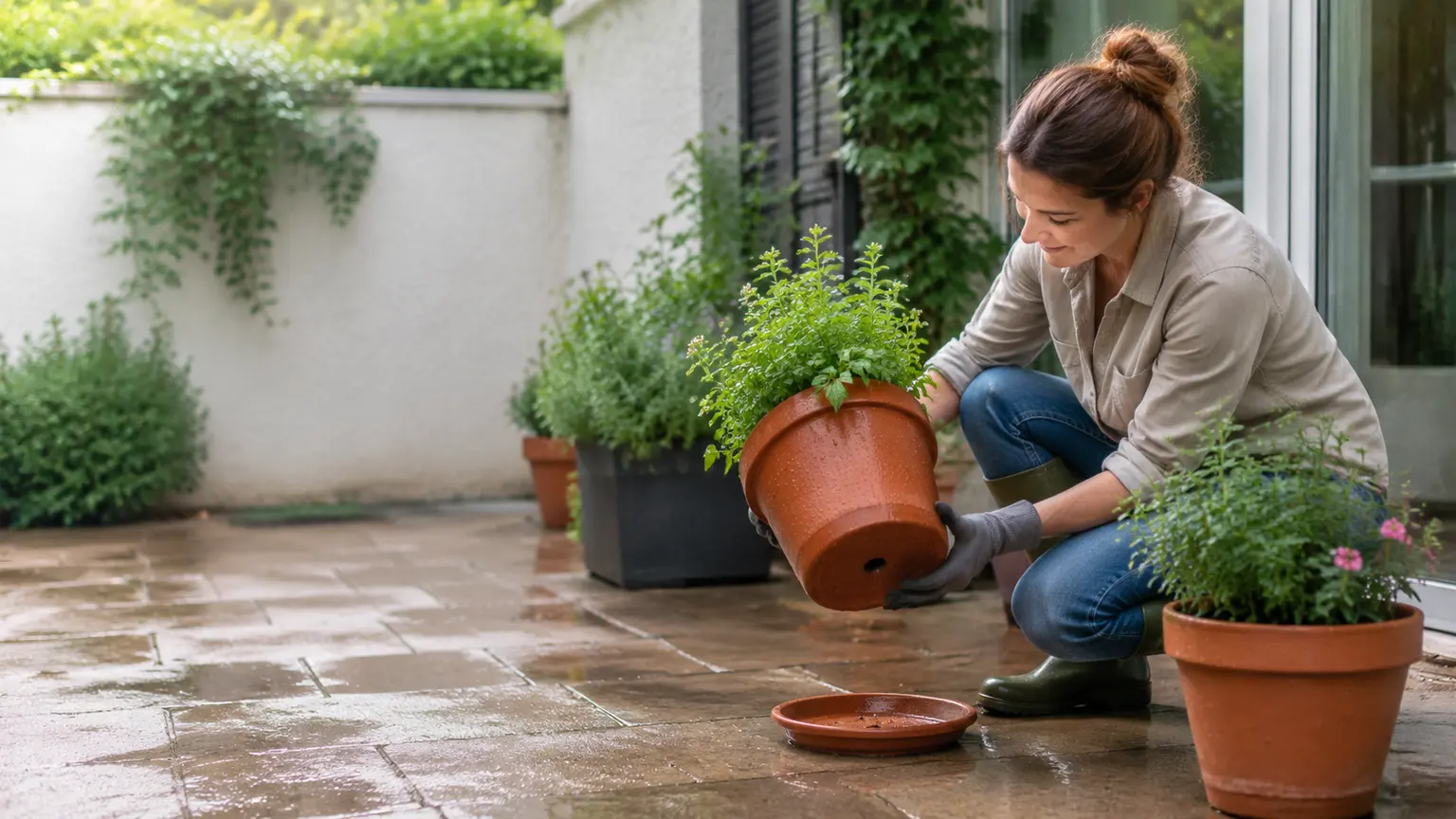
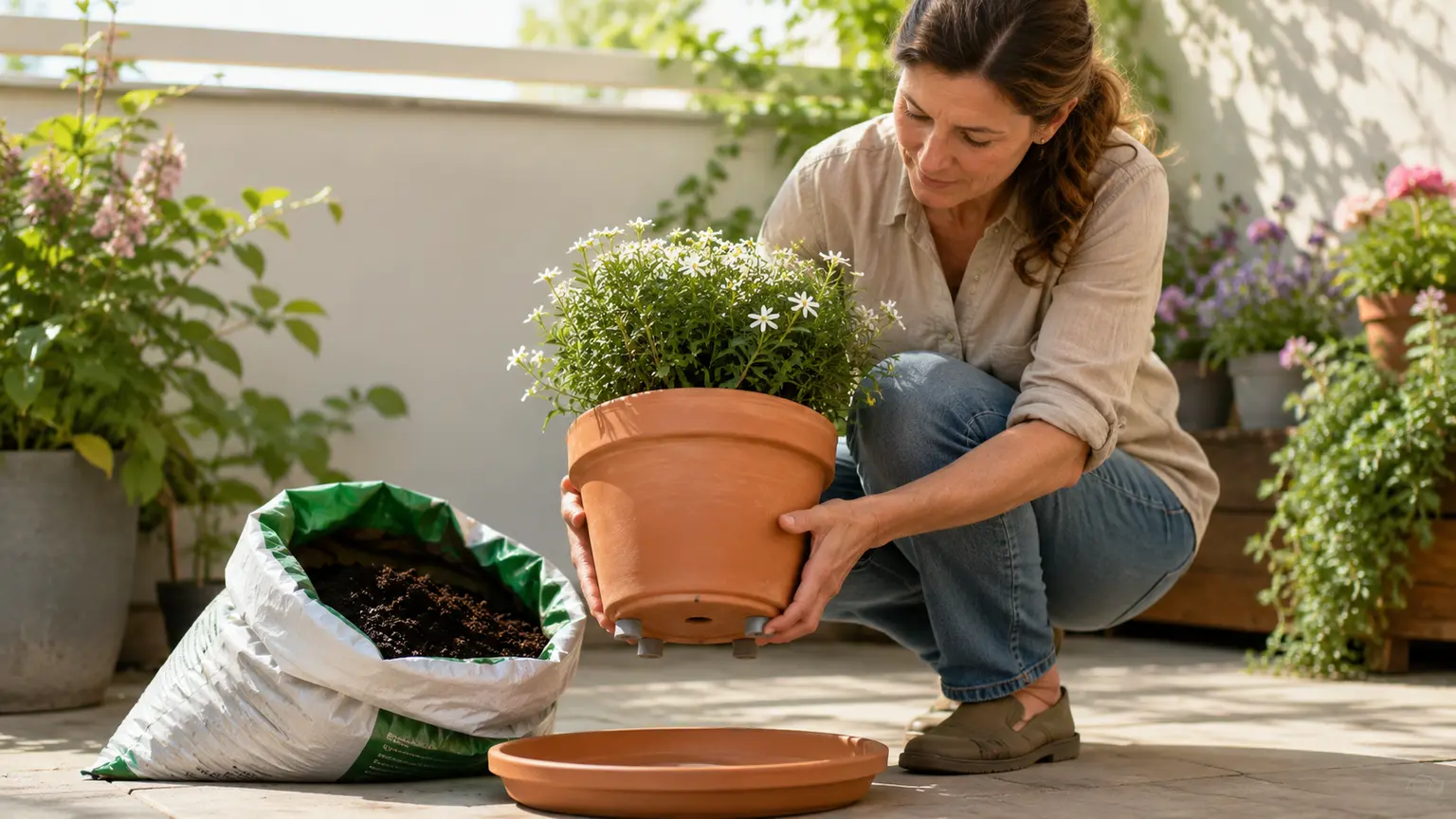
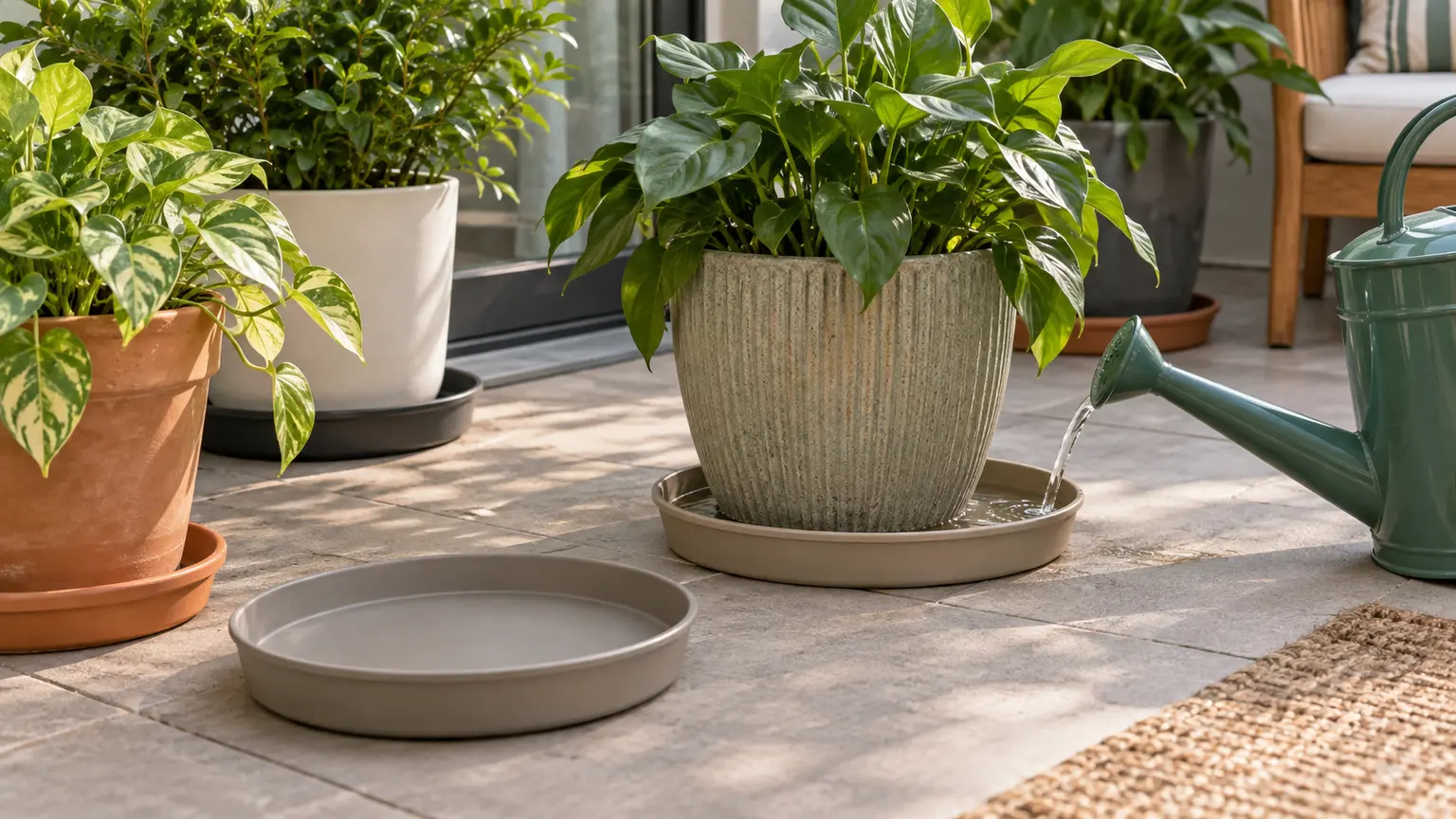
For most small balcony gardens, the low-intervention setup is a container with open drainage holes plus a removable saucer or tray underneath. Drainage holes let excess water leave the growing medium. The detachable tray can intercept drips and brief overflow without making the water difficult to remove.
Treat the tray as temporary capture, not a permanent reservoir. It should be easy to lift, inspect, empty, and clean. Choose a tray that fits beneath the pot without trapping the container in a sealed outer space. If you use a decorative outer planter, make sure the inner container can still drain and be removed for inspection.
Do not add gravel, rocks, or broken pot pieces to the bottom of a planted container as a drainage fix. Extension guidance indicates that this layer does not improve drainage and can leave the potting mix wetter. The important features are functional drainage holes, suitable potting media, controlled watering, and a catch tray that can be emptied.
For a related inspection, see How to Check a Patio Pot for Drainage Problems Before You Plant.
Water slowly enough that runoff stays small
Runoff is often a watering-routine problem rather than a need for more hardware. Container water needs vary with the pot’s size and material, the plant’s size, sun, wind, heat, and weather. Instead of following a universal calendar or volume, check the potting mix and the plant’s condition before watering.
- Check the potting mix before watering. If it is still adequately moist, wait and check again later.
- Water gently at the base of the plant rather than pouring quickly across the surface.
- Leave some headspace below the rim so water has room to soak in without immediately spilling over.
- Pause if water begins flowing freely into the tray. Let the mix absorb what has already been applied before deciding whether more is needed.
- Recheck the tray after watering and after rain, especially when the balcony is above another unit or a surface that can stain.
A slow, measured application makes it easier to notice when the container is saturated. During hot, sunny, or windy weather, a plant may need attention more often; that does not mean every watering should be larger. For more routine ideas, see How to Water Patio Containers During Hot, Dry, or Windy Weather.
Empty, reuse carefully, and keep water out of drains
Inspect saucers after watering and rain, then empty them promptly. This protects the plant from sitting in water and supports a no-standing-water routine. The U.S. Environmental Protection Agency advises eliminating standing water and emptying or changing water in potted-plant trays at least weekly because containers can support mosquito breeding. For a balcony where the goal is to prevent water from remaining at all, prompt emptying is the more practical standard.
Do not send captured water over the balcony edge, into a neighboring space, or deliberately into a street gutter or storm drain. Runoff may carry potting media, fertilizer residue, or other pollutants. EPA notes that storm drains commonly carry water directly to water bodies, although local drainage systems differ. Follow property procedures and local utility guidance for disposal, and keep soil and fertilizer residue out of drains.
Know when a balcony garden has outgrown a DIY solution
Pause and seek building-specific guidance if water repeatedly overflows, containers become unstable in wind, a heavy group of wet pots is planned, or the proposed solution requires tubing, brackets, rail attachments, drilling, or a permanent reservoir. These are signs that the problem involves more than ordinary container care.
A manageable balcony system should be removable, inspectable, and easy to empty. If it cannot meet those conditions without altering the building or storing substantial water, reduce the number or size of containers, revise the watering routine, or ask the property manager what setup is allowed. The safest runoff plan is usually the one that prevents excess water at the source rather than trying to engineer a new drainage path.
Sources and further reading
- www.epa.gov — www.epa.gov
- extension.illinois.edu — extension.illinois.edu
- extension.illinois.edu — extension.illinois.edu
- www.epa.gov — www.epa.gov
- www.epa.gov — www.epa.gov
- extension.umd.edu — extension.umd.edu