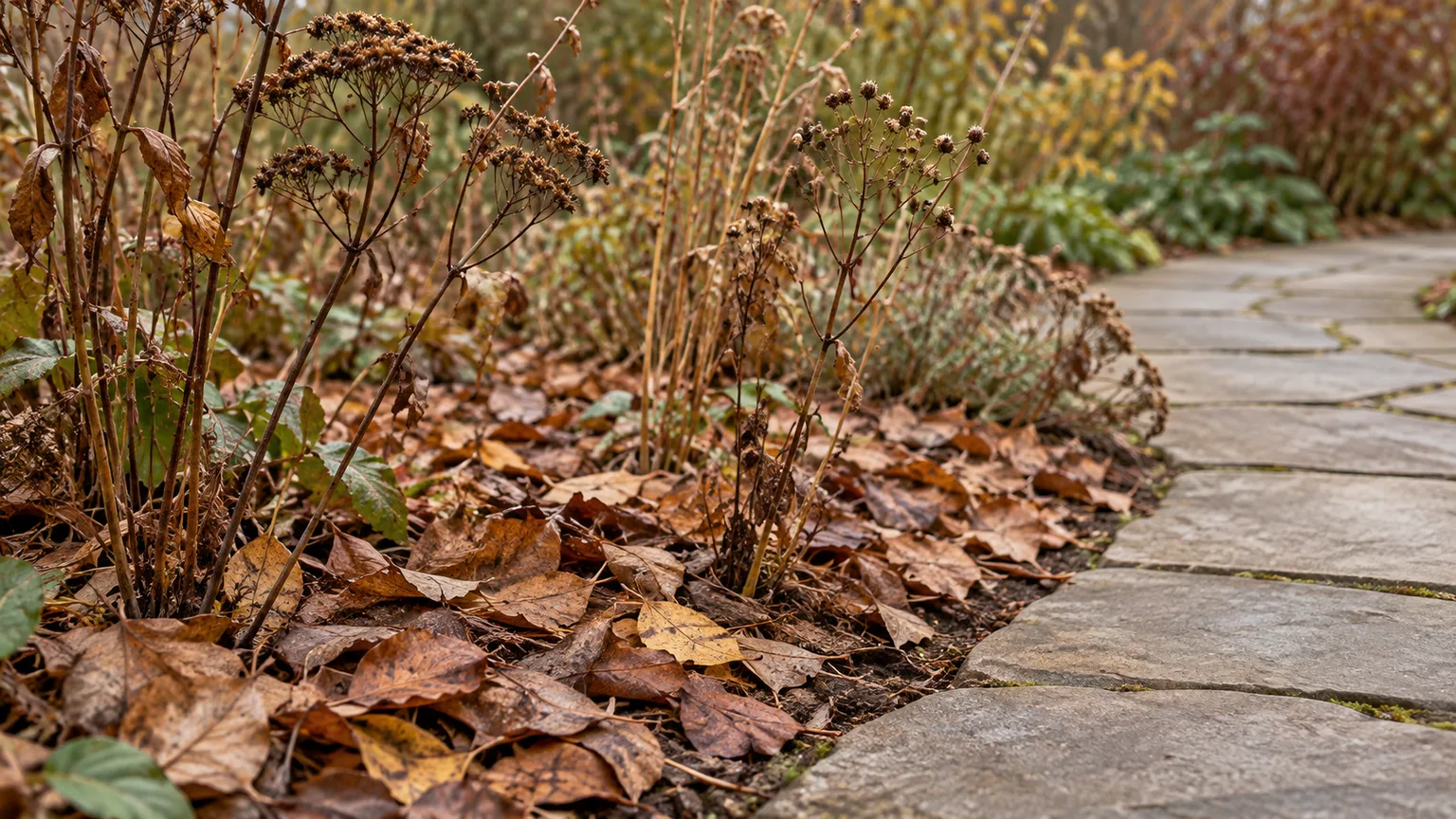
Fall cleanup does not have to be an all-or-nothing choice. In a small garden, you can leave healthy leaves and stems in a defined bed or tucked-away corner while keeping paths, entrances, and lawns clear. This selective approach preserves potential overwintering habitat without treating every part of the property as a habitat zone.
The right balance depends on what is growing in the space, how people use it, and the risks that apply locally. Plant disease, pest pressure, tick exposure, erosion, access needs, and wildfire requirements can all justify moving or removing material. The goal is not to follow one nationwide cleanup rule. It is to decide what each small area can safely retain.
Designate habitat zones instead of leaving the whole yard untouched
Start by choosing one or more places where healthy organic material can remain. A perennial bed, shrub border, bed edge, or lightly used corner can hold leaves and standing stems through winter.
Move leaves from pavement, steps, and heavily used paths into a designated bed rather than shredding or discarding them automatically. Keep thick accumulations off turf when they block light, and do not bury plant crowns. Where local defensible-space guidance applies, follow it before retaining leaves near structures. A defined zone also makes spring cleanup easier: you know which material is being retained for habitat and which areas need to stay orderly and accessible.
- Mark a habitat zone with a simple garden label or note in your seasonal checklist.
- Keep walkways, gates, drains, stairs, and frequently used seating areas clear.
- Move healthy leaves from high-traffic surfaces into a designated planting bed.
- Leave an untouched corner when space allows; even a small area can contribute habitat.
- Review local fire, lease, municipal, or HOA requirements before retaining dry material near a building.
What to leave: intact leaves, standing stems, and a little open soil
Leaf litter can provide winter cover for bees, butterflies, moths, and other pollinators. If habitat value is the priority, retain leaves intact in the selected bed instead of shredding them there. Eggs, caterpillars, and cocoons may be in or on leaves, so mechanical processing can reduce the value of the material you are trying to preserve. Leaves can be moved from paths or lawn into a suitable garden area, but excess layers should be redistributed rather than allowed to smother plants.
Healthy perennial stems and twigs can also provide winter structure. Hollow or pithy stems are used by some solitary bees and other insects. Rather than cutting every plant to the ground in fall, leave a selected group standing. Choose stems that are stable and do not obstruct access, then postpone cutting until late spring or until pollinator activity is visibly underway in your area. That timing is more flexible than a single calendar date because emergence differs across the United States and from year to year.
Some ground-nesting pollinators need a small sunny patch of uncovered soil. Protect a spot where you have observed ground-nesting insects by avoiding tillage and by not covering every inch with mulch, tarp, or weed barrier. This does not mean exposing all garden soil or removing erosion-control cover. Select one deliberately chosen patch rather than exposing the whole garden.
What to remove or relocate: plant problems, excess cover, and people space
Selective habitat retention means removing material that creates a documented problem. Plant parts with significant disease or insect-pest problems may need to leave the garden. Seed-heavy material from a plant known locally to spread aggressively may also need different handling. Do not assume every browned stem or fallen leaf is diseased, infested, or invasive; identify the concern locally before treating all debris as waste.
A typical home compost pile may not reliably kill every pathogen, insect larva, or weed seed. If you remove material because of a particular plant-health or seed-spread concern, follow local extension or municipal guidance for disposal rather than automatically adding it to ordinary home compost. Do not burn garden debris unless local fire and air-quality rules specifically allow the practice and provide safe instructions.
Move leaves away from lawn areas when the layer becomes thick enough to block light, and keep them off high-traffic surfaces. Where ticks are a local concern, University of Maryland Extension advises raking leaves away from places where people and pets are likely to encounter them while retaining leaf habitat elsewhere. Tick exposure varies by location, so use current local public-health guidance rather than assuming that all leaf litter creates the same risk.
Resume cleanup by watching spring activity, not a nationwide date
Plan fall work in stages. First, clear access routes and address known plant-health problems. Next, relocate healthy leaves and decide which stems will remain. In spring, inspect the habitat zone before cutting or raking it. The Environmental Protection Agency advises leaving beds undisturbed until pollinator activity is visible, while regional guidance may offer a different seasonal example. A November-through-April retention period cited by UMass Extension is specific to its regional context and should not be treated as a national schedule.
- Check the retained area for emerging plants and visible pollinator activity.
- Move excess leaves onto healthy planting areas or manage them according to local compost guidance.
- Keep paths and active-use areas clear.
Buildings and wildfire-prone sites come first
Habitat retention does not override building safety. For homes exposed to wildfire, the U.S. Fire Administration identifies the first zero to five feet around a structure, attached deck, or attached fence as an area where combustible mulch, dead or dry vegetation, leaves, and pine needles should be removed. It also advises storing wood piles at least 30 feet from the home. These distances and requirements may be more specific in your community.
Before placing leaf piles, brush, logs, or other dry habitat material near a house, outbuilding, fence, deck, or shared property boundary, check with the local fire district or fire authority. Follow current municipal, state, lease, or HOA rules where they apply. In a wildfire-prone setting, retain habitat farther from structures or in a location approved by local guidance rather than treating the space immediately next to the building as a habitat zone.
A practical small-garden decision check
Before leaving material in place, ask four questions: Is it healthy? Is it outside any applicable local fire or defensible-space zone? Can it stay without interfering with access or daily use? Is the timing appropriate for local pollinator activity and plant growth? If the answer to any question is no, relocate, reduce, or remove the material. If all four answers are yes, a modest retained zone can provide winter shelter without requiring an untidy or unsafe whole-yard approach.
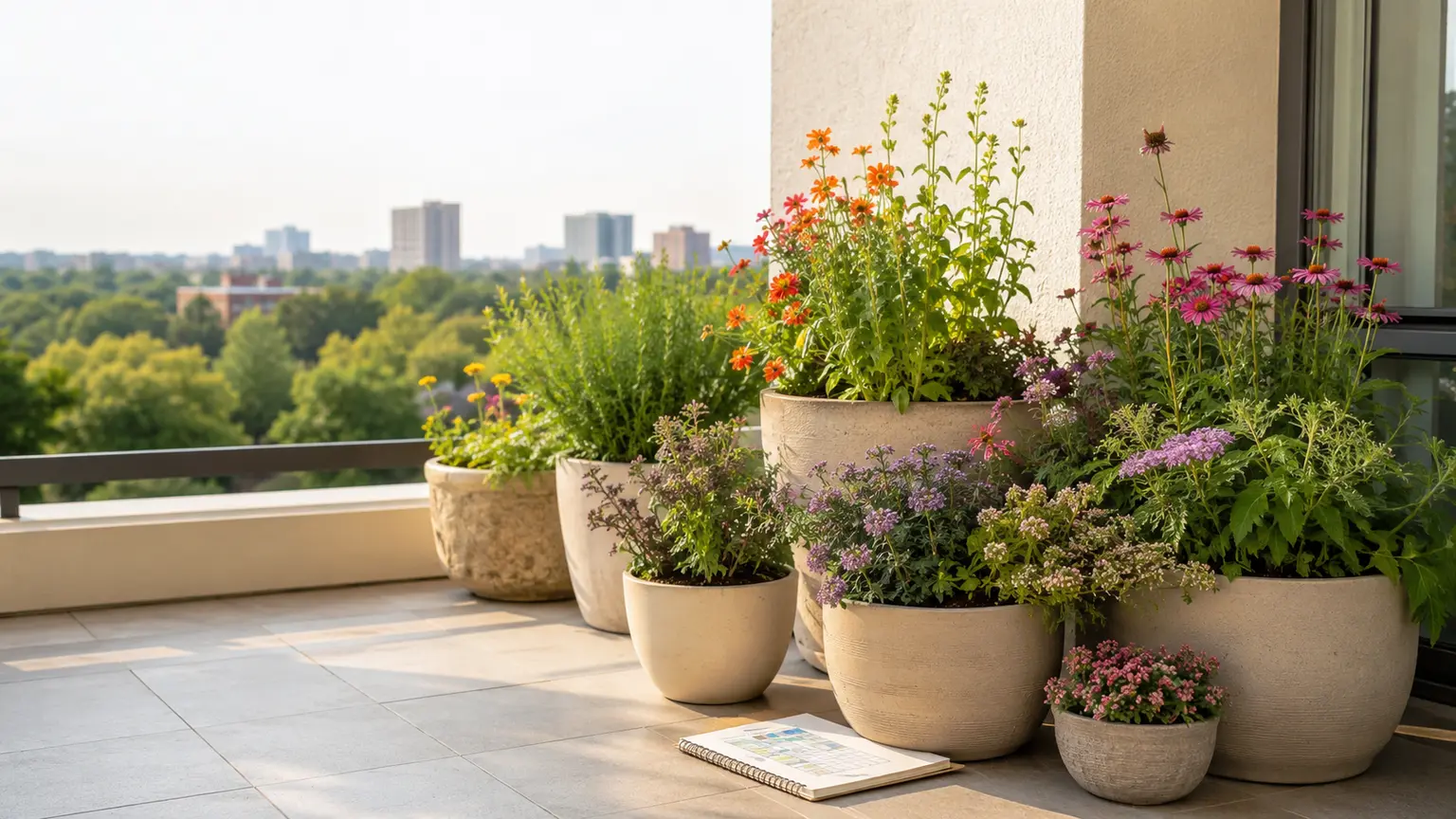
For a broader pollinator plan in a very small space, see How to Build a Pesticide-Free Pollinator Plan for a Small Patio.
Sources and further reading
- Winterize Your Pollinator Garden — U.S. Fish & Wildlife Service
- Bee a Good Neighbor — Spring Planting Poster — U.S. Environmental Protection Agency
- I Didn’t Know That!: Leave the Leaves — National Park Service
- Managing Fallen Leaves and Fall Cleanup — Iowa State University Extension and Outreach
- Hort Notes, 2025, Vol. 36:9 — UMass Extension
- Take Action — Defensible Space Fire Zones — U.S. Fire Administration
- Managing Fall Leaves in the Home Landscape — Iowa State University Extension and Outreach
- Leave the Leaves for Natural Pest Control — University of Maryland Extension