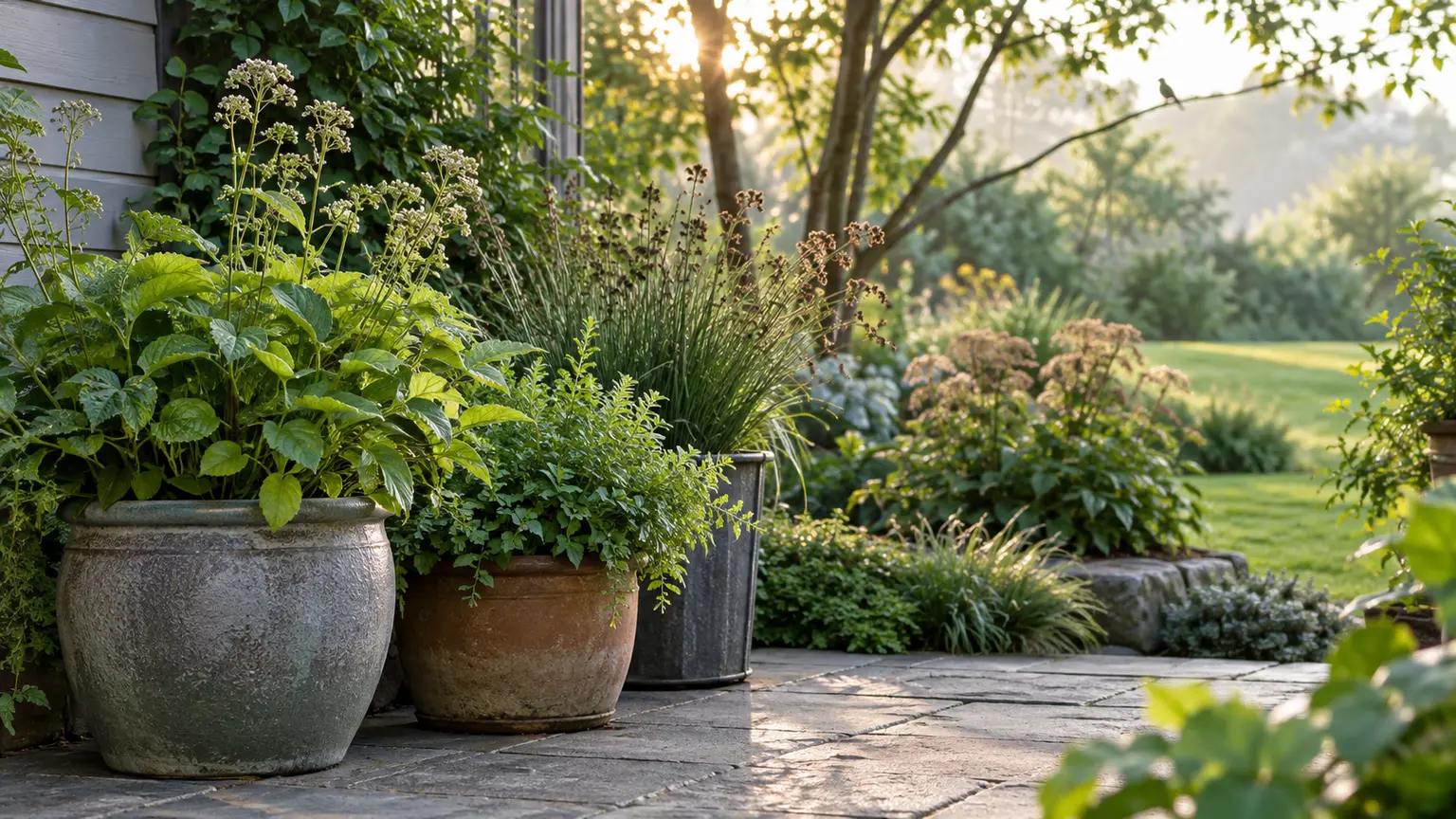
A small yard may have only a few windows, but each pane can still create a serious collision hazard when it reflects trees, shrubs, flowers, or open sky. Birds may read the reflection as habitat or a clear flight path rather than as a solid surface. The most useful prevention usually begins outside the house: identify the panes that create the greatest risk, then make those panes visibly different from the reflected landscape.
Find the few panes that need attention first
Start with a walk around the yard from outdoors. Look at the windows from the angles a bird might approach, and repeat the check at more than one time of day. Reflections change as the light moves, so a pane that looks harmless in the morning may mirror vegetation or sky later.
Prioritize windows with any of these signs:
- A known collision, heard impact, feather, or other strike evidence.
- A strong reflection of trees, shrubs, flowers, or sky.
- A seemingly open view through the house, especially where glass lines up with another window or bright outdoor space.
- A location beside vegetation, a birdbath, feeder, or another place where birds are active.
This is a practical way to decide where to begin, not proof that other panes are safe. U.S. Fish and Wildlife Service guidance notes that nearly all glass and lights can contribute to collisions. If several windows share the same reflection or flight approach, treat them as a group rather than assuming one small sticker will protect the whole area.
Make reflective glass read as a barrier
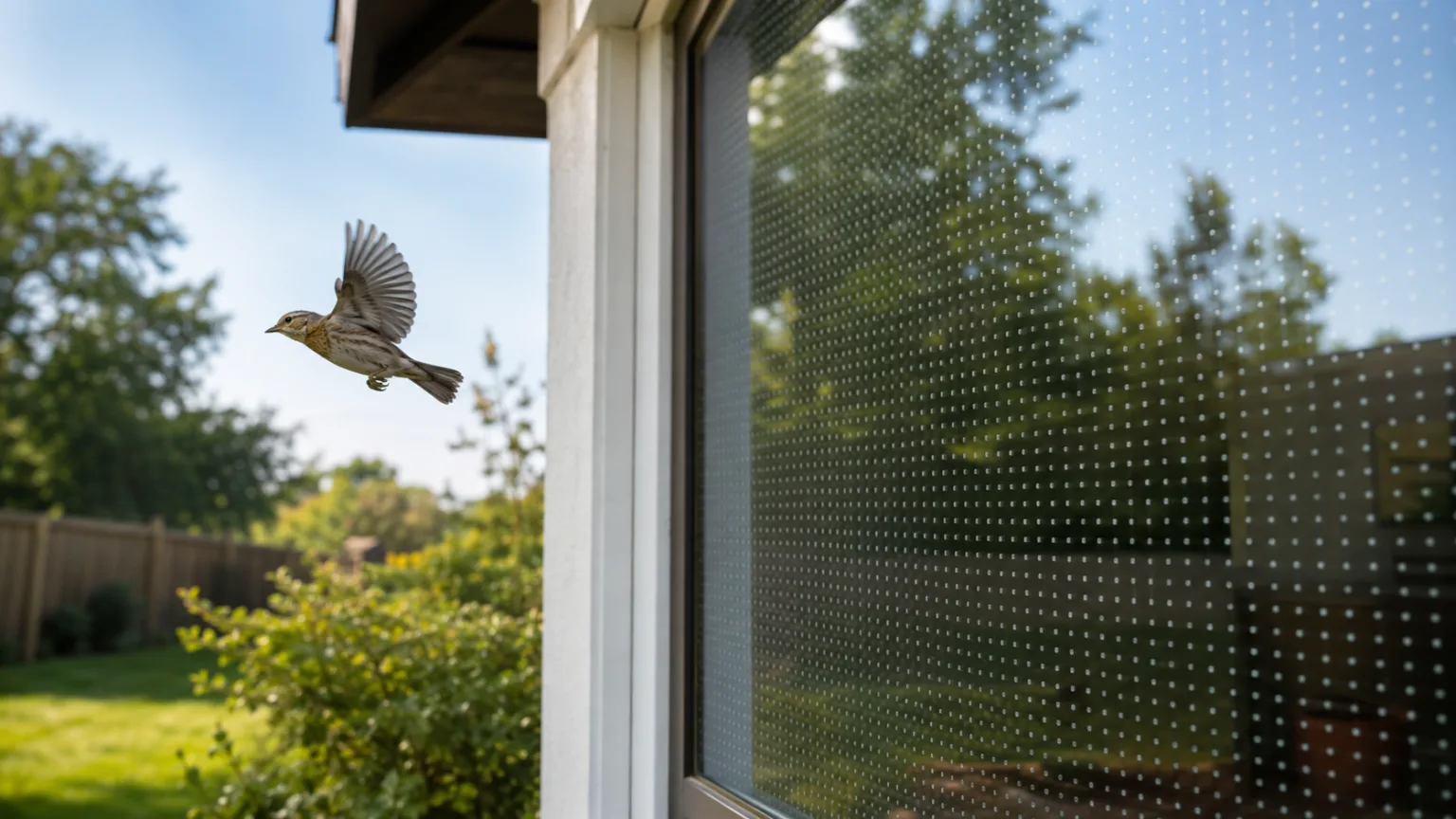
For an existing problem window, use a repeated pattern on the exterior surface. The guidance summarized by the U.S. Fish and Wildlife Service and Bird Safe recommends individual markers at least 1/4 inch across, arranged no more than 2 inches apart vertically and horizontally. The pattern needs to cover the full hazardous pane, not just the section where a person happens to notice a reflection.
Depending on the window and the appearance you want, the pattern might be made with temporary paint, tape, or purpose-made exterior markers. The important features are placement, spacing, coverage, and visibility from the outside. Check the result in the daylight conditions that produce the reflection. A dark marker can be difficult to see against a dark reflected background.
Choose an exterior retrofit that fits a small yard
A dotted pattern is not the only option. Exterior barriers can reduce reflections and give a bird a visible or physical cue that the window is not an open flight path. Choose an approach that can cover the entire problem pane and remain secure in local weather.
- Exterior insect screens: A screen over the window can reduce reflections and signal a barrier. It protects the screened pane; an ordinary interior screen or a screen on a different opening does not automatically protect nearby glass.
- Exterior netting: Netting can give a bird a surface from which it can safely bounce away from the glass. Install it taut, with openings 1/2 inch or smaller, to help avoid entanglement. Inspect it periodically for looseness or damage.
- Exterior cord curtains: Full-window vertical cords can interrupt the reflection. U.S. Fish and Wildlife Service guidance specifies spacing of less than 4 inches; Bird Safe gives a comparable limit of no more than 10 centimeters, or about 4 inches.
- Interior blinds and shades: These may offer secondary help when their pattern is visible from outside, but reflections can hide them. Pair interior coverings with an exterior treatment rather than relying on closed blinds alone.
For a rental, balcony, or small patio, a removable exterior screen or carefully secured full-pane marker pattern may be easier to reverse than a permanent installation. Whatever format you choose, inspect it from the bird’s approach, not only from inside the room.
Put feeders near treated windows—not in front of untreated hazards
Feeder placement advice can seem counterintuitive. If a feeder or birdbath is near a window, first treat the glass facing it. Then, if the location works for the birds and the household, place the feeder within 3 feet of the window. U.S. Fish and Wildlife Service and Cornell guidance describe this short distance as limiting the speed a bird can build before reaching the glass.
The sequence matters: placing a feeder close to untreated glass does not make that glass safe. Treat the pane first, and consider whether the location also exposes birds to predators or other hazards. Collision prevention is one part of responsible feeder siting, not the only consideration.
Check whether the change is working
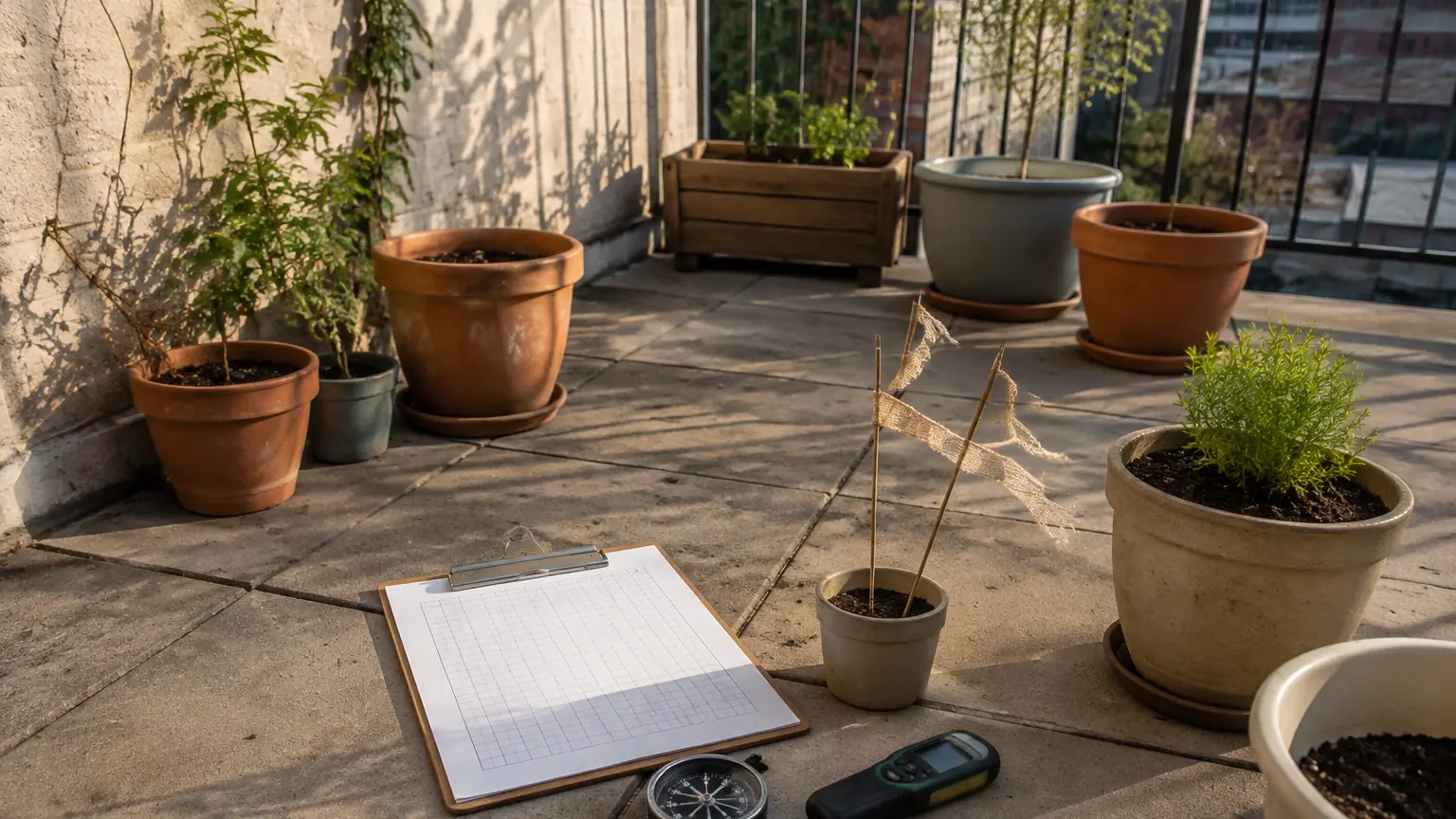
A simple log can help you decide whether you treated the right panes and whether another window needs attention. Before or immediately after the retrofit, record the same information each time you check:
- Date and approximate time.
- Window or location.
- Whether you heard or saw an impact.
- Whether the bird flew away, appeared injured, or was found dead.
- Species, only when identification is confident.
- Relevant conditions, such as strong reflection, rain, or a change in nearby vegetation.
For a more systematic household check, look in the morning and afternoon and use similar observation effort before and after treatment. In the contiguous United States, spring and fall migration—especially April, May, September, and October—can be useful monitoring priorities, although local timing varies and those months do not describe every U.S. location.
Treat the log as a decision aid, not a precise measurement. Casual observations can miss collisions because an injured bird may leave the area and scavengers may remove a carcass. Compare the same windows under roughly similar observation conditions rather than claiming an exact percentage reduction. You do not need a perfect baseline before treating a pane with clear strike evidence.
Add night-light discipline as a companion practice
At night, turn off unnecessary indoor and exterior lights, or use timers and motion sensors where appropriate. Blinds, shades, awnings, and shutters can also reduce light escaping through windows. These steps are especially relevant during migration, but they do not replace daytime treatment of panes that reflect vegetation or sky. For a small yard, the most durable plan is usually straightforward: identify the risky glass, cover the full exterior pane with a close visible pattern or suitable barrier, site feeders only after treating the facing window, and keep checking the same locations over time.
Sources and further reading
- www.fws.gov — www.fws.gov
- www.fws.gov — www.fws.gov
- www.fws.gov — www.fws.gov
- www.fws.gov — www.fws.gov
- www.fws.gov — www.fws.gov
- www.allaboutbirds.org — www.allaboutbirds.org
- birdsafe.ca — birdsafe.ca
- birdsafe.ca — birdsafe.ca