A patio plant can struggle even when the regional air temperature seems manageable. Direct sun is only one part of the exposure. Paving and walls can absorb solar energy, warm nearby air, and reflect light and heat toward leaves and containers. A dark pot can also heat quickly, while a small volume of potting mix may dry faster than soil in a garden bed.
These conditions vary with the surface material, sun angle, wind, building layout, container size, and plant species. Rather than promising a particular temperature reduction, treat the problem as a site adjustment: observe where heat is coming from, then combine several movable changes.
Why this patio feels hotter than the forecast: a quick diagnosis
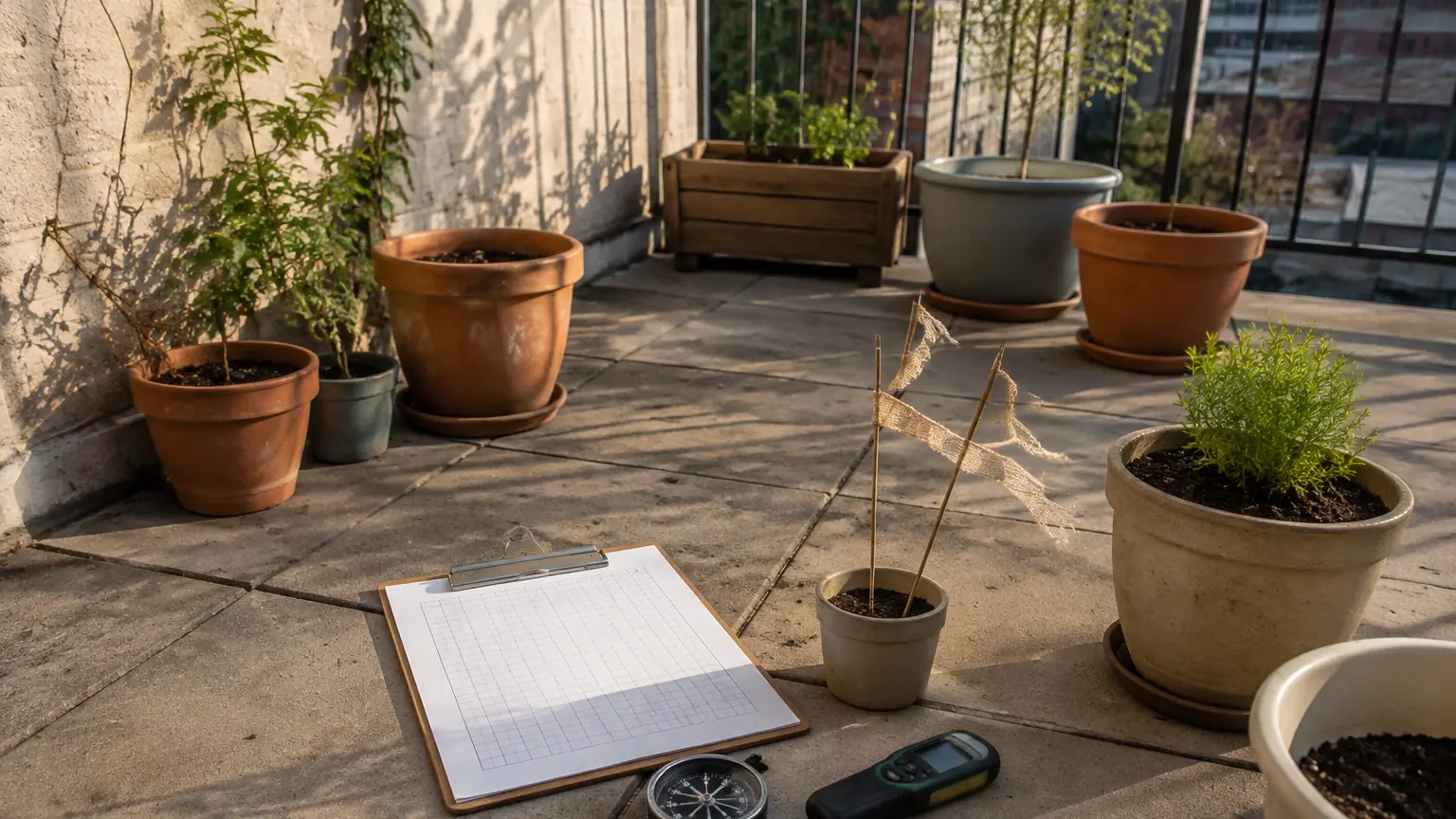
Choose one hot afternoon and inspect the space at more than one time. Check the plant’s position in early afternoon, when direct sun is strong, and again later, after the sun has shifted. A wall or slab may remain hot after it is no longer brightly lit.
- Note when the plant receives direct sun and when the wall or paving receives it.
- Compare a pot near the wall or pavement edge with one farther away, if you have more than one container.
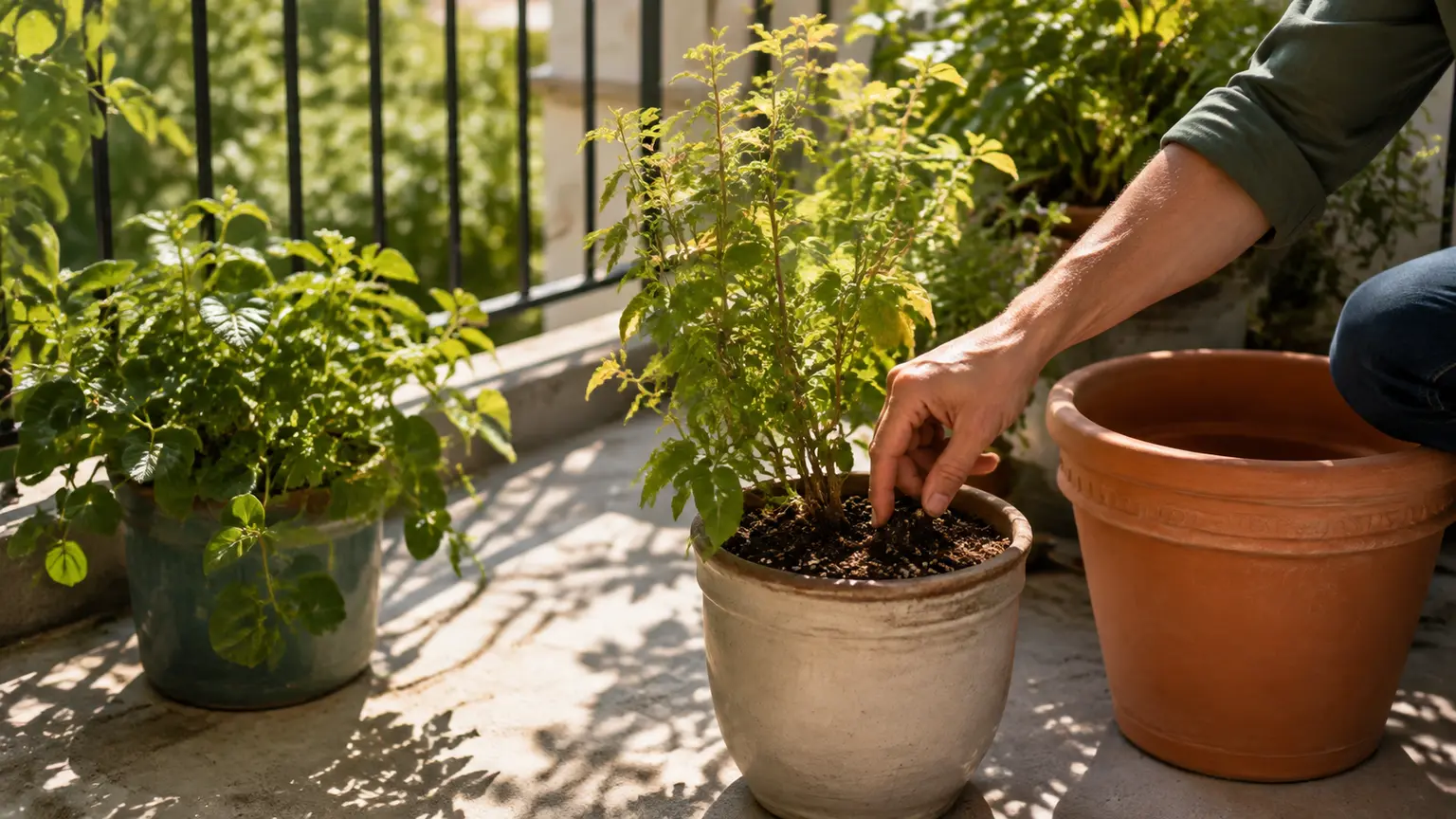
- Touch the outside of the pot and the nearby paving carefully; unusually hot surfaces point to a root-zone or contact problem, not just warm air.
- Look for potting mix that dries unusually quickly, wilt that appears during the hottest part of the day, or leaves exposed to intense reflected light.
- Observe wind and airflow. A sheltered corner may hold heat differently from an open area, while crowded containers can make inspection and watering more difficult.
Move first: reset the plant’s position before buying anything
Relocation is usually the simplest renter-safe intervention. Pull containers away from a sun-baked wall, the edge of a hot slab, or a narrow corner that receives reflected afternoon light. An existing overhang, a shaded spot that does not encroach on a doorway or exit, or a seasonal shade pattern may provide relief without installing anything.
Use the plant label or reliable guidance for the species before reducing recurring afternoon sun, especially for sun-loving edibles and flowering plants. Shade may reduce heat stress but can also affect flowering, fruiting, or growth when the plant needs strong light.
Heavy containers deserve extra caution. A mature pot can be difficult to move safely, so use an appropriately rated plant caddy only on a stable, level surface. Keep containers clear of exits and narrow walkways, and check balcony, landlord, or property rules before adding substantial weight or changing the arrangement.
Cool the root zone with outer layers, mulch, and air beneath the pot
Leaves may show the problem first, but the container itself can become the main heat source. Several modest changes can reduce direct exposure to the potting mix and help slow moisture loss.
Use a lighter outer surface
Dark containers in full summer sun can become hot and dry their growing medium quickly. If the planted pot has drainage holes, place it inside a larger, light-colored outer container or use a lighter container when repotting is already appropriate. The outer layer should shade the inner pot without trapping collected water around it.
Double-pot carefully
For a heat-exposed inner pot, pot-in-pot insulation is another option. A dry gap around the draining inner container can be lined with a suitable material such as foam or bubble wrap, particularly when using a metal outer container. Keep the planted pot’s drainage holes open, and do not allow it to stand in water inside the cachepot. Empty any catch tray after watering.
Cover the mix and lift the pot slightly
A thin, appropriate layer of mulch can reduce evaporation and moderate the surface temperature of the growing medium. Possible container materials include clean, herbicide-free grass clippings, straw or hay in sufficiently large containers, burlap, shredded newspaper, or coconut coir. Keep mulch away from stems and plant crowns, and continue checking moisture because mulch does not correct poor drainage.
Raise containers slightly above cement or other hot paving with stable pot feet, risers, or a low stand rated for the load. This reduces direct contact and allows air beneath the pot. A support must be level and secure; avoid unstable pallets or improvised platforms on balconies, stairs, or narrow walkways.
Group plants without creating a crowded, damp cluster
Compatible containers can be grouped so their foliage shades some of the exposed potting mix. Adjust the grouping to balance soil shading, airflow, watering, and inspection; avoid pressing leaves tightly together or making it harder to notice wilting or drainage problems.
Add shade that moves with the sun—without creating a wind or lease problem
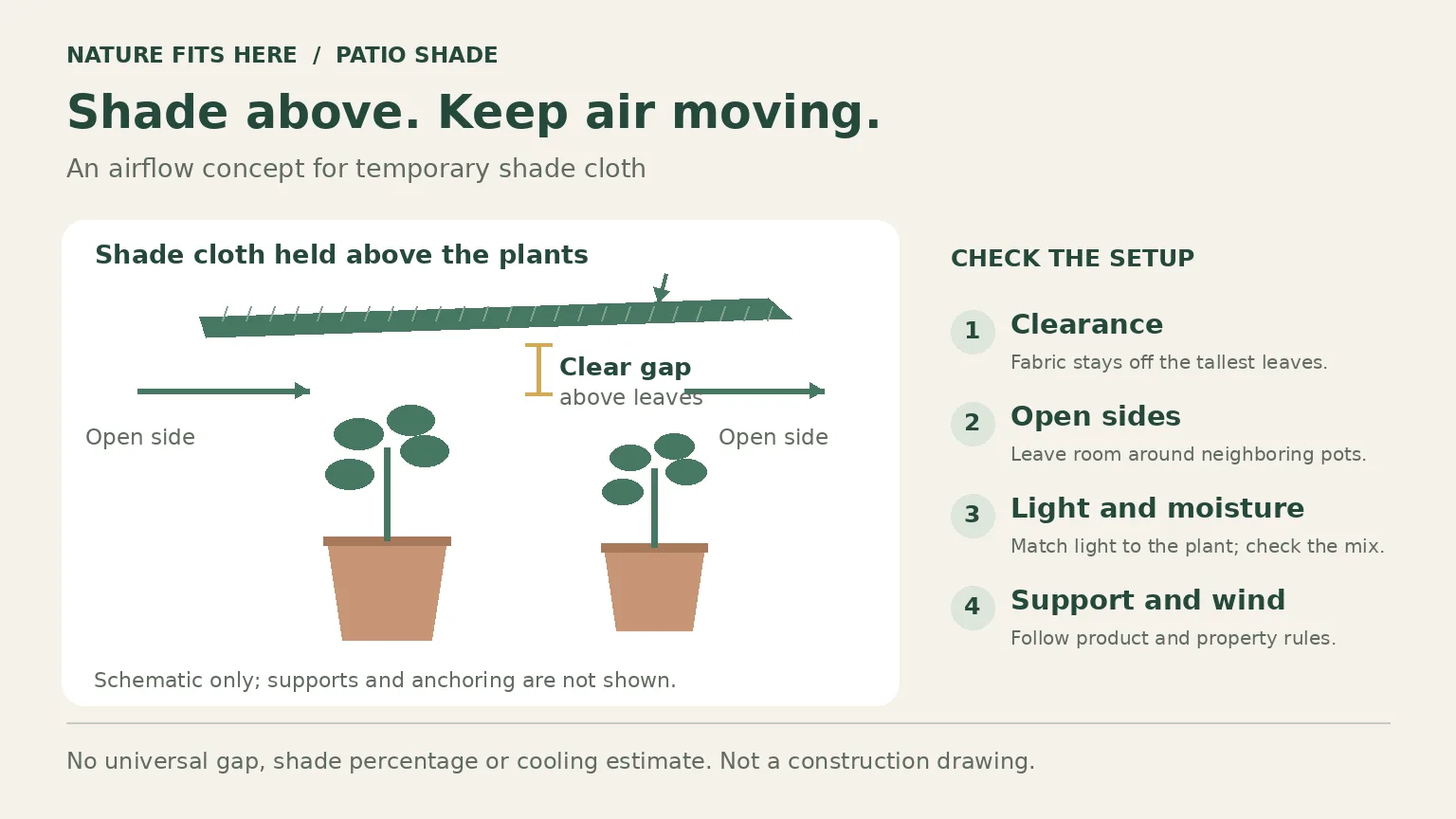
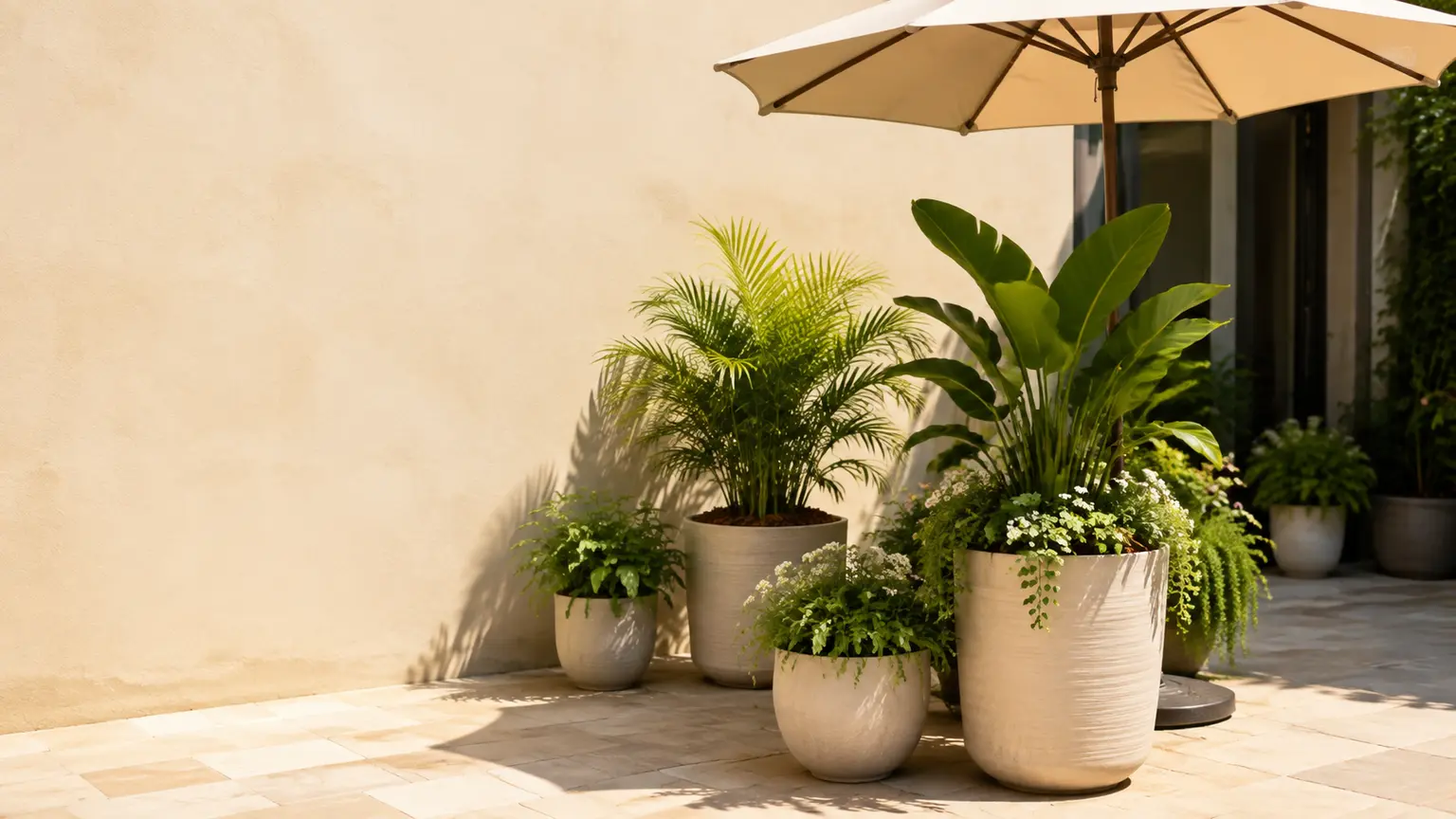
When moving a container is impractical, temporary shade can intercept direct afternoon sun. A portable umbrella, freestanding screen, or movable shade-cloth frame can be positioned between the plant and the sun during the hottest period. It is a practical application of extension guidance to move or shade containers during very high heat, not a guarantee that the wall or paving will stop heating.
Before choosing a cover, distinguish the exposure that remains: direct sun on leaves, a hot pot surface, or heat from the wall after direct sun has moved. An overhead cover addresses incoming sun; moving away from the surface may still be needed. Use the shade-cloth placement examples and airflow diagram to compare a movable pot, a group beside a wall and a windy balcony. Recheck moisture and foliage after the strongest exposure eases.
- Match the shade schedule to the plant’s light requirements rather than shading every container automatically.
- Keep the screen or umbrella freestanding unless you have permission for another arrangement.
- Follow the product’s instructions for securing it, and remove or reposition it when wind conditions make it unstable.
- Maintain clearance from doors, exits, railings, stairs, and shared walkways.
- Review landlord, HOA, and balcony rules before using shade cloth, screens, umbrellas, or stands.
Do not attach a screen permanently to a rented wall, railing, or structure, and do not add coatings or make other building modifications without permission. A movable solution should remain removable and be used only where it can be placed securely and in accordance with product and property rules.
A realistic heat-wave routine
After changing the setup, observe the next hot afternoon and adjust one factor at a time. Check the growing medium rather than watering by the clock. Containers can dry quickly in hot, dry, or windy weather, but thorough watering still needs functional drainage. Remove standing water from saucers and cachepots instead of leaving the inner pot submerged.
- Check moisture early in the day and again when the site has had its strongest exposure.
- Look at the wall, paving, pot exterior, and leaves to see which parts remain hottest.
- Move the container farther from the heat source if the position still produces repeated afternoon stress.
- Refresh or reposition mulch only when the surface remains clean and the stem area is clear.
- Reassess temporary shade after the sun angle changes, and secure, remove, or reposition movable equipment whenever it is unstable, when local or property rules require it, or when forecast or observed wind exceeds the product’s stated limits.
The most useful goal is not a promised number of degrees. It is a container that dries at a manageable rate, a root zone that is less exposed to hot paving, and foliage that receives enough light for the plant’s needs. In a rental patio or balcony, several reversible adjustments usually offer more flexibility than one permanent fix.
Research basis: guidance from the U.S. Environmental Protection Agency, University of Illinois Extension, University of Minnesota Extension, North Carolina State Extension, and Virginia Cooperative Extension. Patio-level results will vary by site and plant.
Sources and further reading
- www.epa.gov — www.epa.gov
- extension.illinois.edu — extension.illinois.edu
- extension.umn.edu — extension.umn.edu
- content.ces.ncsu.edu — content.ces.ncsu.edu
- www.pubs.ext.vt.edu — www.pubs.ext.vt.edu
- www.epa.gov — www.epa.gov