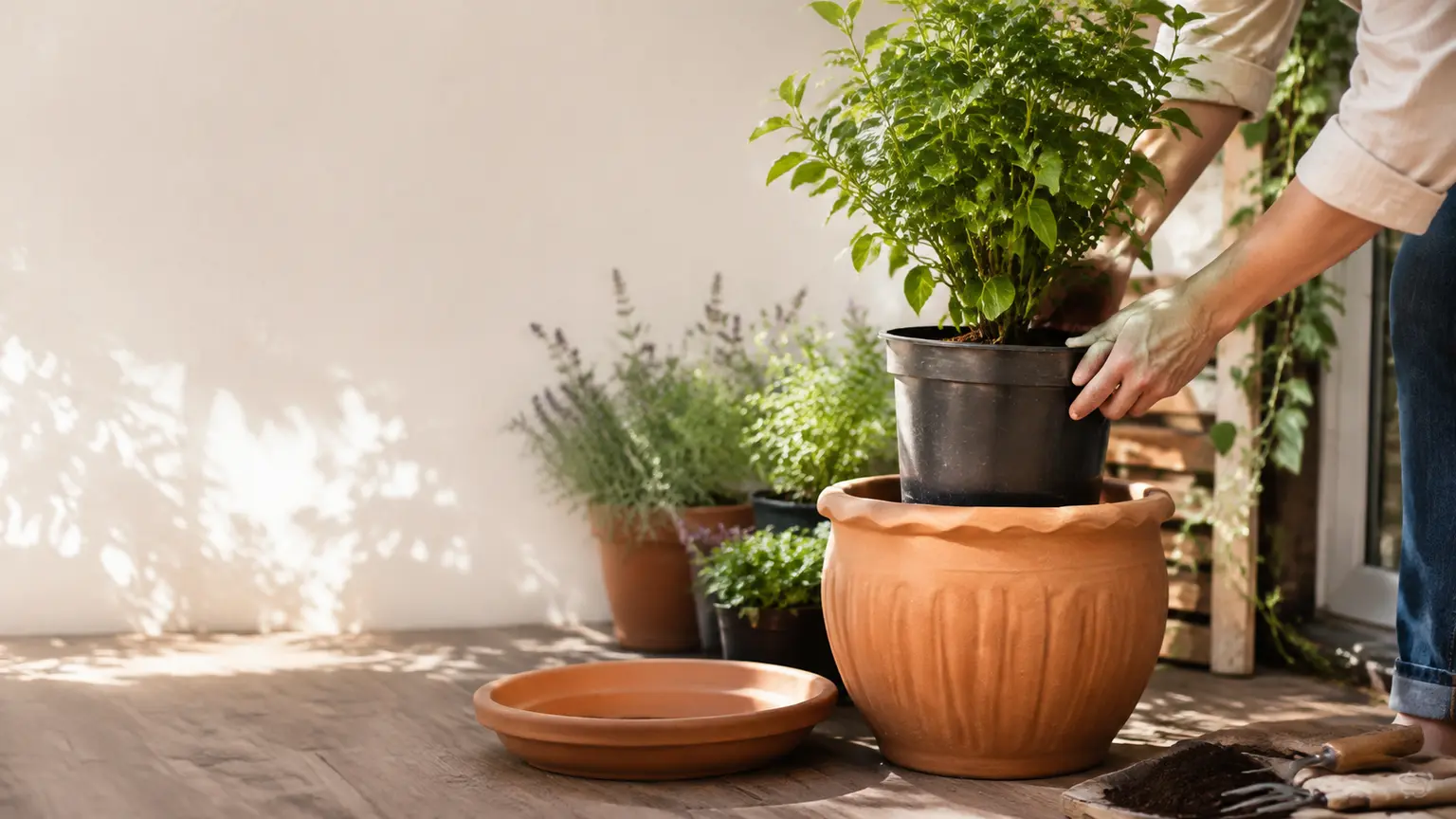
A decorative patio planter can improve the look of a container garden without becoming the plant’s primary growing container. The practical approach is to keep the plant in its nursery pot—the inner pot—with drainage holes, then place that pot inside the decorative outer planter, often called a cachepot.
This arrangement avoids modifying a planter made from an unknown material and keeps the plant easier to lift, inspect, water, and replace. The outer container is a sleeve and runoff catcher, not automatically a water reservoir. Any water collected there needs to be checked and emptied.
The simple setup: use the decorative planter as a cachepot
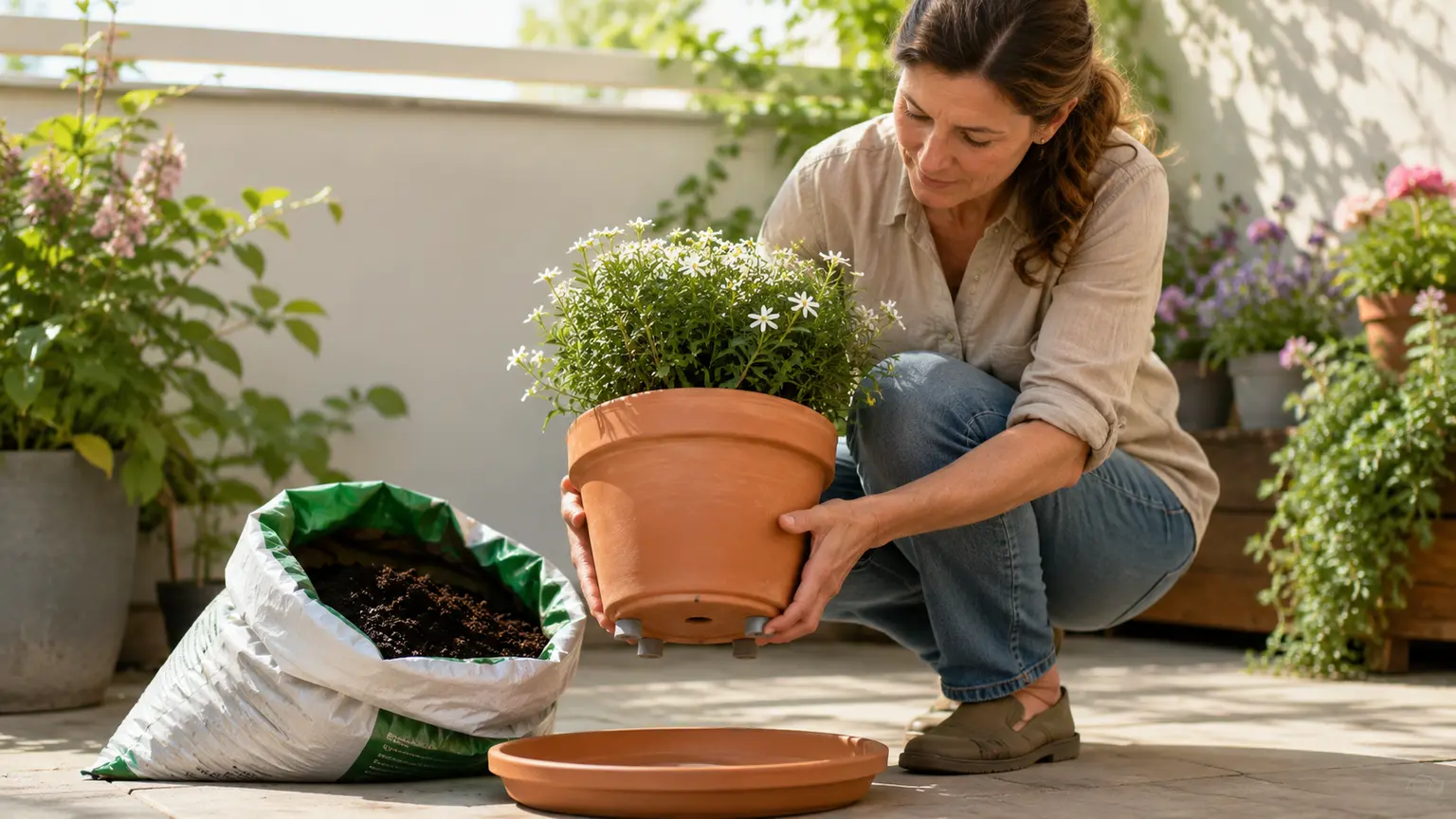
Start with a healthy nursery pot that has open drainage holes. The potting mix and roots remain in this inner container, where excess irrigation water can leave the root zone. Set the nursery pot inside the decorative planter only after confirming that it can sit securely and be removed without disturbing the plant.
There is no universal clearance measurement that works for every combination. Pot taper, rim shape, plant weight, access around the container, and the position of the plant all affect the fit. Instead, use a simple usability test: you should be able to grasp or otherwise lift comfortably the nursery pot out when you need to water, inspect the base, empty runoff, or move the plant.
- Check that the nursery pot remains upright rather than leaning against the outer planter.
- Confirm that the inner pot can be lifted out without crushing foliage or straining the plant.
- Look around the base for a place where water could collect and become difficult to remove.
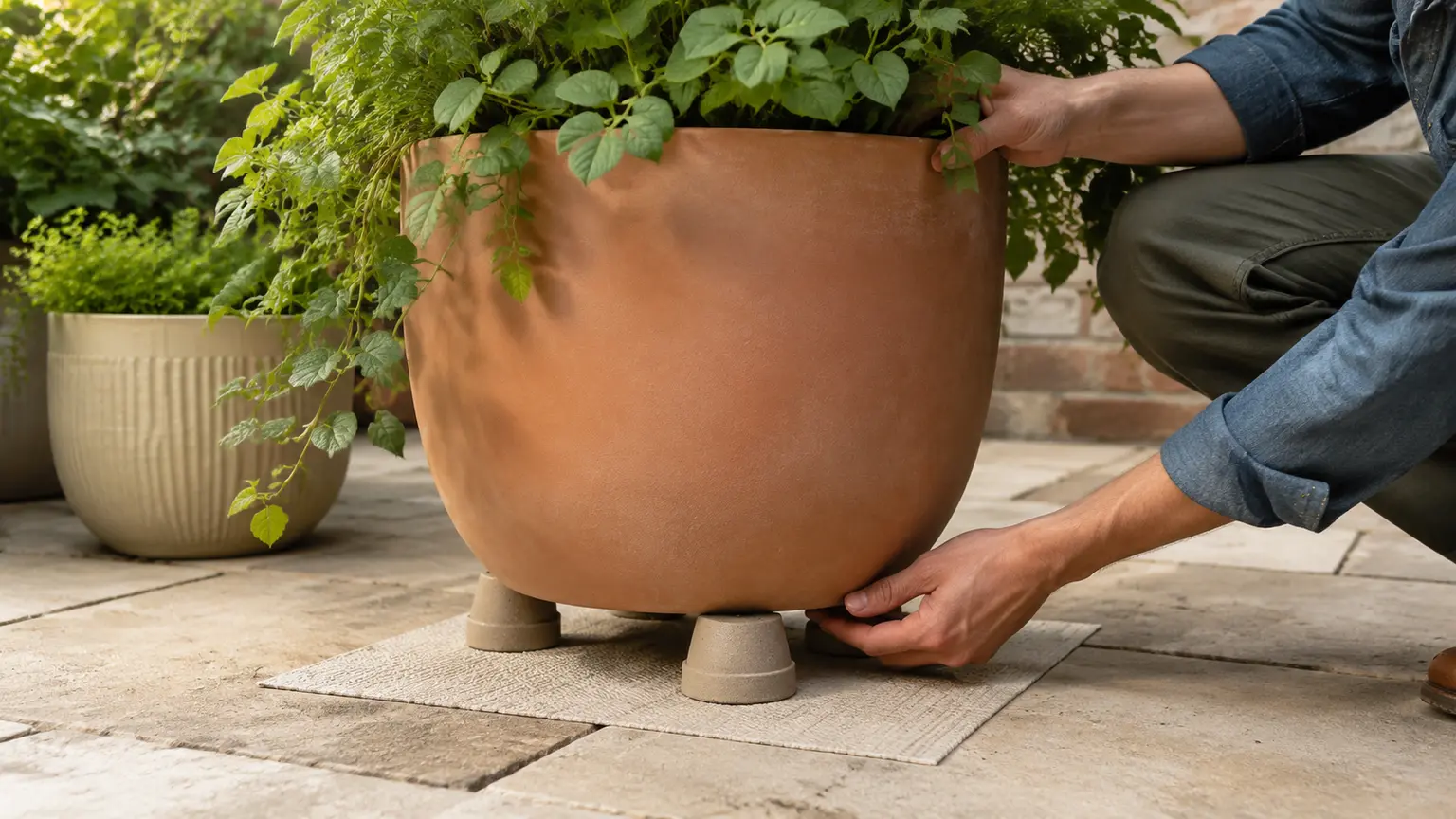
- Make sure the decorative planter is stable on its intended surface for the combined weight of the plant, nursery pot, potting mix, and water.
- Leave the potting mix in the nursery pot; do not add a layer of gravel or rocks beneath the mix as a drainage fix.
The non-negotiable routine: lift, look, and empty runoff
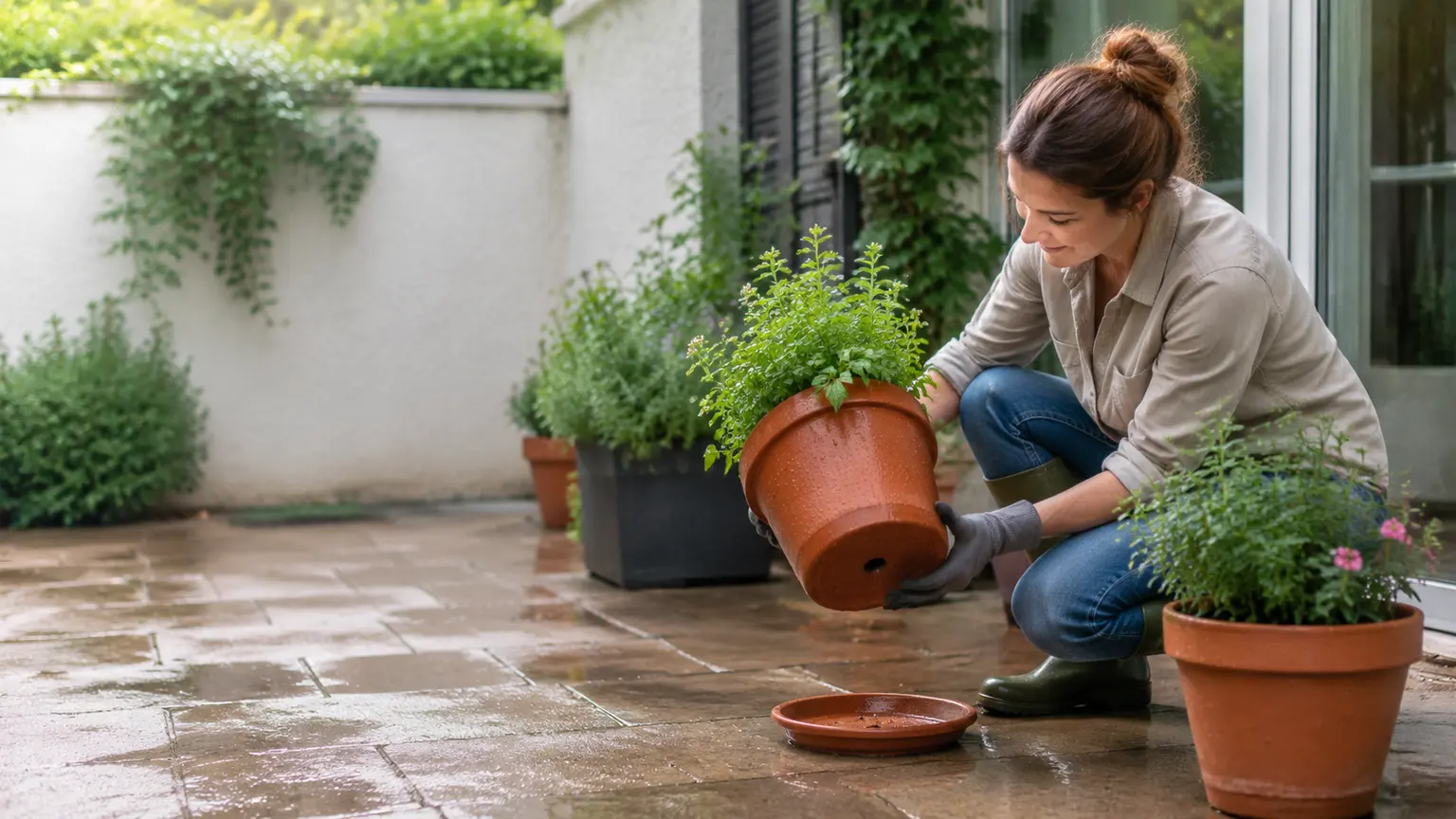
After watering, excess water may pass through the nursery pot and collect at the bottom of the cachepot. That water is runoff. It should not be treated as a permanent supply unless the outer container was specifically designed as a self-watering system.
- Check the potting mix before watering instead of following a fixed calendar.
- Water the plant according to its conditions and the moisture level of its mix.
- Allow the nursery pot to drain after watering.
- Lift the inner pot, when practical, and look inside the decorative planter for collected water.
- Empty the outer planter before returning the nursery pot or leaving it in place.
- Repeat the check after unusually heavy watering or weather that changes how quickly the container dries.
Keeping the nursery pot standing in collected water can leave the potting mix overly wet and reduce the air available to roots. That is a water-management concern, not proof of a particular disease. Leaf changes or other symptoms can have multiple causes, so avoid diagnosing a plant from standing water alone.
If lifting the plant is difficult, treat that as a design problem. Reposition the container while it is manageable, or choose an outer planter that allows better access. A cachepot that traps water where it cannot be inspected is harder to manage than one that makes the runoff visible and removable.
Fit and summer watering: size for access and judge moisture plant by plant
The decorative planter’s appearance does not determine whether the plant has the right amount of growing space. The nursery pot and its root system are the more relevant horticultural fit. An outer planter needs enough room for the inner pot to sit securely and come out for inspection, but it should not be selected solely by its large overall volume.
Small containers generally dry faster. A much larger planted container can hold more wet potting mix for longer than a plant’s root system can use. Heat, wind, direct sun, container material, plant type, and growth stage can all change the balance. On a summer patio, two plants in similar-looking planters may still need different watering decisions.
Use your fingers to feel into the potting mix as a starting point, but do not treat one depth or one dry-down interval as a rule for every plant. Consider the plant’s usual moisture preference, the size of the nursery pot, its light and wind exposure, and how quickly the mix is changing between checks. Follow the plant-specific guidance available for the particular plant rather than watering simply because a certain number of days has passed.
A practical fit check before you commit
- Lift the empty nursery pot in and out of the decorative planter several times.
- Repeat the test with the plant in place only if it can be done without bending, dropping, or damaging the foliage.
- Check whether the outer planter’s rim blocks access to the inner pot.
- After watering, confirm that you can remove collected runoff without tipping the plant or spilling wet mix.
- Recheck the arrangement as the plant grows heavier or the patio conditions change.
What this is—and is not: cachepot versus self-watering planter
An ordinary cachepot is an outer container that holds or displays a plant kept in a separate draining pot. If irrigation water gathers in its bottom, the normal response is to lift the inner pot, inspect the runoff, and empty it. The presence of water does not mean the planter is supplying the plant in a controlled way.
A purpose-built self-watering planter is a different system. Extension guidance describes these containers as having a reservoir separated from the growing medium, a route such as wicking or capillary movement to move water toward the plant, and an overflow arrangement. Those parts are designed to regulate how water reaches the growing medium.
A simple routine for small outdoor spaces
The cachepot method works best when the decorative container stays accessible. Keep the nursery pot removable, check the mix before watering, allow drainage, and inspect the outer planter afterward. Empty runoff rather than relying on a calendar or assuming that summer heat makes every plant thirsty at the same rate.
This simple separation also makes seasonal adjustments easier. A plant can be moved, examined, or exchanged without rebuilding the decorative display. The goal is not to make every planter identical; it is to create an arrangement where drainage, access, and plant-specific moisture needs remain visible and manageable.
Sources and further reading
- www.extension.umd.edu — www.extension.umd.edu
- extension.illinois.edu — extension.illinois.edu
- content.ces.ncsu.edu — content.ces.ncsu.edu
- extension.uconn.edu — extension.uconn.edu
- yardandgarden.extension.iastate.edu — yardandgarden.extension.iastate.edu