A pollinator water station does not need to be a permanent pond or ornamental basin. In a small yard, patio, balcony, or overlooked corner, the more practical goal is accessible moisture that can be emptied, scrubbed, or reset often. That matters because any container that holds water can become a mosquito-breeding site if it is left unmanaged.
For summer, two comparatively simple approaches are a shallow dish with stable landing stones and a damp-sand or mud puddling spot. Both can support pollinator access without making permanent standing water the default. Neither is maintenance-free: the station and nearby water-holding items still need regular inspection.
The goal: accessible water, not a standing-water ornament
Insects need a reachable surface rather than a deep container. A shallow dish can provide that surface when stones or rocks break the water line and give insects places to land. University of Maine Cooperative Extension recommends changing insect water sources two to three times weekly during warm weather. Treat that as a practical summer routine, not a universal rule for every location or season.
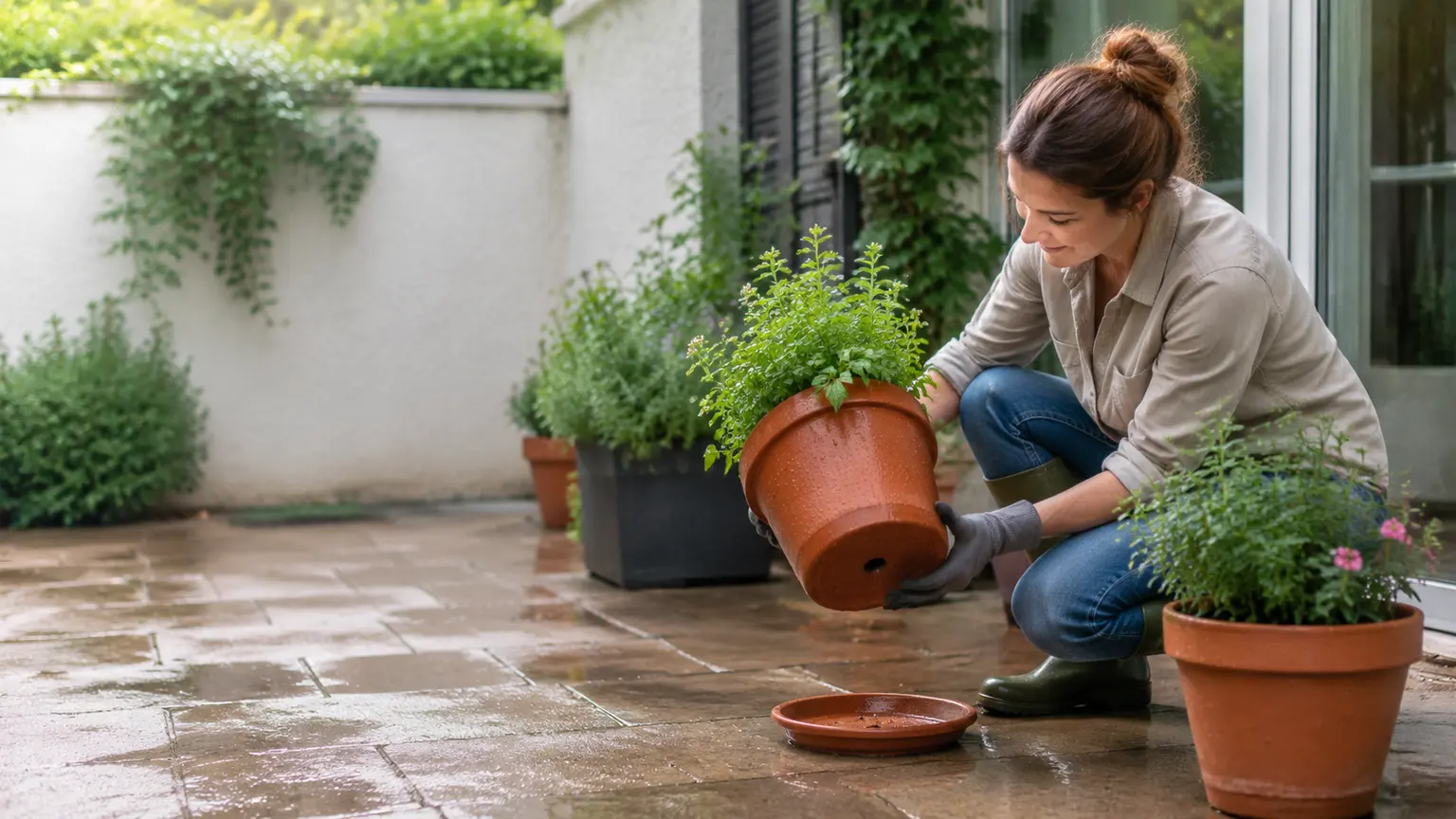
The mosquito-prevention side of the decision is equally important. The CDC recommends emptying and scrubbing water-holding items once a week, including birdbaths and flowerpot saucers. Simply topping off a dish does not remove eggs, larvae, or residue from the container surface. A pollinator station should be easy enough to lift, dump, and clean without special equipment.
Two low-volume designs that are easy to reset
Option 1: a shallow stone-filled dish
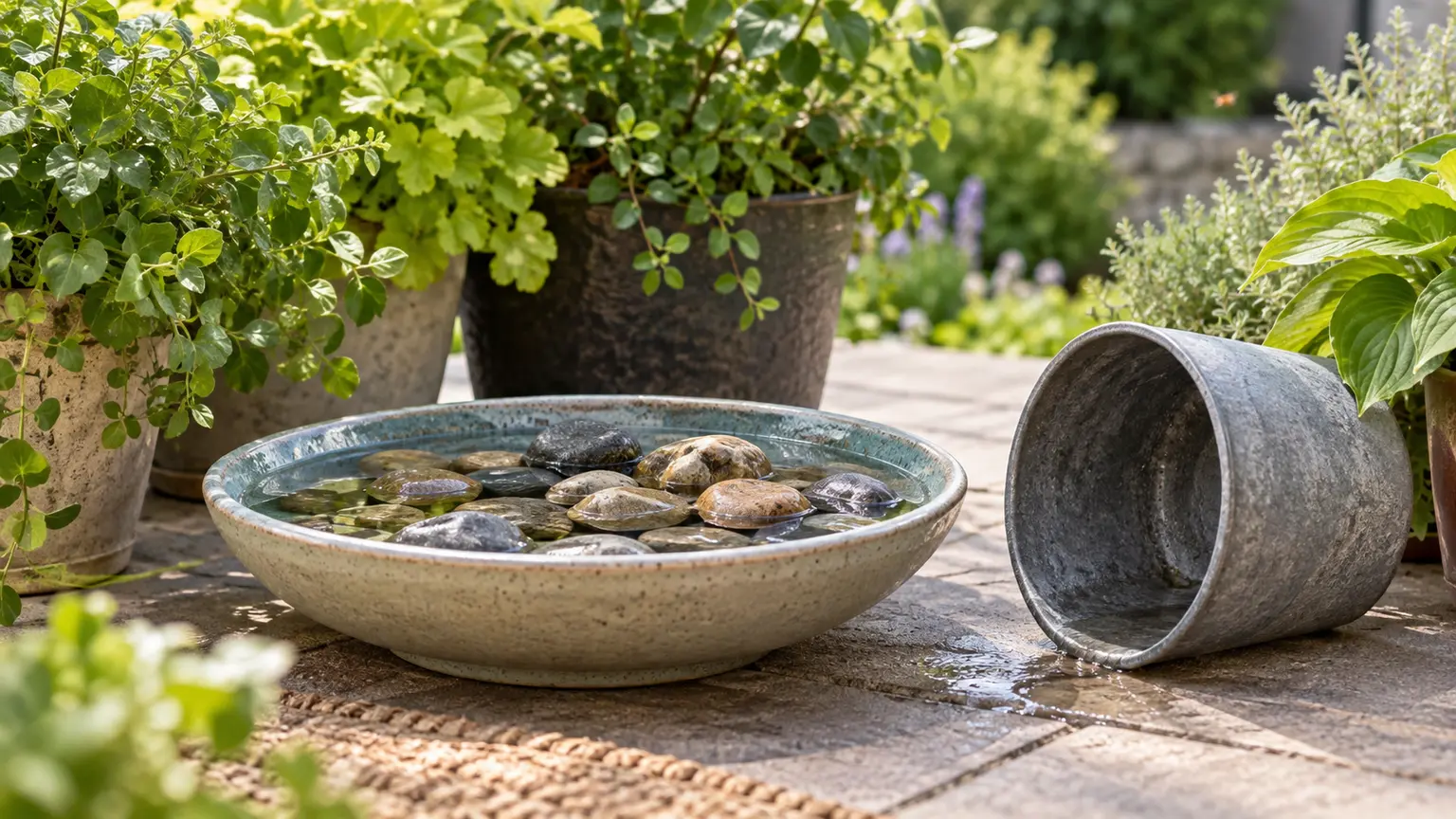
Choose a shallow, stable dish that you can carry to a sink or outdoor drain area. Add clean rocks or stones so some surfaces sit above or near the water and insects can approach without having to land on a broad, open water surface. Set it where pollinators already move through the space, but not where it can be knocked over or hidden from inspection.
- Fill the dish with only a small amount of water, keeping the stones available as landing surfaces.
- Inspect it every day or whenever you are tending nearby containers, looking for debris, algae, or larvae.
- Empty and scrub it at least weekly, following CDC container-maintenance guidance.
- During warm weather, refresh the water two to three times per week rather than waiting for evaporation or visible fouling.
- If you cannot maintain the dish, remove it instead of leaving it as a permanent water-holding object.
The University of Maine guidance supports this kind of frequently refreshed, rock-accessible station. It does not establish that a shallow dish is mosquito-proof. Its advantage is that it is small, visible, and easy to reset.
Option 2: a damp-sand or mud puddling spot
Some butterflies gather at shallow, mineral-bearing mud puddles. A puddling station can recreate that moist surface with a shallow container filled with sand or mud and arranged with a few rocks for stable access. Keep the medium damp rather than turning it into a pooled basin.
- Use a shallow container or a small area of suitable ground that can be checked easily.
- Add sand or mud to create a broad, reachable damp surface.
- Place a few rocks where insects can land without standing in saturated material.
- Moisten the medium as needed, but do not leave a separate pool of standing water.
- Inspect the area regularly and reset or replace the material if it becomes foul, waterlogged, or difficult to monitor.
Avoid adding salt, sugar, fertilizer, manure, or other attractants unless a local Extension authority specifically supports that practice. Recommendations about additives vary, and this article does not establish that they are necessary or appropriate. Plain damp sand or mud is the lower-complexity starting point.
Make the weekly water sweep part of garden care
The pollinator station is only one possible water source around a home. Once a week, walk the yard, patio, balcony, or storage area and look for objects that have collected rain or irrigation water. The CDC identifies common problem spots such as plant saucers, buckets, toys, tarps, trash containers, and other items that can hold water.
- Empty and scrub the pollinator dish or birdbath.
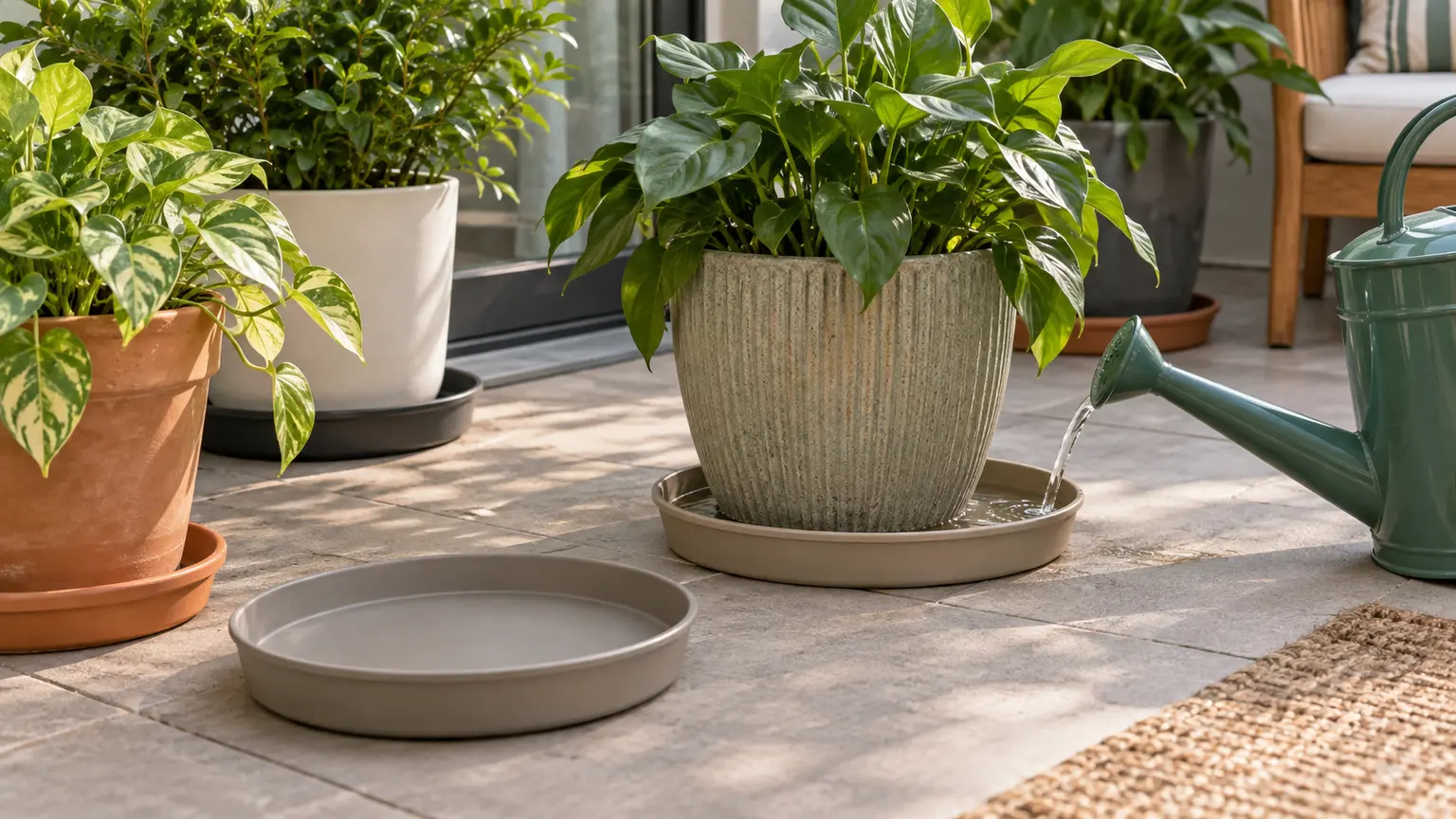
- Check plant saucers and remove water that remains after rain or irrigation.
- Turn over buckets, toys, trays, and unused containers.
- Tighten, cover, or screen water-storage containers where appropriate.
- Inspect tarps, pool covers, gutters, and other surfaces or equipment that may form pockets of water.
- Look at rain barrels and similar storage systems for secure covers or screens, following local guidance.
- Remove debris and correct items that repeatedly collect water.
The point is source reduction, not a promise that one household can eliminate every mosquito. Water may collect beyond the property, and local mosquito programs may have additional recommendations. Still, a recurring sweep reduces the number of unmanaged water-holding places under your control.
For patios, plant saucers deserve special attention because they are easy to overlook. If you are also managing container plants, see How to Keep Patio Plant Saucers From Holding Water After Rain for a closely related drainage task.
When moist habitat works—and when to skip a water feature
A naturally moist area can be a better fit than a decorative basin when the site drains promptly. A properly designed and maintained rain garden is intended to infiltrate water and generally should not hold standing water for more than about a day, except during very large storm events, according to EPA stormwater guidance. That is a drainage principle, not a guarantee for every site.
Rain gardens involve more than placing a damp container in a planting bed. Soil, slope, drainage, utilities, local requirements, and the relationship to buildings all matter. Before creating one, consult current local guidance from an Extension office, conservation district, municipality, or other appropriate local authority. EPA’s material is useful for the prompt-drainage concept but is not a substitute for a site-specific assessment or current local specifications.
Skip a water feature when you cannot commit to inspection and cleaning, when the container is difficult to drain, or when the design is intended to hold water indefinitely without active management. EPA identifies stagnant or shallow pools that persist for at least seven days, as well as aquatic sites with dense floating vegetation, as primary mosquito-breeding habitat. A still, vegetated basin should not be presented as a low-maintenance pollinator feature.
A simple summer decision rule
Choose the smallest water or moisture feature that meets your goal and that you can maintain on schedule. For most small spaces, that means either a shallow, stone-filled dish refreshed several times a week or a damp puddling station that does not become a pool. Pair it with a weekly water sweep, and remove the feature if it becomes easy to forget.
Pollinator support does not require permanent standing water. A resettable design—or a properly draining moist habitat—keeps the benefit connected to a realistic maintenance routine rather than to an ornament that quietly collects water.
Sources and further reading
- www.cdc.gov — www.cdc.gov
- www.epa.gov — www.epa.gov
- extension.umaine.edu — extension.umaine.edu
- extension.uga.edu — extension.uga.edu