A wilted patio plant does not automatically need more water. Wilting can occur when potting mix is genuinely dry, but it can also occur when the mix stays saturated and roots do not have enough air. Heat, wind, reflected light, recent transplanting, and a crowded root ball can create similar symptoms.
The safest approach is diagnosis first: inspect the growing medium, pot weight, drainage, location, and recent changes before choosing a remedy. The right response may be thorough watering, temporary shade, a drainage correction, or—when root crowding is clear—repotting. There is no dependable universal watering calendar or pot size that suits every plant, container, and U.S. climate.
Start with the pot, not the leaves
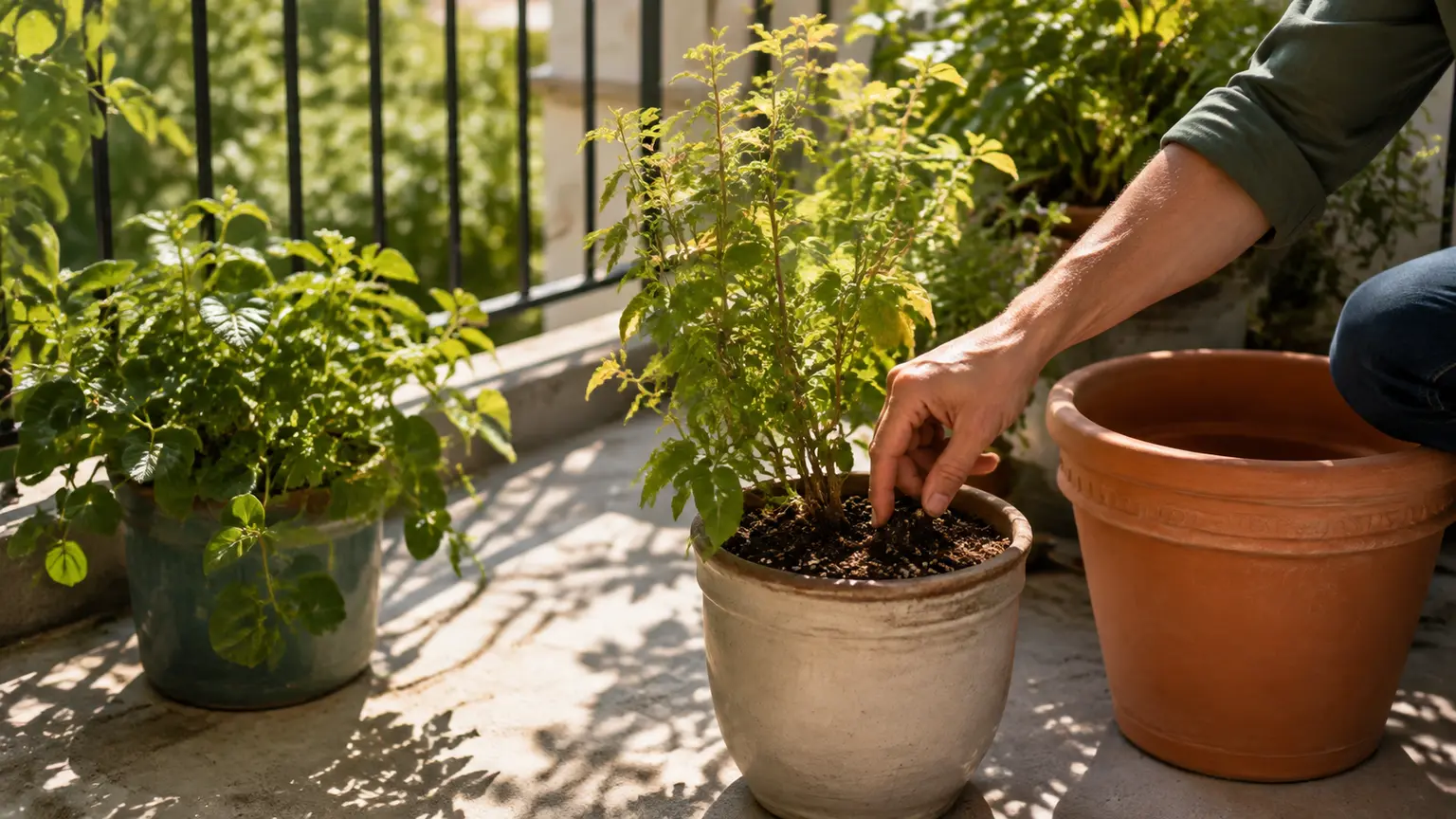
Use this five-minute check before changing the plant’s care:
- Notice when the wilt occurs. Does it appear mainly during a hot afternoon and improve overnight, or does the plant remain limp? Timing is useful evidence, but it does not prove the cause.
- Feel the potting mix below the surface rather than judging only by its appearance. The appropriate moisture level depends on the plant and medium; a plant adapted to drier conditions should not be managed like a moisture-loving annual or vegetable.
- Lift the container only if it is safe and manageable. Compare its weight with the weight it has when freshly watered. A notably light pot supports a dry-root-zone diagnosis; a heavy pot suggests that adding water may be the wrong move.
- Check the drainage holes and saucer. Confirm that holes are open and that the pot is not sitting in standing water.
- Look at the setting and recent history. Note direct sun, wind, a light-colored wall or paving that reflects heat, a move outdoors, a recent purchase, or a recent transplant.
Keep the plant in its pot for this first assessment. Pulling out a root ball can add disturbance and is unnecessary when the evidence already points to dry mix, wet mix, or acute exposure. If the problem persists or the pattern is unclear, contact your state or county Cooperative Extension service or a local plant diagnostic resource.
When the mix is dry: rehydrate the root zone
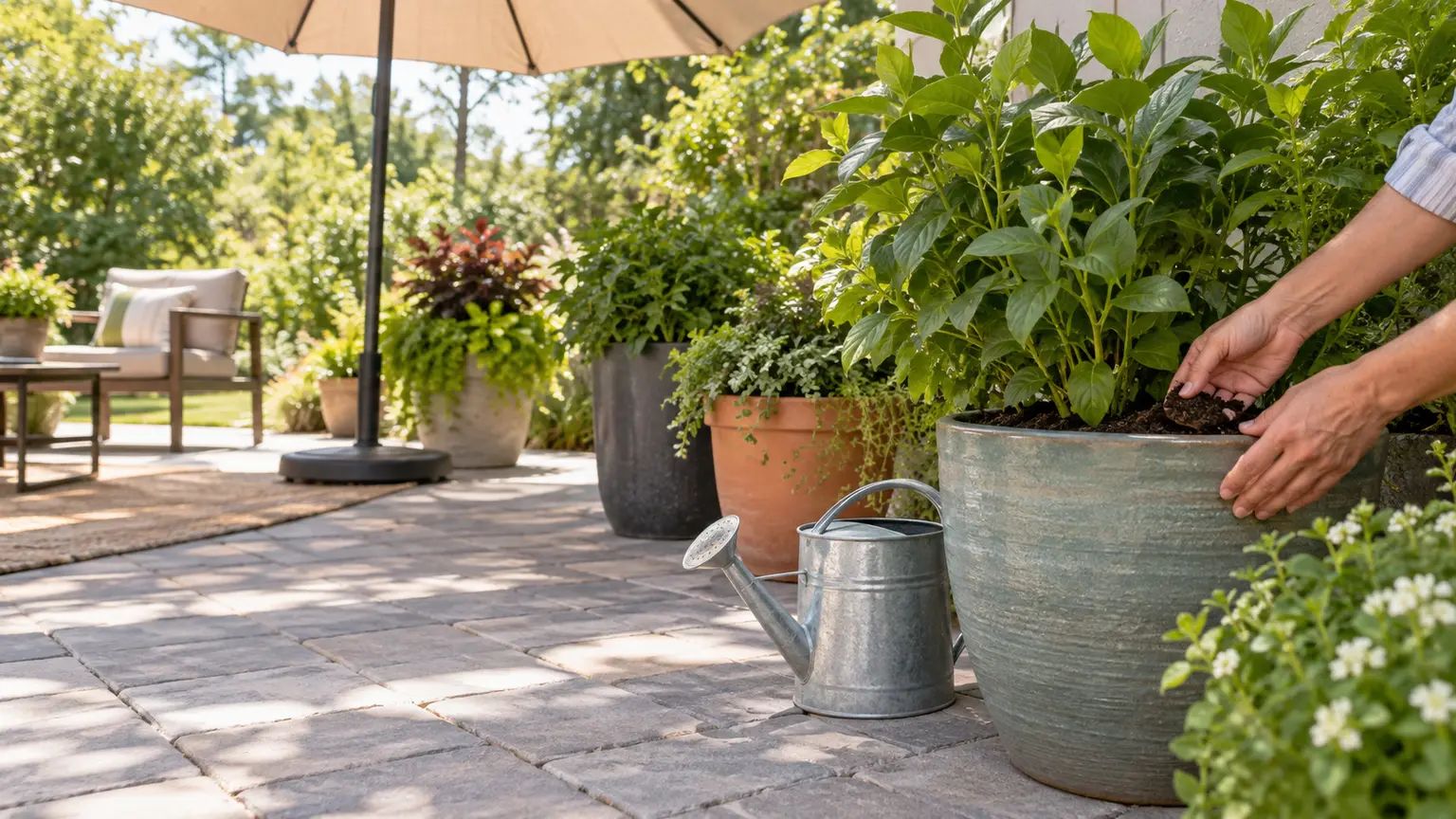
If the medium below the surface is dry and the container feels unusually light, water may be appropriate. Apply water slowly and thoroughly so the entire root zone is rewetted, allowing excess water to leave through the drainage holes. Watering only the surface can leave much of the root ball dry.
Very dry potting mix can shrink away from the sides of a container. In that situation, water may run down the gap and out of the holes without wetting the root ball evenly. Repeated, controlled applications may be needed; a carefully managed soak can also help rehydrate a severely dried root ball. Watch the container as you do this rather than assuming that the first flow of water means the mix is fully wet.
When water is not the answer: wet mix and drainage problems
A heavy pot, persistently wet medium, or water that cannot escape points away from simple thirst. Roots in saturated growing medium may lack oxygen, and the resulting wilt can resemble drought stress. Do not keep adding water to a plant whose root zone is already wet.
Inspect the drainage holes, remove standing water from the saucer, and consider whether the medium has become dense or degraded. Containers should use potting mix suited to container growing; dense garden soil can interfere with air and water movement. Do not use a bottom layer of gravel as a general drainage fix. Maryland Extension notes that it can raise the water table inside a conventional container rather than improve drainage.
Use the free container-drainage checklist to inspect outlets, saucers and outer pots before adding water or shade. It treats self-watering designs separately.
Persistent decline may involve more than watering or drainage, including pests or disease. Wilt alone is not enough to diagnose root rot or a pathogen. If the medium stays wet despite correction, or the plant continues to deteriorate, seek locally appropriate Extension or diagnostic guidance rather than reaching first for pesticides or fertilizer.
When the plant needs more root room
Root crowding becomes more plausible when growth has slowed, roots visibly circle the inside of the pot or emerge from drainage holes, the container dries unusually fast, or water rushes through without thoroughly wetting the root ball. These signs are more useful together than any single symptom.
If root crowding is evident and conditions are suitable, repotting into a somewhat larger container with fresh, well-drained potting medium may help. Avoid treating repotting as the response to one hot-day wilt. The exact next-pot dimensions are plant-specific, and repotting can add stress. Handle the root ball carefully and provide the light and moisture conditions appropriate for that plant afterward.
When the patio is the stressor: sun, radiant heat, and wind
A plant that wilts during the afternoon but regains firmness overnight or by morning may have adequate moisture yet temporarily be losing water from its foliage faster than its roots can move it. This pattern is a clue, not proof. Check the medium and drainage before deciding whether to water.
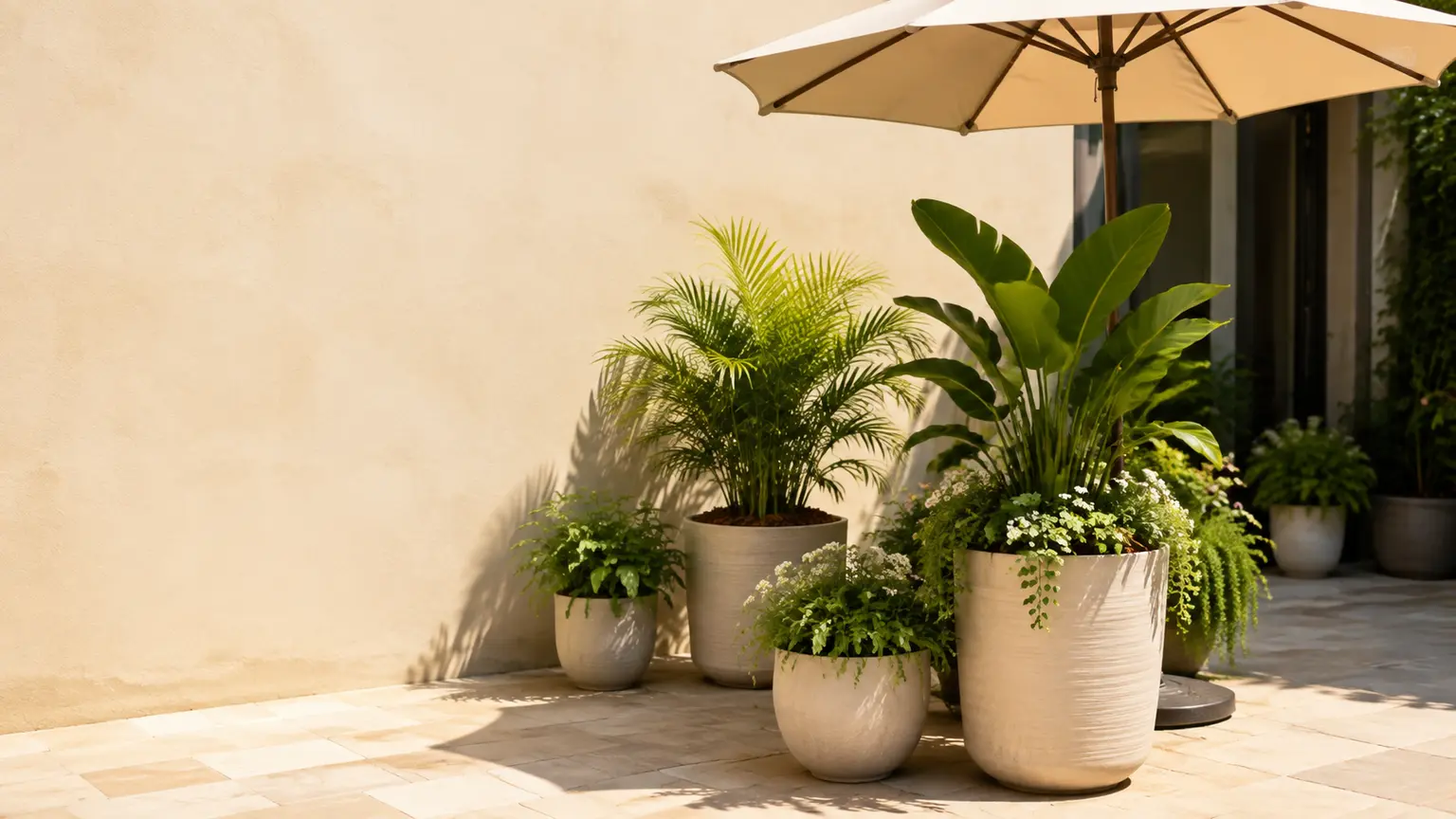
The container’s surroundings matter. Strong sun, wind, and heat reflected from light-colored walls or paving can increase stress, while pot color and material can affect the root-zone environment. These effects vary with the site and plant, so avoid assuming that a particular air temperature will stress every species in the same way.
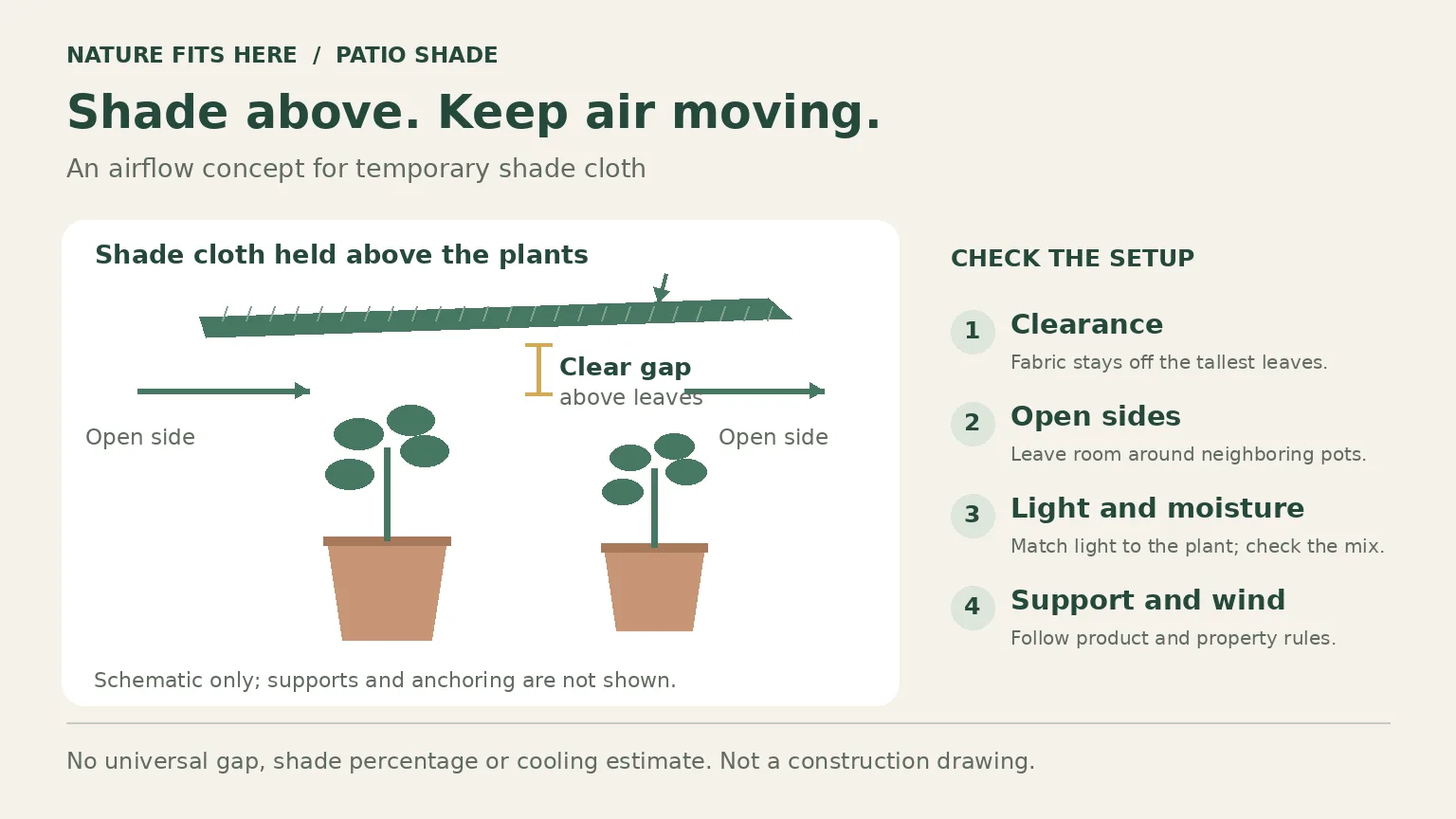
When acute exposure is the likely trigger, move a portable pot temporarily to a less stressful position or provide temporary overhead shade. Keep the plant’s normal light requirements in mind: shade is not a universal cure, and prolonged reduction in light can impair sun-loving ornamentals and fruiting vegetables. If a container is too heavy to move safely, do not risk a fall or trip hazard; adjust the surrounding exposure only when it can be done safely.
If a moisture and drainage check points toward acute sun exposure, use the shade-cloth placement examples and airflow diagram to choose between moving a pot and adding a temporary cover. Make one manageable change, then compare the foliage after the difficult exposure passes and the following morning. Persistent wilt with suitably moist mix calls for closer diagnosis, not progressively deeper shade.
Normal adjustment after a move
Newly purchased plants, plants moved from indoor or greenhouse conditions, and recently transplanted plants may show stress while adapting to different light, wind, and humidity. Gradual acclimation is preferable to an abrupt move into intense outdoor conditions. During extreme heat, postponing a transplant where possible can reduce additional stress.
“Adjustment” should not become an explanation for continuing or worsening wilt. Recheck the medium, drainage, exposure, and roots when appropriate. Scorch, pests, waterlogged mix, or decline that does not ease with suitable conditions calls for closer inspection and local advice.
Choose the least disruptive next step
| What you observe | Most reasonable first step |
|---|---|
| Dry mix and an unusually light pot | Rewet the root zone slowly and thoroughly until excess water drains; check that the root ball actually becomes moist. |
| Heavy pot, wet medium, blocked holes, or standing water | Do not add more water. Open the drainage path, empty the saucer, and reassess the medium. |
| Afternoon-only wilt with dry heat, wind, or reflected light | Verify moisture first, then use temporary shade or a safer, less exposed position if the plant’s light needs allow it. |
| Circling or emerging roots, slow growth, unusually rapid drying | Consider repotting into a somewhat larger container with fresh, well-drained medium when conditions are suitable. |
| Recent move outdoors or recent transplant | Allow gradual acclimation, avoid abrupt exposure changes, and continue checking for a separate moisture or drainage problem. |
Keep observing after the first change rather than stacking several interventions at once. Water only when the root-zone check indicates a need, use shade as a measured response to acute exposure, and reserve repotting for credible evidence of crowding. For plant-specific light and moisture preferences, regional weather, and persistent symptoms, consult your state or county Cooperative Extension service.
Sources and further reading
- extension.umd.edu — extension.umd.edu
- extension.umd.edu — extension.umd.edu
- extension.umd.edu — extension.umd.edu
- extension.umd.edu — extension.umd.edu
- www.extension.umd.edu — www.extension.umd.edu
- extension.colostate.edu — extension.colostate.edu
- extension.oregonstate.edu — extension.oregonstate.edu
- yardandgarden.extension.iastate.edu — yardandgarden.extension.iastate.edu
- www.pubs.ext.vt.edu — www.pubs.ext.vt.edu
- extension.wvu.edu — extension.wvu.edu