A nursery pot tells you how much root space a plant has today. It does not necessarily tell you how much space the plant needs for an entire growing season—or for years of container culture. A home container must also support the plant’s intended mature size, root habit, exposure, and maintenance needs.
That does not mean every plant should be moved into the largest container available. A pot that is far larger than the current rootball can hold a large volume of unused growing medium, which may stay wet after watering. The useful goal is a container with enough usable root space for the plant’s intended stage, along with a shape, weight, drainage design, and water demand that fit the site.
Stop Reading the Nursery Pot as a Final Answer
Start by identifying what the plant is expected to become. Check the cultivar tag or supplier listing for mature height and spread where that information is available. Then consider how long the plant will remain in the container. A seasonal annual display, a vegetable grown for one season, and a shrub kept in a pot for several years do not need the same sizing approach.
Use the nursery pot as evidence of the plant’s present rootball, not as a permanent prescription. For a long-season or mature planting, compare the plant’s expected top growth with its root-space needs. Large top growth needs anchoring, root space, and enough water, so a narrow, lightweight pot may be unsuitable even if its listed capacity seems adequate.
- Identify the plant’s expected mature height and spread.
- Decide whether the plant will stay in the container for one season or multiple years.
- Look for a naturally deep, spreading, or otherwise distinctive root habit in reliable plant-specific guidance.
- Assess the container’s usable depth, total growing-media volume, footprint, and filled weight.
- Confirm that the gardener can water the finished container thoroughly when the plant needs it.
Size the Root Zone in Two Dimensions: Depth and Usable Volume
Container size is not just diameter or gallon capacity. A pot can have a generous nominal volume but still offer an unsuitable shape for a plant that needs depth. Conversely, a shallow, broad container may provide useful lateral space but not enough vertical root run. Extension guidance from the University of Maryland pairs container dimensions and volume rather than relying on one measurement alone.
Think of the decision in two parts. First, ask whether the container provides enough usable depth for the plant’s expected root run. Second, ask whether the total volume is sufficient for the mature plant’s water, anchoring, and root-space demands. Plants with substantial top growth or fruiting potential often need both adequate depth and enough overall root volume.
Avoid turning examples such as five-, 15-, or 30-gallon containers into universal rules. Those figures can be useful starting points for particular crops or situations, but they do not translate automatically to every ornamental, edible, shrub, or tree. Species, cultivar, age, climate, exposure, and the intended length of container culture all change the decision.
Also inspect the container’s interior shape. A tall, narrow pot may have adequate depth but provide less resistance to wind than a broader container. A very shallow pot may be stable but offer too little root space for a plant expected to become large. Choose geometry that matches both the root zone and the plant’s aboveground form.
Choose a Pot That Will Stay Upright—and That You Can Actually Water
A container’s footprint and weight are practical parts of sizing. Tall plants in small, lightweight containers are more likely to become top-heavy or blow over, especially in exposed locations. A broad, lower container may be more stable in wind than a tall, narrow container with the same nominal volume.
Plan the final location before filling a large pot. Growing medium becomes heavy when wet, and the container itself adds more weight. University of Maryland Extension gives an example of a filled 20-inch-diameter container weighing about 100 pounds. That is a handling and placement concern, not a load-rating recommendation. Do not assume that a balcony, deck, rooftop, or railing can support a particular container. A container’s weight is not evidence of the structure’s load capacity.
Watering capacity creates a second boundary. Smaller containers generally dry more rapidly, while a large container may require several gallons during a thorough watering. A mature plant whose roots occupy more of the container can also use water quickly. Larger volume may reduce rapid drying, but it does not automatically make a container low-maintenance if the gardener cannot water it fully when needed.
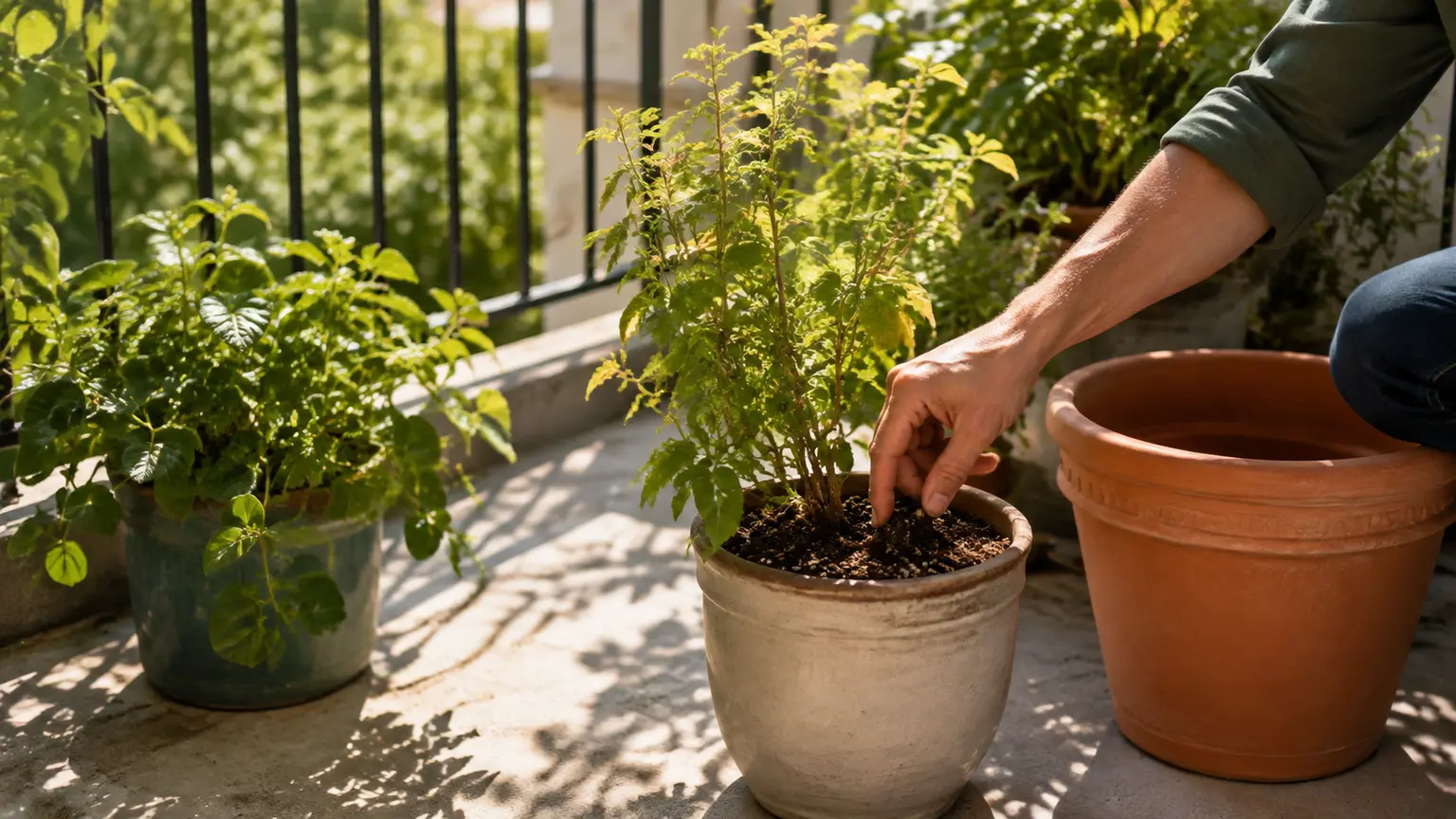
Before choosing the largest suitable pot, ask where a hose or watering can will reach, how often the space can be checked, and whether water can be applied to wet the medium thoroughly. Check moisture rather than relying on a rigid calendar. Drying rate varies with container material, sunlight, wind, weather, and plant type. For exposed sites, the guide “How to Choose Plants for a Hot, Windy Patio Without Guessing” may help with the broader placement decision: How to Choose Plants for a Hot, Windy Patio Without Guessing.
Drainage Is a System, Not a Layer of Rocks
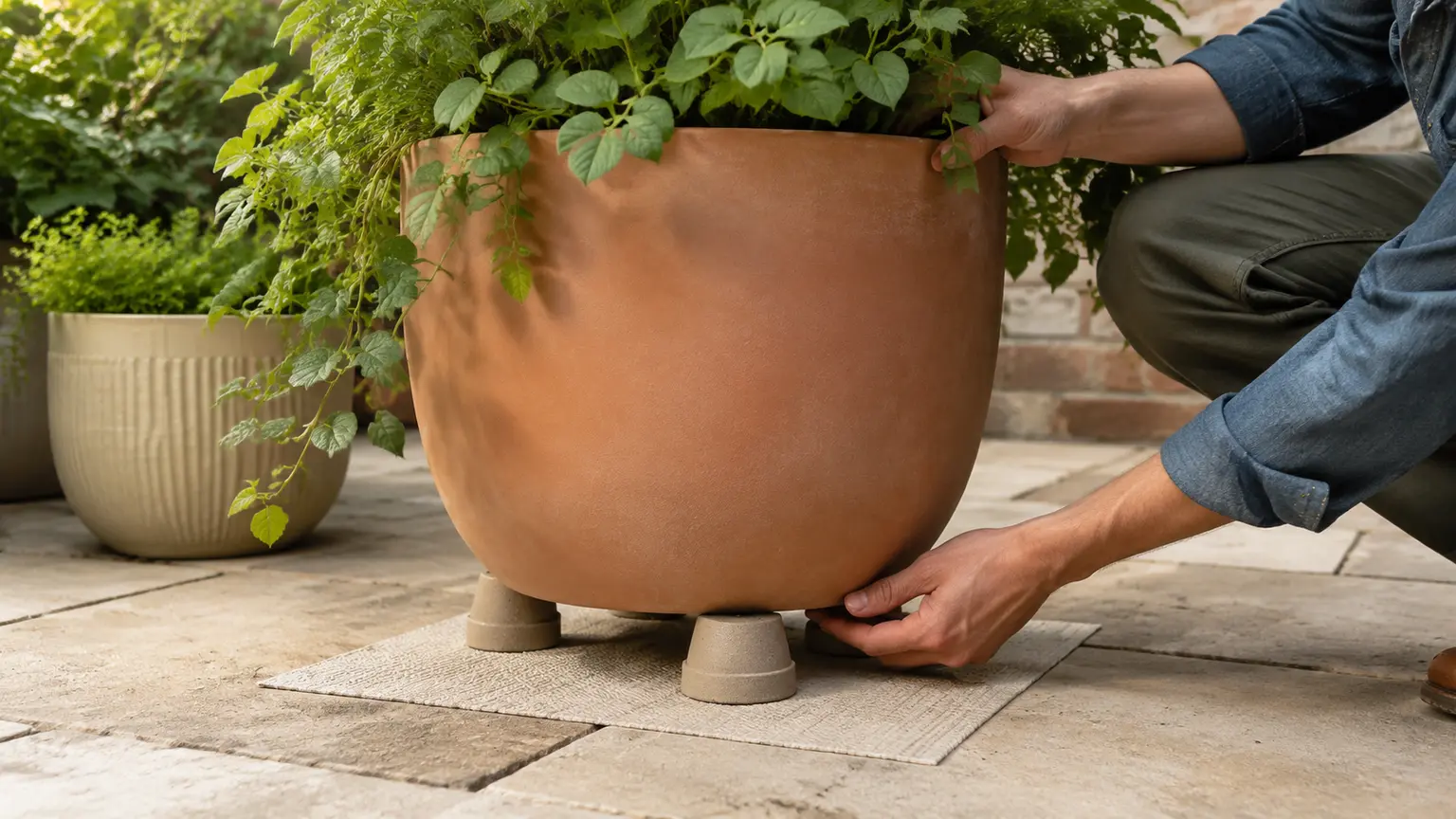
Conventional containers need a functional way for excess water to leave the root zone. Check that drainage holes are present, open, and positioned to allow water to escape. Raising a pot slightly on suitable supports can help water exit freely, provided the supports are stable and appropriate for the surface.
Do not add gravel, rocks, or broken pot shards at the bottom as a general drainage fix. University of Maryland Extension explains that this approach does not improve drainage and can worsen waterlogging by changing where water accumulates. It also uses space that could otherwise hold growing medium. Extra ballast may sometimes be considered for stability, but that is a weight tradeoff—not a drainage strategy.
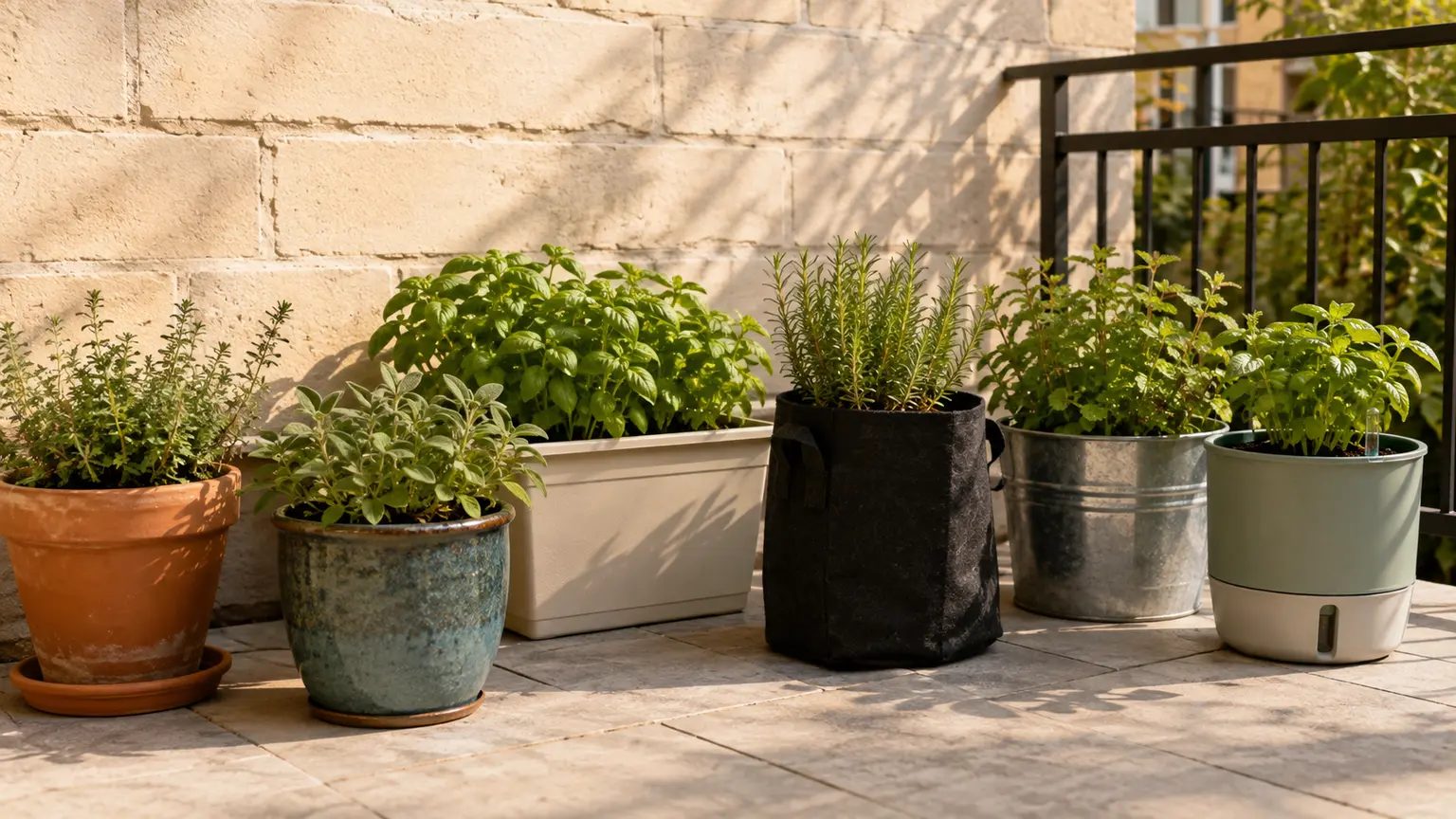
A self-watering container is a different system, not simply a sealed conventional pot. It needs the designed reservoir and overflow arrangement described for that type of container. Follow the manufacturer’s design rather than assuming that the absence of visible drainage holes means the container is functioning correctly.
Before planting, inspect the pot and its location using this short check:
- Are the drainage holes present and unobstructed?
- Can excess water leave without pooling beneath the container?
- Will a saucer or surface trap discharged water against the pot?
- Is the container stable when empty, and will it remain stable when the plant and wet medium add height and weight?
- Can the finished container be moved only with suitable equipment, or should it be placed permanently before filling?
For more detail on the drainage part of this inspection, see How to Check a Patio Pot for Drainage Problems Before You Plant and How to Elevate a Patio Planter for Better Drainage Without Damaging the Surface.
When to Step Up, When Not to Overpot, and When Root Management Matters
The right next step depends on the planting situation. For a mixed annual display or a plant being moved up only one stage, Oregon State University Extension advises choosing a container only slightly larger than the combined rootballs. This limits the amount of unoccupied medium that can remain wet. In that short-term context, “bigger” is not automatically better.
For a long-season crop or a plant intended to reach a substantially larger size, the container still needs to provide enough eventual root space, depth, and anchoring mass. The solution is not to keep a mature plant permanently cramped simply to avoid unused medium during its earliest stage. Instead, match the container to the intended stage and reassess as the plant develops.
Root habit can also affect long-term maintenance. Maryland Extension notes that fabric grow bags can air-prune roots, while plants in other container types may need to be removed and have circling roots addressed. That is not a universal instruction for every species: root pruning needs and tolerance vary by plant, age, season, and the length of time it will remain potted.
The same caution applies to woody perennials, shrubs, and fruit trees. Larger containers can support more plant growth but may become difficult to move. Woody plants in containers can have winter-management considerations; use species- and climate-specific guidance before making overwintering or root-pruning decisions.
A Practical Container-Size Decision
A good container is not simply the biggest one that fits the space. Choose one that gives the plant enough usable depth and total root volume for its intended stage, remains stable in the site, drains through a suitable design, and can be watered thoroughly by the person caring for it. Recheck the choice when the plant’s mature size, root habit, exposure, or length of container culture changes.
Sources and further reading
- extension.umd.edu — extension.umd.edu
- Container Gardening Basics — Food Hero — Oregon State University Extension
- Growing Vegetables in Containers and Salad Tables — University of Maryland Extension
- Container Gardening Basics — EM 9544 — Oregon State University Extension
- Growing Figs in Maryland — University of Maryland Extension